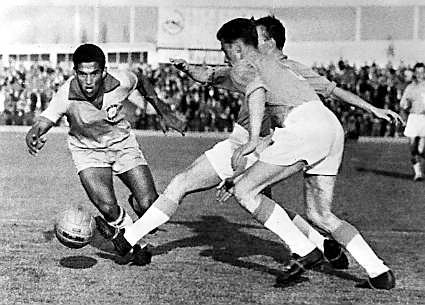
Chile 1962: The Battle of Santiago, Garrincha's greatest moment and the World Cup born from an earthquake

- Chile hosted the 1962 World Cup despite suffering a devastating earthquake months before, demonstrating recovery and organizational capacity
- Garrincha was the tournament's standout protagonist, leading Brazil to win the championship with memorable performances and establishing himself as a legendary figure
- The Battle of Santiago was a violent confrontation between Chile and Italy that marked the championship for its brutality and intensity on the pitch
In May 1960, an earthquake measuring magnitude 9.5 — the strongest ever recorded by instruments — devastated southern Chile. Two years later that country had to host a World Cup. The phrase that saved it was said by Carlos Dittborn, the official who had fought for the bid: «because we have nothing, we want to do everything». Dittborn died a month before the tournament started, aged 38. The stadium in Arica bears his name.
🇨🇱 The 1962 World Cup in numbers
- Host nation
- Chile
- Teams
- 16
- Champions
- 🏆 Brazil
- Runners-up
- Czechoslovakia
- Final
- Brazil 3-1 Czechoslovakia
- Stadium
- Estadio Nacional · Santiago de Chile
- Attendance
- 68,679
- Top scorer
- Six players with 4 goals, including Garrincha
The Battle of Santiago
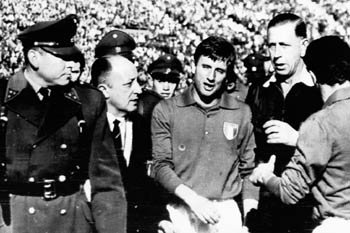
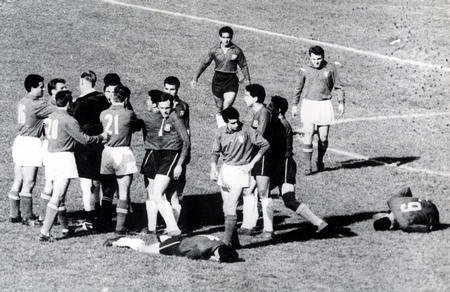
2 June 1962, Chile versus Italy. The Italian press had published disparaging articles about Chile and the country was up in arms. What happened on the pitch was presented like this by the BBC, via David Coleman: «the most stupid, appalling, repugnant and shameful spectacle in football history».
There were punches, flying kicks, a broken nose — Italian Humberto Maschio's, from a straight right from Chilean Leonel Sánchez, who was a boxer's son — and the police had to enter the field four times. English referee Ken Aston sent off two Italians and completely lost control of the match.
Chile won 2-0. And that disaster had consequences that continue to this day: years later, Ken Aston himself was the one who invented the yellow and red cards, looking for a way for players to understand the sanction without speaking their language. The idea came to him while standing at a traffic light.
Garrincha carried Brazil on his shoulders
Pelé got injured in the second match and didn't play again. Brazil, the defending champions, lost their star in the first week.
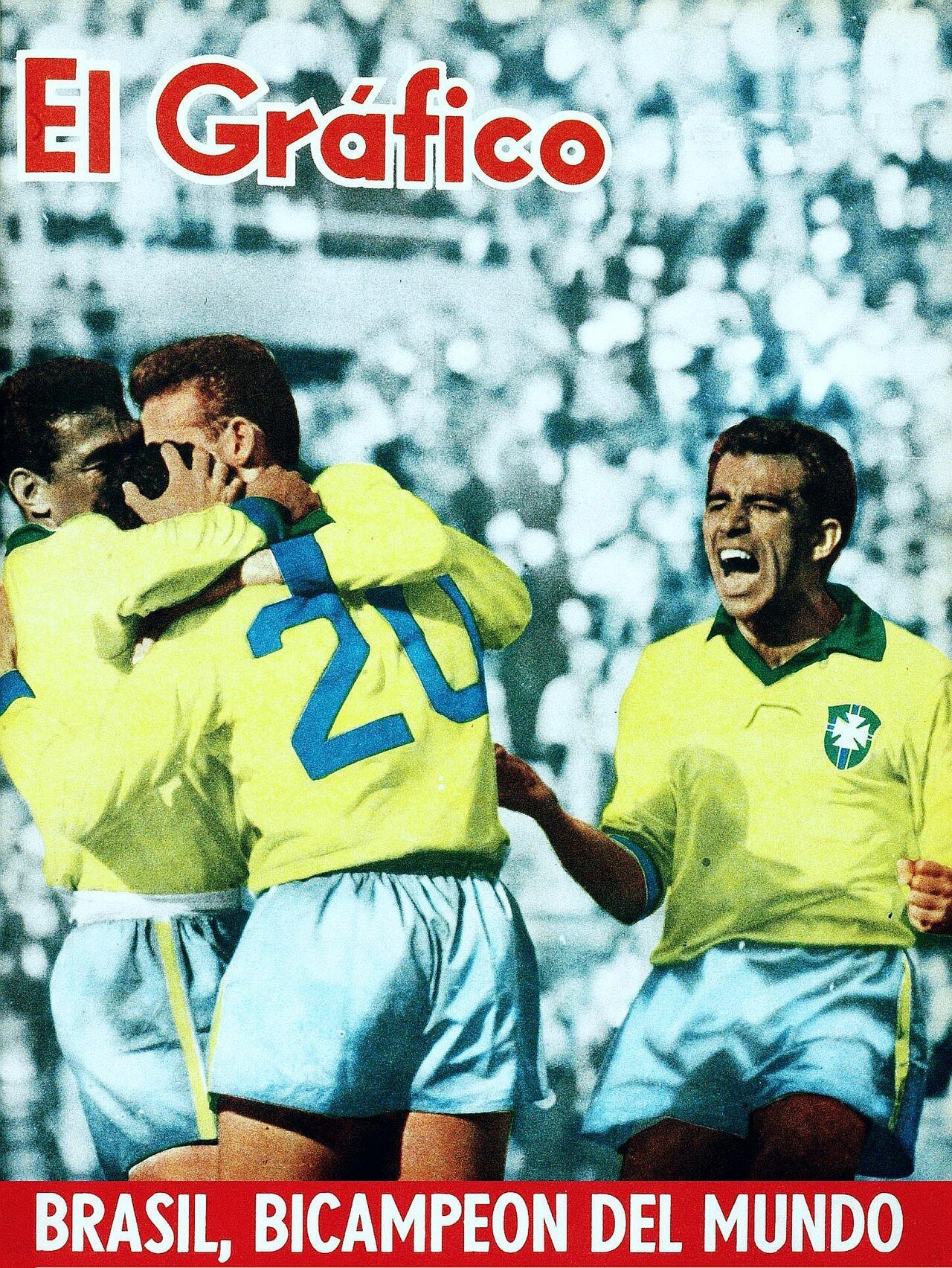
And then came Manoel Francisco dos Santos, Garrincha, a man with both legs bent the same way due to a birth defect — one six centimetres shorter than the other — whom doctors had told would never be able to play football. He tore the tournament apart. Two goals against England in the quarter-finals, two against Chile in the semi-finals, and a performance that many consider the greatest individual display in World Cup history.
He finished as the tournament's top scorer, tied with five other players on four goals, and as the competition's best player.
Spain returns, and goes out in the first round
Spain returned to a World Cup twelve years after Brazil 1950 — the Rome draw in 1954 had left them out and in 1958 they didn't qualify either. They arrived with an idea that sounds barking mad by today's standards: Helenio Herrera's side had Alfredo Di Stéfano and Ferenc Puskás, both naturalized players.
And here's one of the saddest stories in Spanish football: Di Stéfano never played a single minute in a World Cup his entire life. He got injured before the tournament started and never got to debut. Argentina didn't go to a World Cup during his best years, with Colombia he couldn't make it, and when he finally arrived with Spain, his body had other ideas. The best player of his era never played a single World Cup match.
Spain lost to Czechoslovakia, beat Mexico and lost to Brazil. Out in the first phase.
The Olympic goal that's only happened once
There's something from this World Cup that's never been repeated: Colombian Marcos Coll scored an Olympic goal — straight from the corner kick, without anyone touching the ball — in Colombia's 4-4 against the Soviet Union. And he scored it against none other than Lev Yashin, the greatest goalkeeper in history.
It's the only Olympic goal in World Cup history. Sixty-odd years later, it's still the only one.
That the yellow and red cards came straight out of that match.
That the connection is real but indirect. The referee from that disaster, Ken Aston, truly is the one who came up with the cards — but years later, and the trigger he himself described was a different match, England-Argentina in 1966, after which he realized players didn't understand they were being cautioned or sent off because they didn't speak the language. The idea for the colour code came to him at a traffic light. They debuted at Mexico 1970. So Santiago 62 is at the root of the problem, not the solution.
That Garrincha was sent off in the semifinal against Chile and that FIFA let him play the final «because he was the best».
That the sending-off is true and that he played the final as well. What's unclear is why: various versions are doing the rounds — diplomatic pressure, a lenient referee's report, intervention from the Brazilian prime minister — and none of them are conclusively documented. The honest answer is to say he was allowed to play without knowing exactly why.
That Chile 62 was the most brutal tournament ever played.
That the reputation comes mainly from a single match, the Italy one, which was also the one the world saw on television. The tournament had more brutal episodes, yes, but you shouldn't turn one match into the label for an entire championship. What is objective is that it was, up to that point, the lowest-scoring World Cup in history: football was becoming more defensive and you could really see it here.
- Copa Mundial de Fútbol de 1962 — Wikipedia
- RSSSF — complete data from the 1962 tournament
- The photos are in the public domain or Creative Commons via Wikimedia Commons; each one carries its author and licence at the bottom.
- On Garrincha's sending-off and his presence in the final there are several explanations: here we say it's unresolved rather than pick the prettiest one.