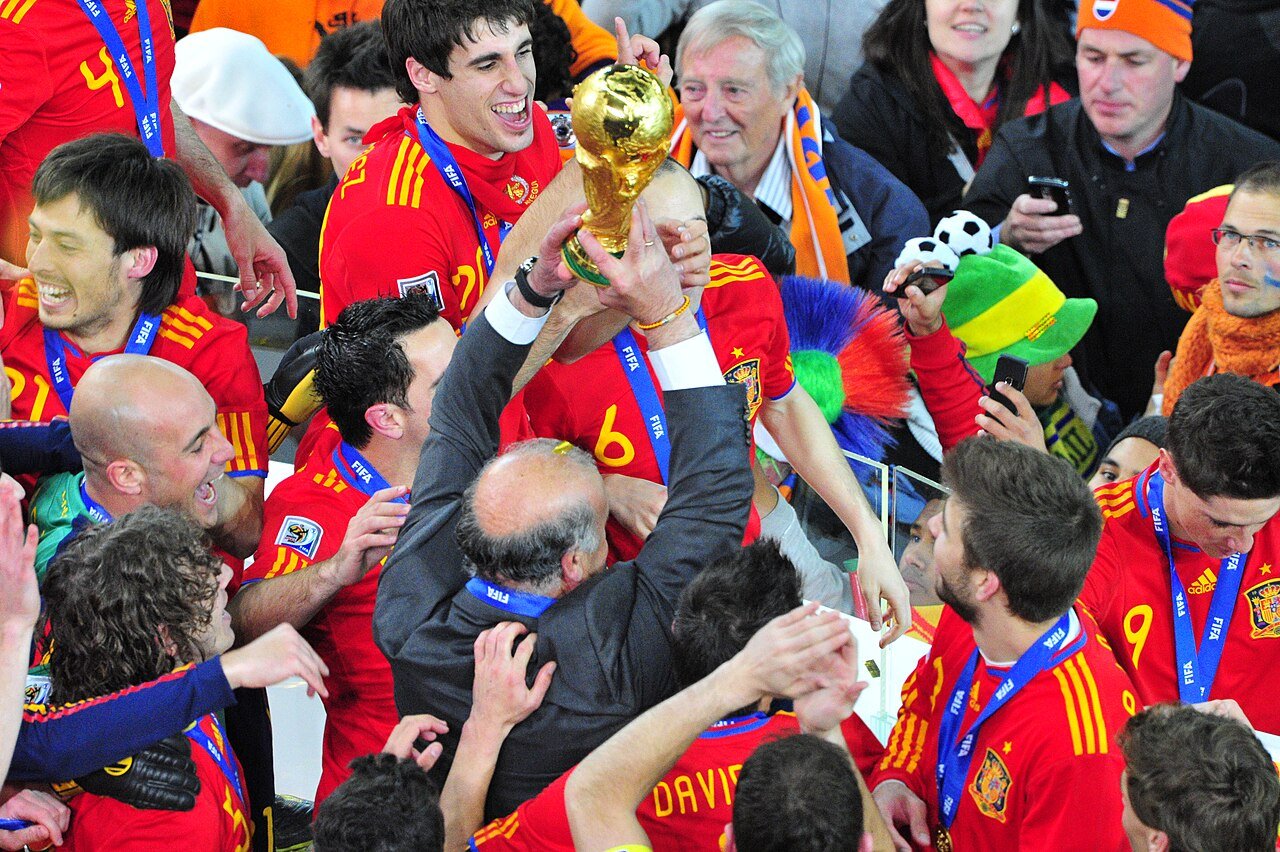
South Africa 2010: Iniesta's goal, Spain's first star and the only champions who started by losing

- Iniesta's goal was decisive in the South Africa 2010 final, giving Spain their first World Cup title
- Spain established itself as the tournament's top team, demonstrating superior football throughout the competition
- Spain was the only champion that started the tournament losing, achieving the historic comeback until conquering the title
Eighty years. Since 1930, Spain had been to thirteen World Cups and had reached the quarter-finals at best. Their furthest point was a fourth-place finish in 1950. And then, on 11 July 2010, all that changed.
🇿🇦 The 2010 World Cup in numbers
- Host
- South Africa
- Teams
- 32
- Champions
- 🏆 Spain
- Runners-up
- Netherlands
- Final
- Spain 1-0 (a.e.t.) Netherlands
- Stadium
- Soccer City · Johannesburg
- Attendance
- 84,490
- Top scorer
- Four players with 5 goals, including David Villa
Starting with a loss
Spain arrived in South Africa as European champions and firm favourites. And they lost their opening match, 1-0 to Switzerland, one of those days when the ball simply won't go in.
The fact that makes it historic: no team had ever won a World Cup after losing their opening match. Spain was the first, and they remain the only one.
From there they beat Honduras and Chile, and then came the strangest part of all: Portugal 1-0, Paraguay 1-0, Germany 1-0 and Netherlands 1-0. Four knockout matches, four wins by a single goal, not a goal conceded from the round of 16 onwards. World champions with eight goals across seven matches, the lowest tally of any World Cup winner.
The hardest final
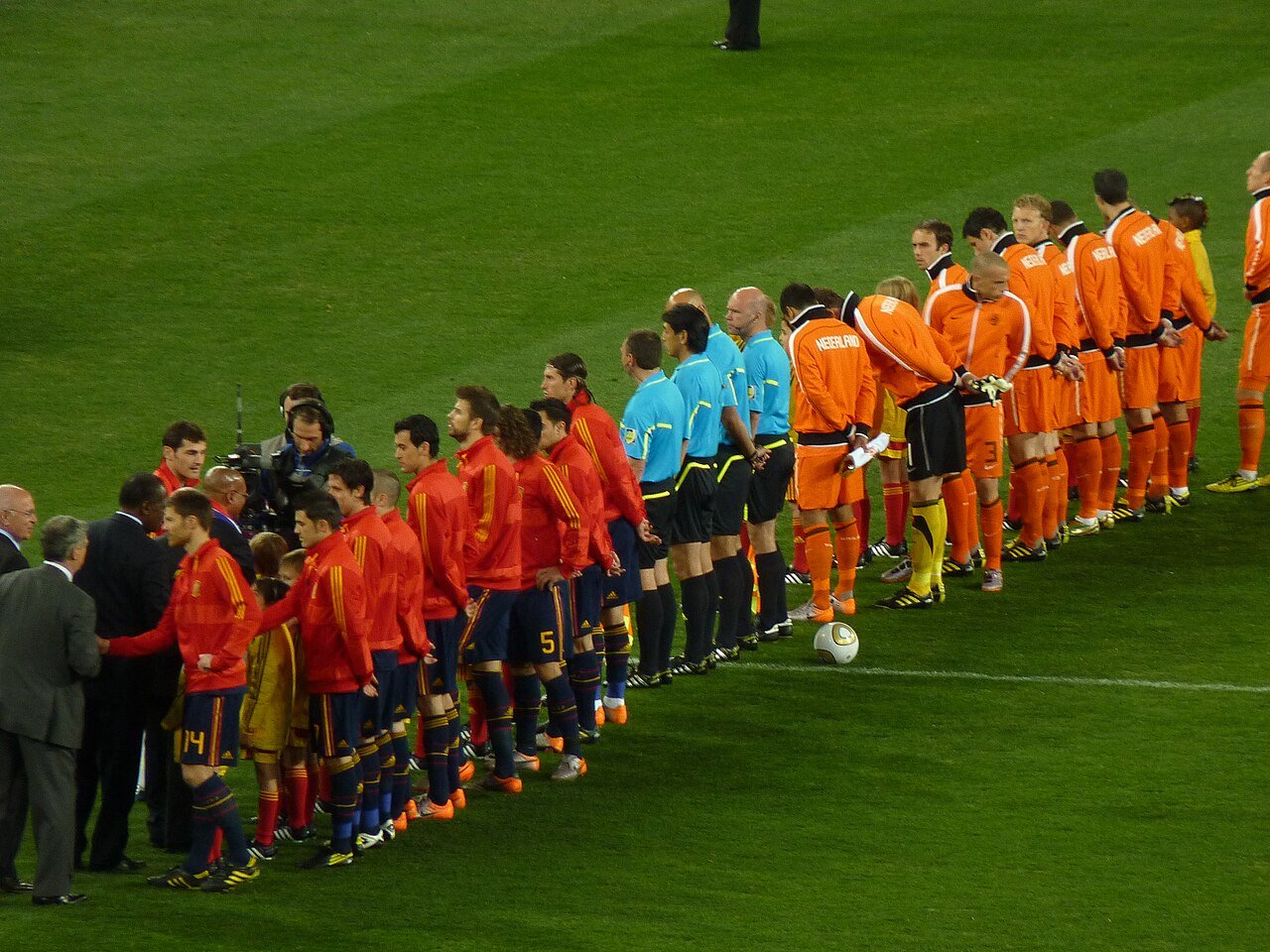
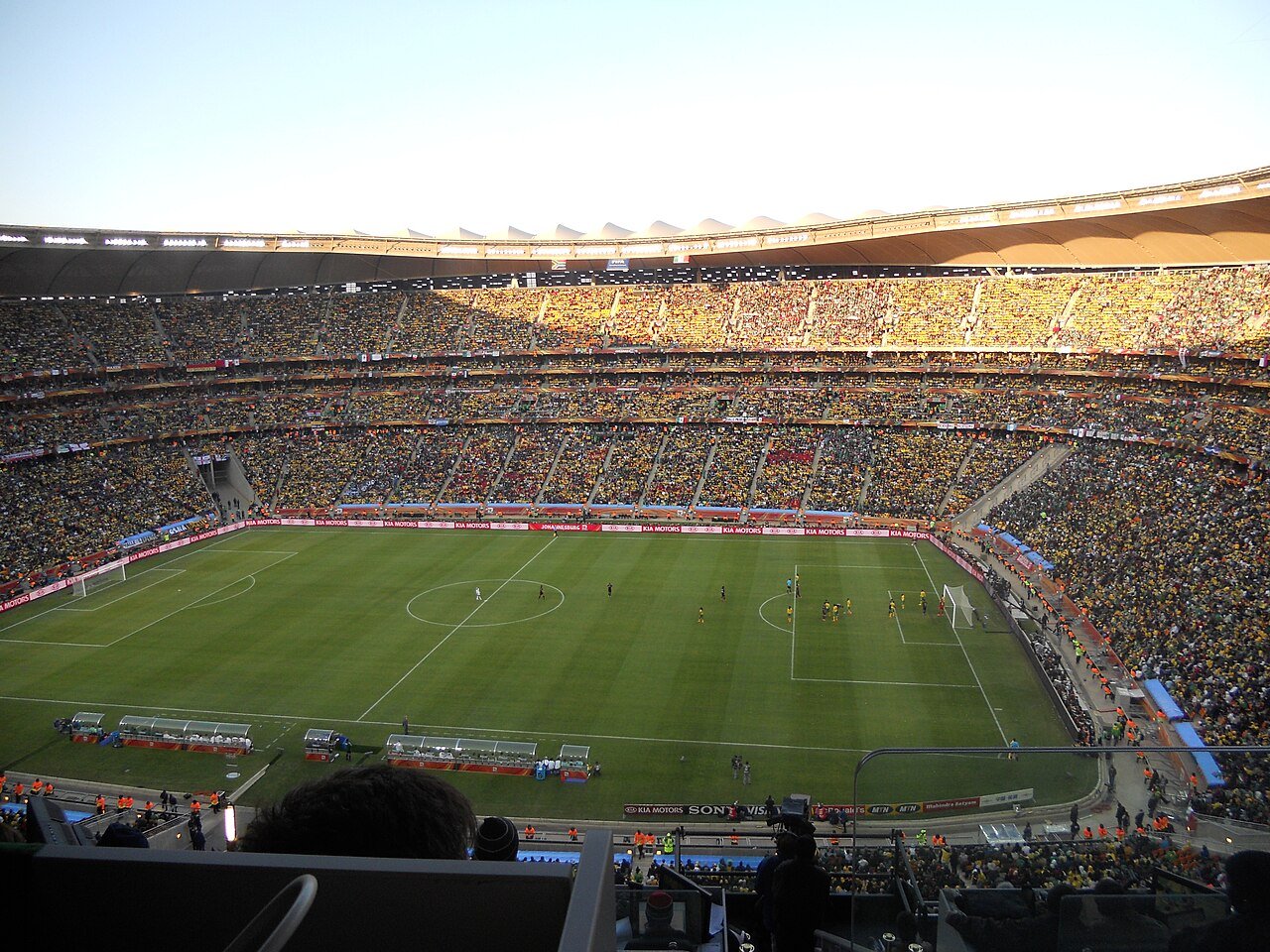
Soccer City, Johannesburg, 84,490 spectators. The Netherlands, who arrived with a very different style of football to the Total Football of 1974, decided that you couldn't beat Spain by playing, so they came out swinging.
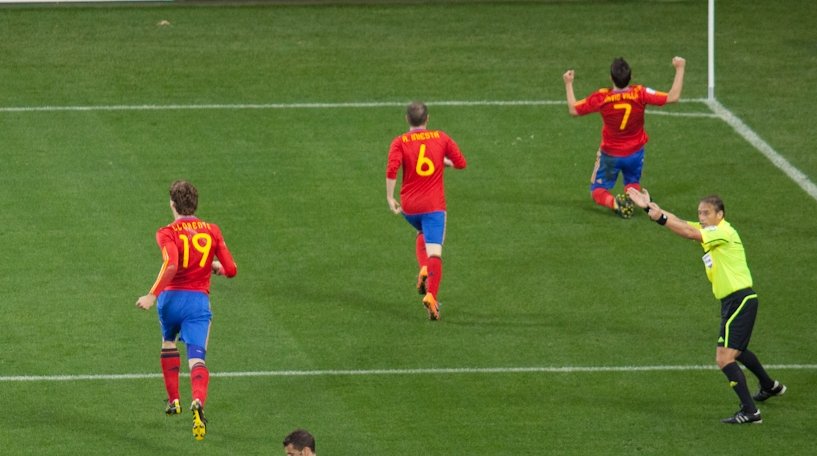
English referee Howard Webb showed fourteen yellow cards, a record for a final. The moment that says it all: Nigel de Jong planted the sole of his boot on Xabi Alonso's chest right at his sternum. Yellow card. Webb has since admitted that today he would have sent him off.
Casillas denied Robben a one-on-one with the tip of his boot when the match was slipping away. And in the 116th minute, Cesc delivered the pass, Iniesta controlled it and buried it. He tore off his shirt to reveal a hand-written message: "Dani Jarque, always with us", for his friend who had passed away a year earlier.
That an octopus from a German aquarium got every World Cup result spot on and there was something inexplicable about it.
That the correct predictions are real: he got all eight forecasts he was asked to make in 2010, including all seven for Germany and the final. And the explanation too: the octopus chose between two transparent boxes with a flag stuck on and food inside, and octopuses react to shapes, contrasts and colours — his preference for horizontal stripes and certain tones has been noted. With two options, getting eight in a row right has odds of 1 in 256: unlikely, but nothing crazy when dozens of animals around the world were making predictions and only the one that got it right became famous. Paul died in October 2010 and his aquarium built him a monument.
That that team won by just passing the ball around pointlessly and grinding out 1-0 wins.
That eight goals in seven games is a fact, and it's the lowest tally for any champions. But it's worth looking at the other end: just two goals conceded in the whole tournament and none from the quarter-finals onwards. And above all, the context: their opponents stopped trying to beat Spain at football. The Netherlands made their point with De Jong's sole. When every single rival's plan is to stop the game being played, winning four straight knockout ties 1-0 isn't lack of ambition: it's resilience.
That Luis Suárez robbed Ghana of Africa's first-ever World Cup semi-final with a handball on the line, and got away with it unpunished.
That he didn't get away with it unpunished: he was sent off and a penalty was awarded, which is exactly what the rulebook says. What happened next wasn't his fault — Asamoah Gyan smashed the penalty against the crossbar in the dying moments of extra time and Uruguay won the shootout. The debate isn't about whether there was punishment, but about whether punishment is enough when a handball denies a certain goal. Suárez has never shown remorse and called it "the Uruguayan hand of God". Ghana still hasn't reached a semi-final.
The first African World Cup
Spain's story shouldn't overshadow the other side: it was the first time the tournament was played in Africa, sixteen years after the end of apartheid, and there'd been plenty of doubt about whether South Africa could pull it off. They did.
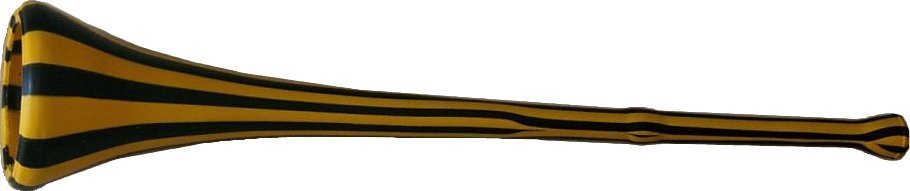
What remained were vuvuzelas, that constant buzzing that drove half the world's viewers mad and nearly got banned by FIFA. And the shock exits of the previous two finalists: Italy and France both went out in the group stage, with the French in the middle of an internal revolt, their players refusing to train.
What it left behind
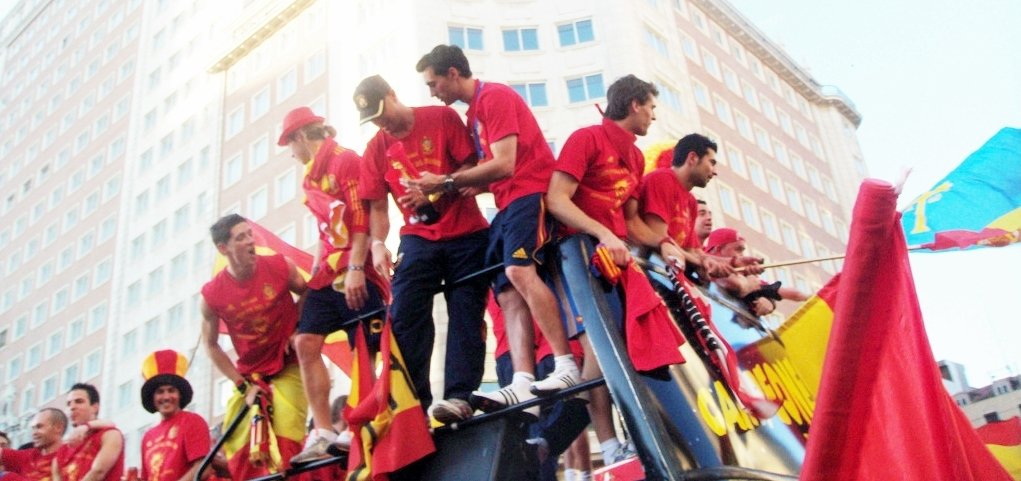
Spain became the eighth country to win the World Cup and the first to win a European Championship, a World Cup and another European Championship in succession. The photo of the bus down the Castellana, the I am Spanish, and that summer are one of those things people who lived through them remember with perfect clarity.
And for this series it has a nice ending: the country that missed a World Cup because of a ballot slip in 1954, the one with failure at home in 1982, the one with Tassotti's elbow and the disallowed goals in Korea, took eighty years and did it in one shot.
- 2010 FIFA World Cup — Wikipedia
- RSSSF — complete 2010 tournament data
- The photos from the final and the celebrations are from fans and media with Creative Commons licences, via Wikimedia Commons; each one credits its author below.

💬 Comments
Have your say, YouTube-comments style but at home. Be polite — decent folk read this.