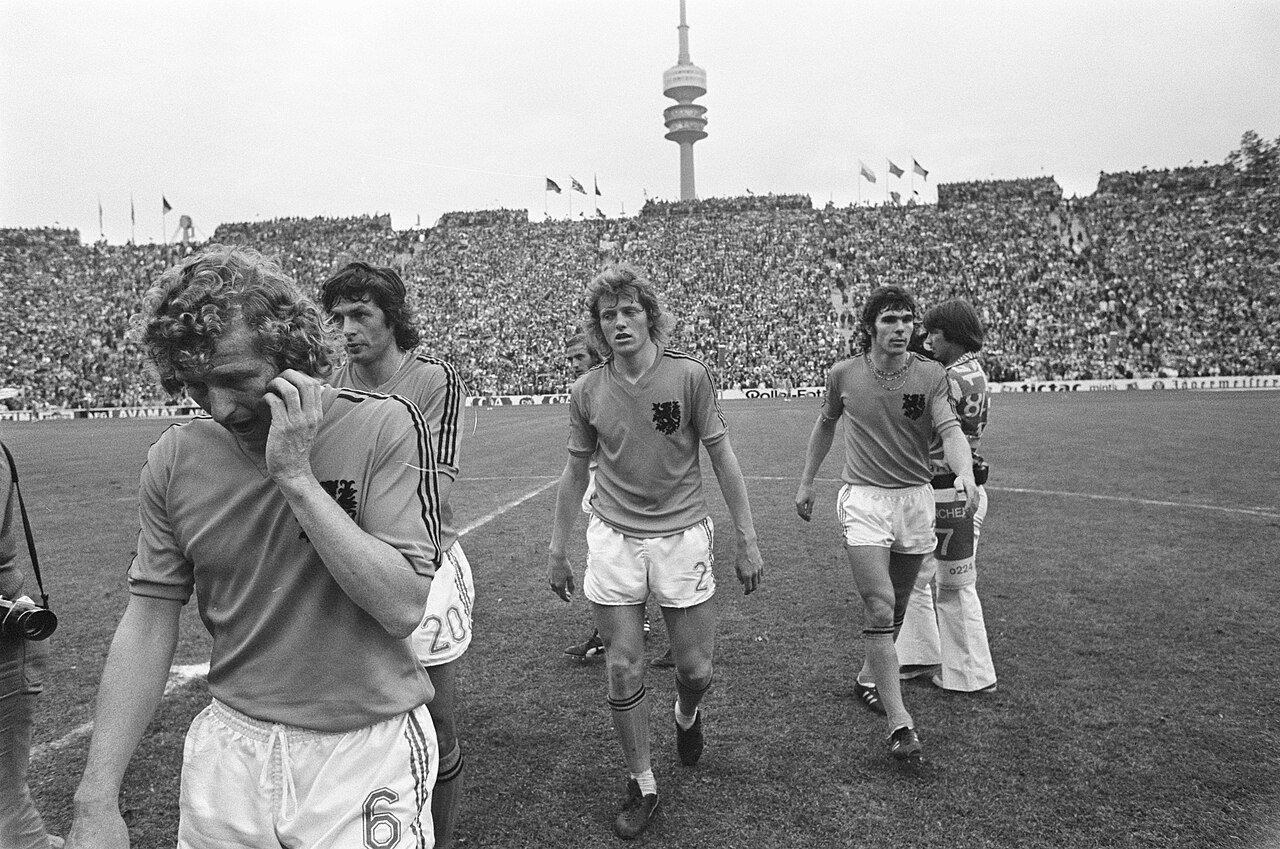
Germany 1974: The Total Football Orange that invented modern football and lost, and the penalty in minute 2

- Germany invented modern football in 1974 with its innovative play system known as the 'Mechanical Orange'
- The German team lost the 1974 World Cup final despite its tactical superiority and revolutionary play
- A penalty in minute 2 was decisive in the final result of the competition
In 1970, Brazil took the Jules Rimet Cup outright and a new trophy had to be made. The one handed out in Munich in 1974 is the one still being lifted today. And with the trophy came a change in how the game was played.
🇩🇪 The 1974 World Cup by numbers
- Host nation
- West Germany
- Teams
- 16
- Champion
- 🏆 West Germany
- Runner-up
- Netherlands
- Final
- West Germany 2-1 Netherlands
- Stadium
- Olympic Stadium · Munich
- Attendance
- 75,200
- Top scorer
- Grzegorz Lato (Poland), 7 goals
Total football
What the Dutch did in 1974 is still being taught in coaching schools. The idea, which came from Ajax under Rinus Michels, was simple to describe and incredibly difficult to execute: any player could play in any position. If the full-back pushed forward, someone covered his space; if the striker dropped deep to receive, another attacked the space he'd left. Everyone attacked and everyone defended, and the team stretched and compressed like an accordion.
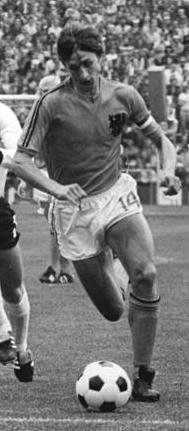
At the heart of it all, Johan Cruyff. He wasn't just the best player: he was the one who understood the system better than anyone and controlled it from within.
On 19 June, against Sweden, Cruyff made the move that would outlive both him and his team: he feinted the cross, pushed the ball behind his standing leg and left defender Jan Olsson sitting on the grass. It's the Cruyff Turn, and today seven-year-olds practise it in every playground in the world.
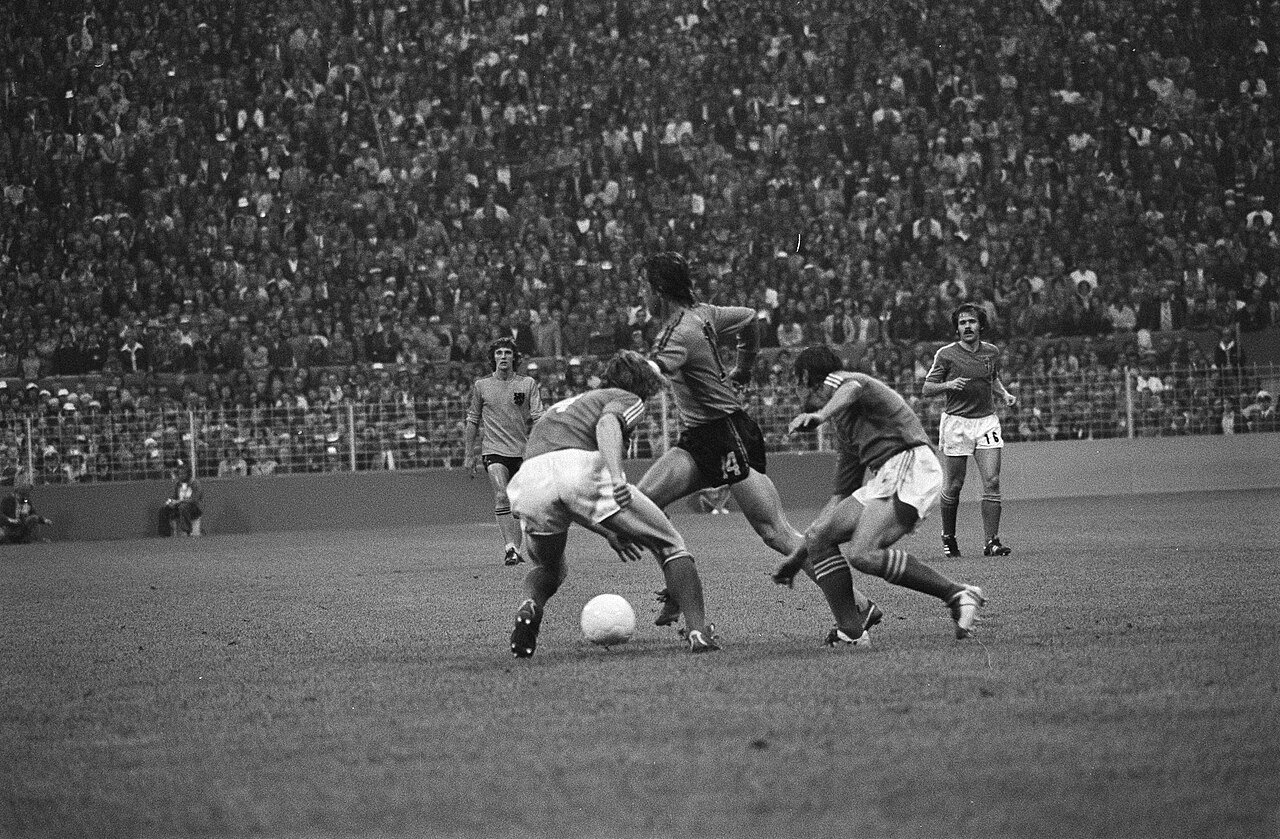
Holland steamrolled everyone. 4-0 over Argentina and 2-0 over Brazil, the defending champions. They reached the final without conceding a goal in open play.
The two Germanys, face to face
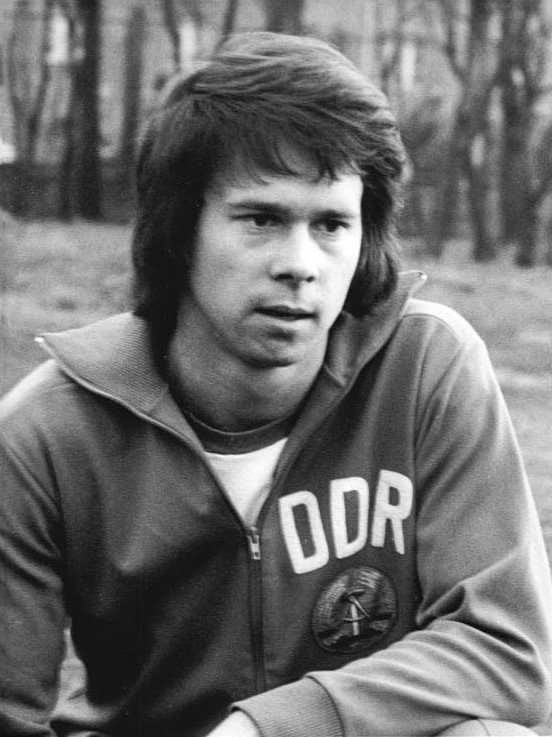
The draw did something that had never happened before and would never happen again: it put West Germany and the German Democratic Republic in the same group. With the Wall standing and the Cold War at its height, the two nations faced each other on 22 June in Hamburg.
The East won, 1-0, with a goal from Jürgen Sparwasser. It was a political earthquake and the most famous goal in GDR football history.
Now here's the bit most people leave out: that defeat actually helped West Germany. With both teams already qualified, losing meant finishing second in the group and ending up in the easier second phase bracket — Yugoslavia, Sweden and Poland — while the GDR went into the group with Brazil, Argentina and Holland. That humiliating defeat actually cleared their path to the title.
Zaire, and what really happened with that free kick
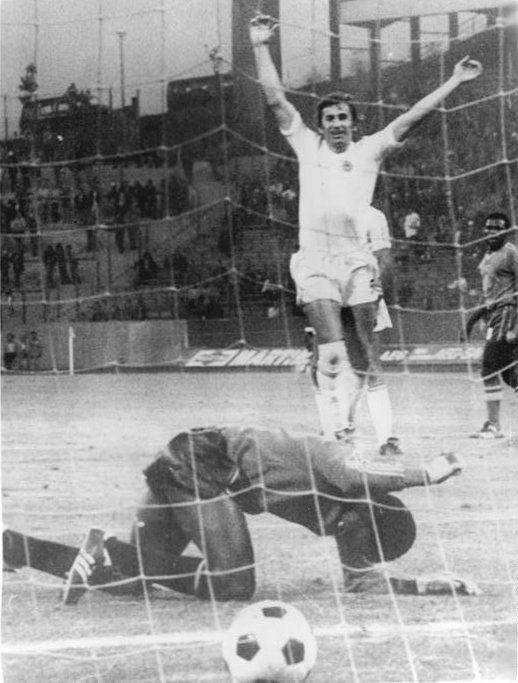
Zaire — today the Democratic Republic of the Congo — was the first sub-Saharan African team to play in a World Cup. And what everyone remembers from it is a joke that's been doing the rounds for fifty years.
Against Brazil, during a free kick, defender Mwepu Ilunga ran out of the wall and cleared the ball before it was even in play. The referee showed him a card. For decades it was told as proof that those players didn't even know the rules.
The reality is far uglier. Zaire had just lost 9-0 to Yugoslavia, and Mobutu's regime sent them a message: if they lost by four goals or more, they weren't coming home. Ilunga explained years later that he knew exactly what he was doing: he wanted to get sent off. On top of that, they hadn't been paid what they were promised for weeks. Zaire lost 3-0 to Brazil, staying under the limit.
The final: the penalty in the 2nd minute
7th July, Olympiastadion Munich. Holland kicked off and started passing. Fourteen or fifteen passes in, without a single German having touched the ball yet, Cruyff went into the box and Uli Hoeneß brought him down. Penalty. Neeskens scored it. First penalty in World Cup final history, and the scoreline 1-0 before the opposition had even touched the ball.
And then the usual Germany thing happened. Breitner equalised from the penalty spot in the 25th and Gerd Müller made it 2-1 just before half-time with an impossible turn inside the box. In the second half Holland attacked relentlessly and just couldn't find the back of the net.
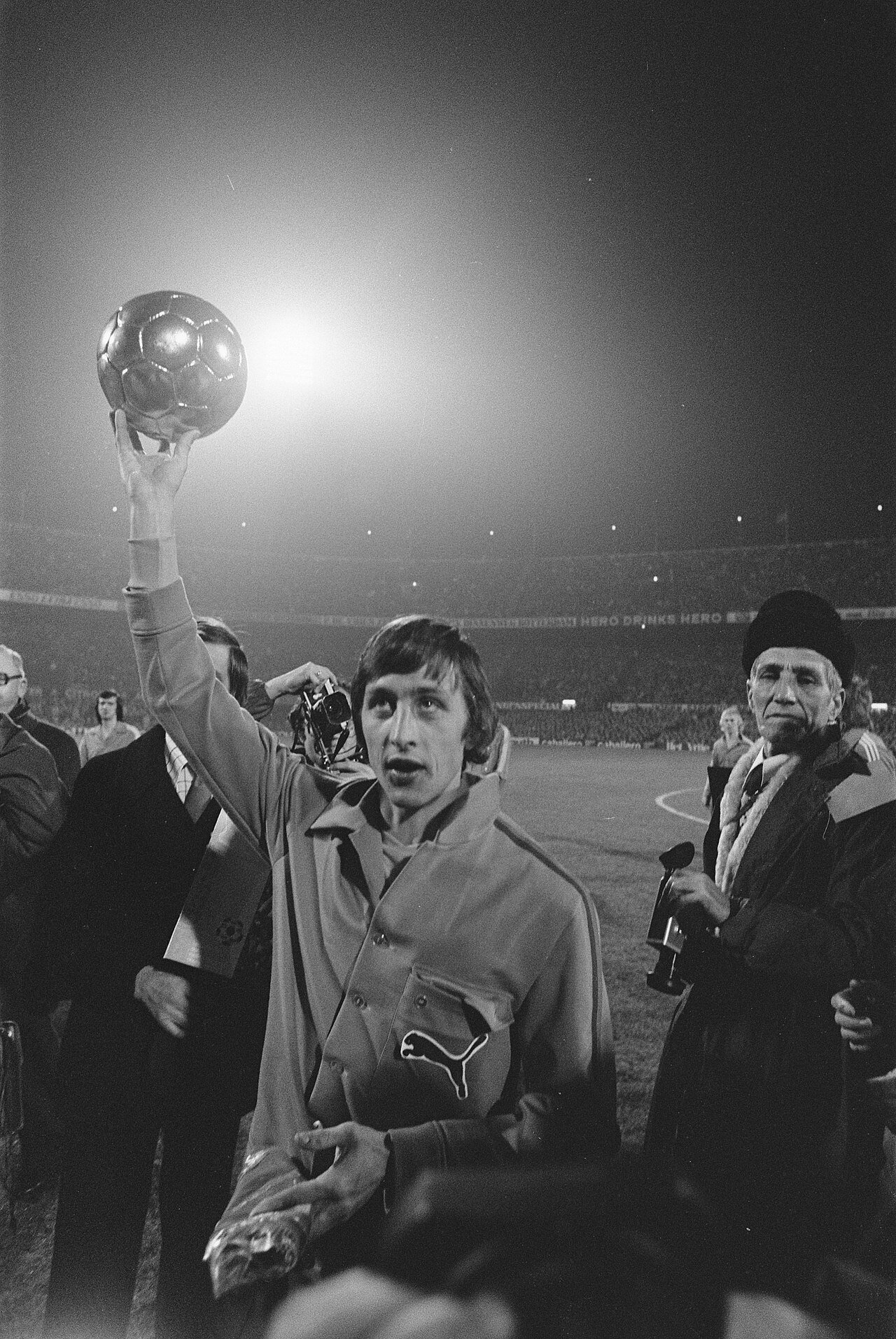
Cruyff went home with the silver medal and the Golden Ball for the tournament's best player.
That he refused to play in Argentina in protest against Videla's military dictatorship. This is the version that's been told for thirty years and what almost every documentary claims.
That he himself debunked it in 2008. The real reason was a kidnapping attempt at his Barcelona home in 1977: armed men broke in at night, tied him and his wife up in front of their children and held them at gunpoint. After that he decided he wasn't separating from his family again. Cruyff explicitly denied both the political version and claims of a row with the Dutch federation over sponsorship. It's a textbook case: for decades he was credited with a political gesture he never made, and the truth was far darker and far less heroic.
That Zaire's defender ran out of the wall and cleared the free kick because he didn't know the rules. It's one of the most-watched "funny" clips in World Cup history.
That he explained years later it was deliberate: he wanted to get sent off. Zaire had just conceded a 9-0 hammering and the team had received word that if they lost by four goals or more they wouldn't be going home; besides, they hadn't been paid in weeks. It's highly unlikely an international footballer wouldn't know when the ball is in play. Fifty years of jokes masked a real threat.
That defeat against communist East Germany was the biggest embarrassment in their history.
That the political blow was huge, that's undeniable. But it worked out well for them tactically: both teams were already through, and losing put them in the easier second-round group while East Germany ended up with Brazil, Argentina and Holland. West Germany became champions; East Germany didn't make it past that stage and never qualified for another World Cup. That 1-0 is the only match ever played between the two Germanys.
What remained
What remained was the phrase that sums up this chapter: Holland 74 is the most remembered runners-up in history. Total football changed the sport — Ajax, Cruyff's Barcelona, tiki-taka and much of what's played today all come from it — and yet it won nothing. Cruyff never played in another World Cup.
And what remained was an uncomfortable lesson that runs through this series since 1954: the team that enchants and the team that wins are almost never the same.
- 1974 FIFA World Cup — Wikipedia
- RSSSF — complete tournament data for 1974
- Cruyff reveals in 2008 the kidnapping attempt that kept him from the 1978 World Cup — The Irish Times
- The photos from the final and of Cruyff come from the Anefo archive of the Dutch National Archives (CC0); those of East Germany and Zaire from the German Bundesarchiv (CC BY-SA). Each carries its credit at the bottom.

💬 Comments
Have your say, YouTube-comments style but at home. Be polite — decent folk read this.