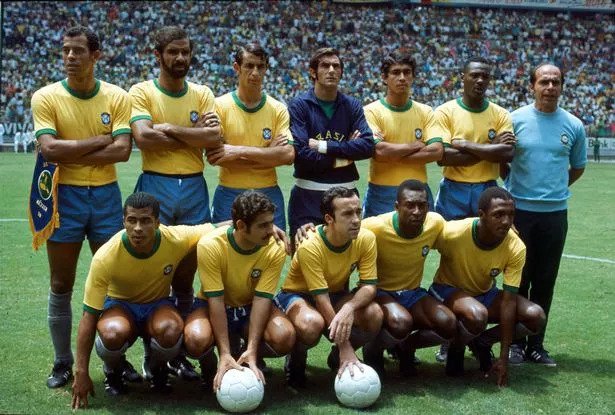
Mexico 1970: the greatest team in history, the first World Cup in colour and the Cup Brazil kept forever

- Mexico 1970 was considered the best team in the history of world football
- The 1970 World Cup was the first championship completely broadcast in color
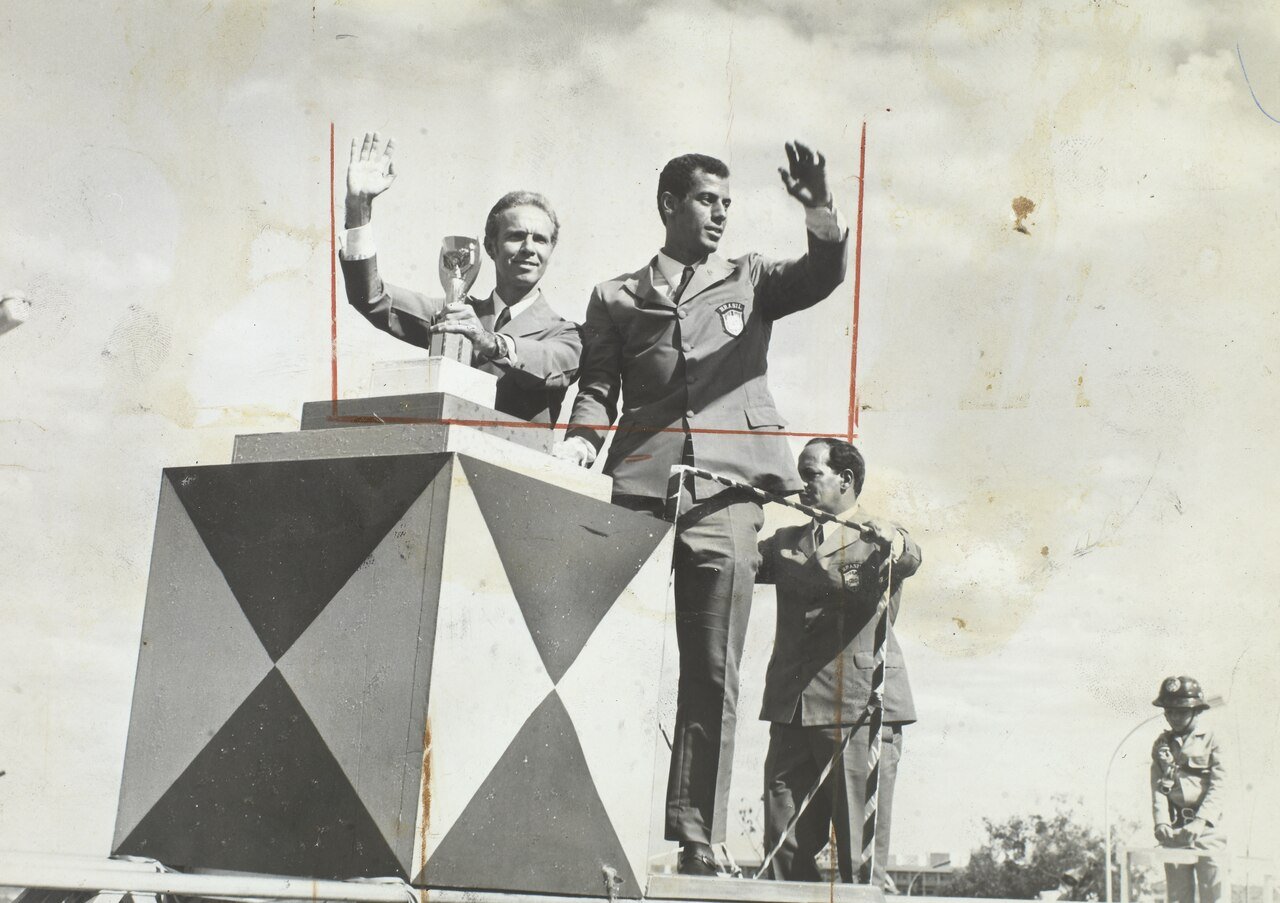
- Brazil won the 1970 World Cup and kept the trophy permanently
Until now, this series has been in black and white. The Wembley ghost goal we saw in grey and with poor definition, which is why it's still debated today. In 1970 football changed colour, literally: satellite arrived, colour television arrived and for the first time the whole planet saw just how yellow Brazil's shirt really was.
🇲🇽 1970 World Cup by the numbers
- Host
- Mexico
- Teams
- 16
- Champions
- 🏆 Brazil
- Runners-up
- Italy
- Final
- Brazil 4-1 Italy
- Stadium
- Azteca · Mexico City
- Attendance
- 107,412
- Top scorer
- Gerd Müller (West Germany), 10 goals
The five number tens
Legend has it that Brazil brought together the five best number tens from their league in the same team: Pelé, Gérson, Tostão, Rivelino and Jairzinho. On paper it was madness — five creative players, no defensive midfielder — and many thought it couldn't work. It worked so well that it's still the benchmark by which every team is measured.
Jairzinho did something no one's repeated: he scored in all six tournament matches, including the final. He won the entire World Cup always finding the back of the net.
And the curious thing about Pelé in this tournament is that his most memorable plays didn't end in goals: the shot from midfield against Czechoslovakia that shaved the post, the dummy without touching the ball in front of Uruguayan keeper Mazurkiewicz, and above all the header that Gordon Banks pulled off in a match against England. That save still appears in every list of greatest saves in history.
The war that wasn't caused by a match
Something happened in the qualifying phase for this World Cup that's always told wrong. In July 1969, El Salvador and Honduras faced each other in a playoff and shortly after an armed conflict lasting around a hundred hours broke out between the two countries, known as the Football War.
The name has done a lot of damage to understanding what actually happened. The matches were the trigger and the pretext, not the cause: behind it all were years of tension over Salvadoran peasants migrating to Honduras, over Honduran land reform that expelled them from their lands and an unmarked border. Football lit the spark to a powder keg that was already in place.
Cards, substitutions and heat
Three things we take for granted today were born here.
Yellow and red cards. They made their debut at this World Cup. The idea came from Ken Aston, the English referee who'd suffered through the Battle of Santiago in 1962 — he came up with the colour-coded system sitting at a traffic light, looking for a way a player could understand they'd been cautioned even if they didn't speak the referee's language. Curiously, not a single red card was shown in Mexico 70.
Substitutions. For the first time two substitutions per team were allowed. Until then, if you got injured, your team played with one fewer player — and that explains half a dozen stories from previous chapters.
And the heat. Matches were played at midday, with brutal temperatures and at altitude, so they could be broadcast during peak viewing hours in Europe. It's the first time you can clearly see that TV business dictates the schedule.
The Match of the Century
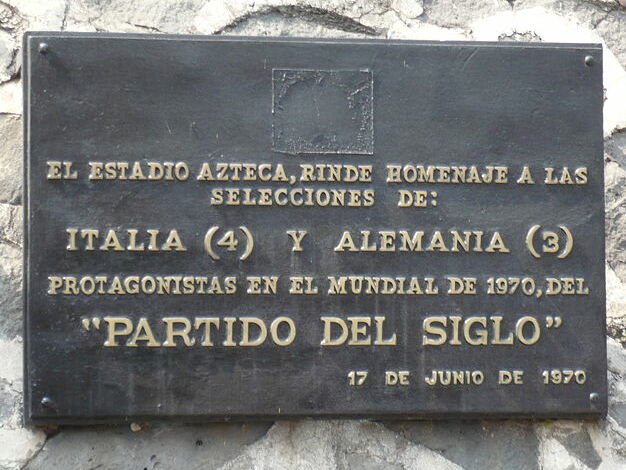
The semi-final between Italy and West Germany, at the Azteca, finished 4-3 to Italy. The 90 minutes ended 1-1 and in extra time five goals were scored.
The image that remained was Franz Beckenbauer playing with his arm strapped to his body in a sling, with a dislocated shoulder, because Germany had already used their two substitutions. He soldiered on like that for the rest of the match.
There's a plaque at the Azteca that commemorates it. It's the only football match in the world with a commemorative plaque in the stadium where it was played.
The final: the goal that gets studied
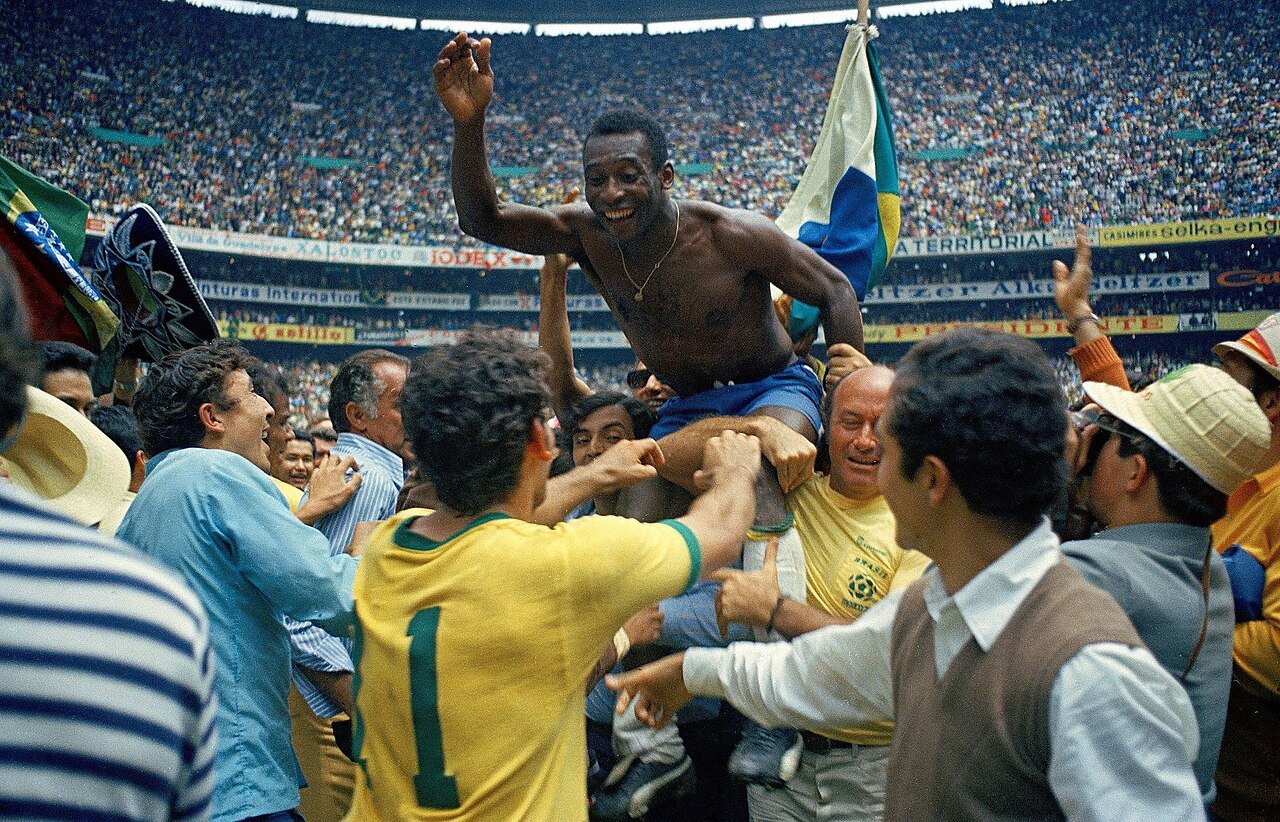
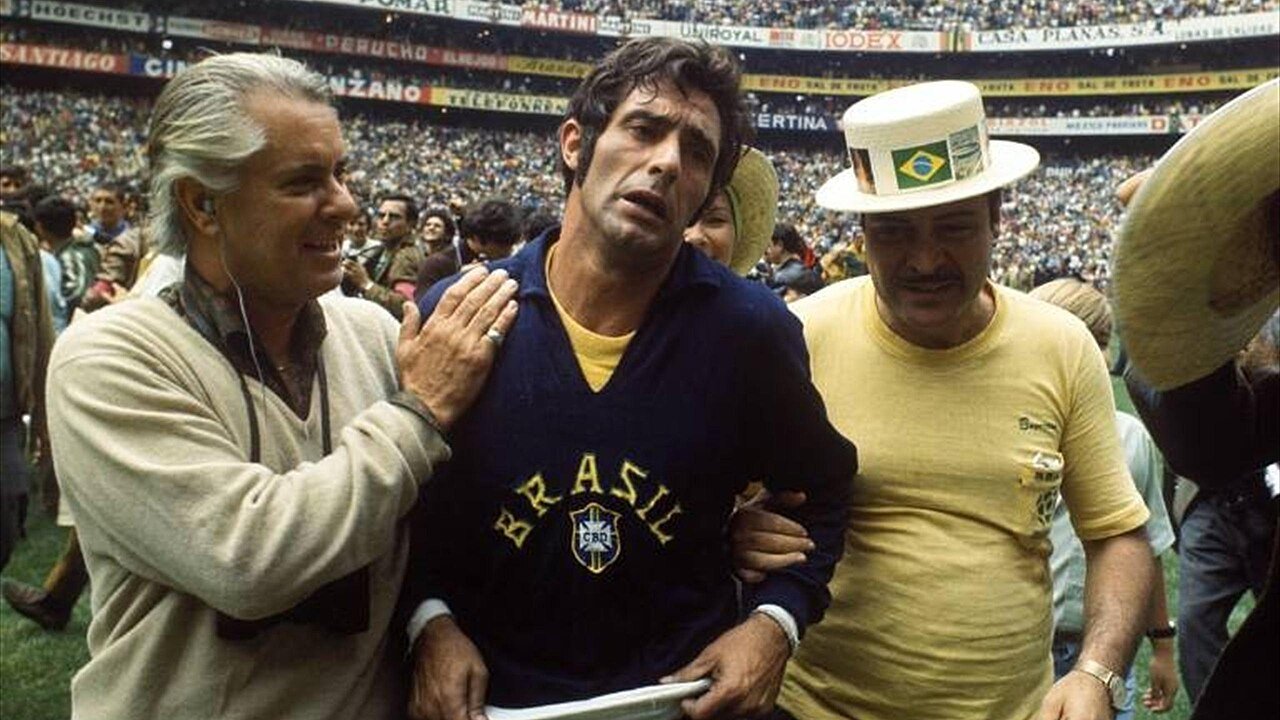
June 21st, Azteca, over 107,000 people. Brazil against Italy's catenaccio, the tournament's most defensive team. 4-1.
And the fourth goal, Carlos Alberto's, is probably the most analysed play in football history: a lengthy sequence involving almost the entire team, with Clodoaldo dribbling past four Italians, and ending with Pelé's blind pass — leaving the ball dead to the right, where he knew his captain was coming — and a thunderbolt strike from the wing.
It's not just a stunning goal. It's a one-minute masterclass in why that team is remembered the way it is.
That a qualifying match for this World Cup triggered a war between El Salvador and Honduras.
That the war did happen and the matches lit the fuse, but the real causes ran much deeper: hundreds of thousands of Salvadorans had emigrated to Honduras, Honduras' land reform began expelling them, the border hadn't been properly defined in decades, and both governments had domestic troubles they wanted to bury. Football was the excuse and the spark. Calling it the «football war» makes for a neat headline and does a huge disservice to what really went on.
That 1970 was the first one you could watch in colour.
That it's essentially true — it was the first broadcast in colour and via satellite to the whole world — but worth clarifying: colour footage existed from earlier tournaments, and in some countries colour broadcasts came later. What's indisputable is the leap: in 1966 the planet watched a World Cup in black and white, and in 1970 it saw it in yellow, green and blue. That contrast is real and explains a good part of the mystique around this team.
That Brazil kept the original trophy outright for winning three World Cups.
That it's absolutely true: those were the rules and Brazil earned it in 1970. What hardly anyone mentions is what happened next. In 1983 the Jules Rimet Cup was stolen from the Brazilian federation's headquarters in Rio de Janeiro and was never recovered: it's believed to have been melted down. The trophy that Barassi had saved by hiding it in a shoebox during the war ended up disappearing in peacetime.
What remained
What remained was jogo bonito as an ideal, the yellow shirt as a global symbol, and an argument that's never been settled: whether that Brazil team is the greatest ever. It has serious competitors — Hungary '54, Holland '74, Spain 2010 — but it's the only one that combined the best football with the best result.
And what remained was the end of an era. Pelé retired from international football shortly after. The next revolution wouldn't come from Brazil, but from a small country in northern Europe that was about to reinvent how the game is played.
- 1970 FIFA World Cup — Wikipedia
- RSSSF — complete data from the 1970 tournament
- From 1970 onwards, almost all World Cup photographic material is agency-protected. Here we only use public domain or Creative Commons images, which is why you'll see fewer action shots than in earlier chapters.
- Photos include their author and licence at the bottom, via Wikimedia Commons.