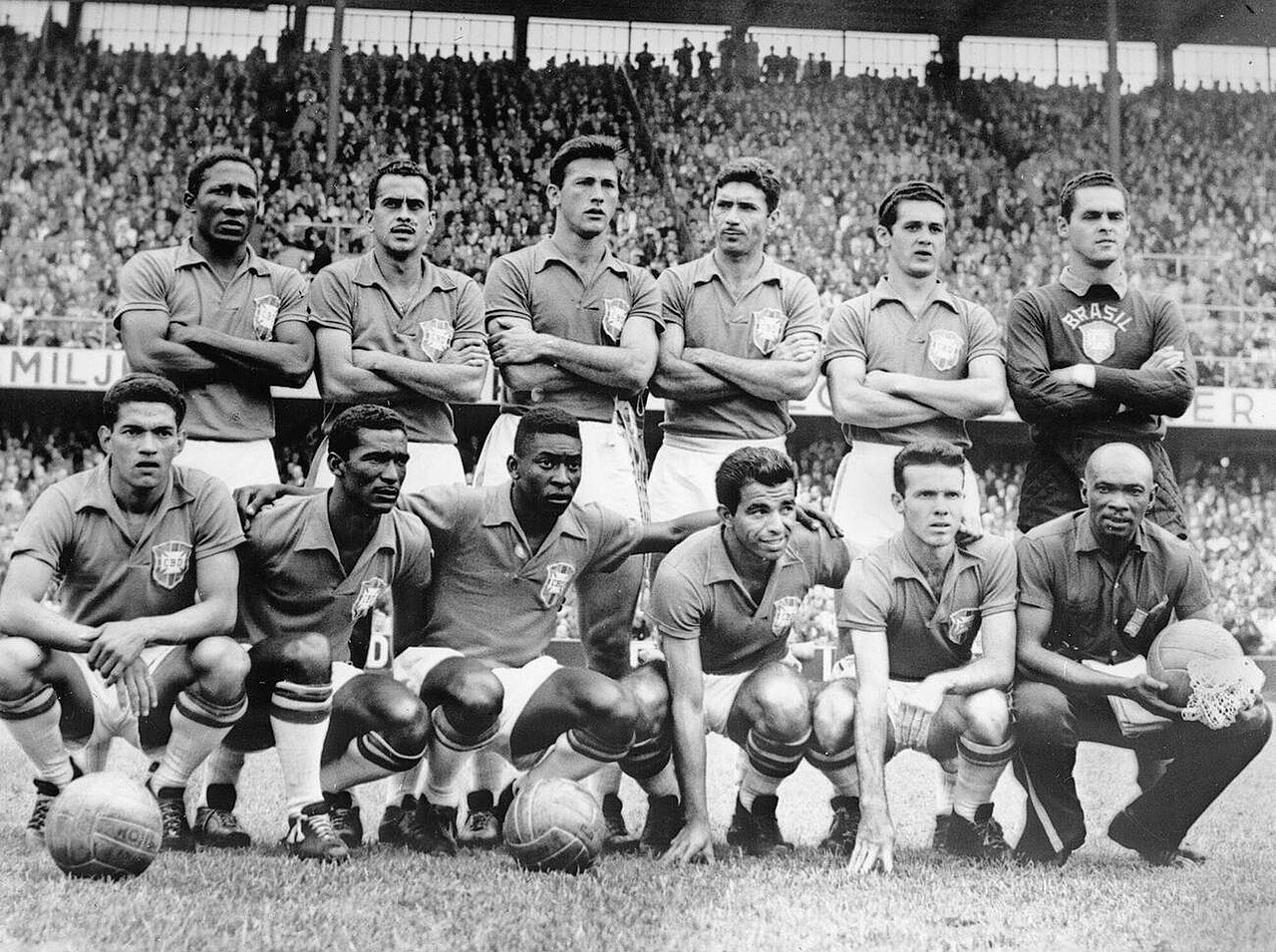
Sweden 1958: Pelé emerged at 17, and Fontaine's 13 goals that no one has matched

- Pelé debuted at the 1958 Sweden World Cup at just 17 years old, marking his presence in the world competition
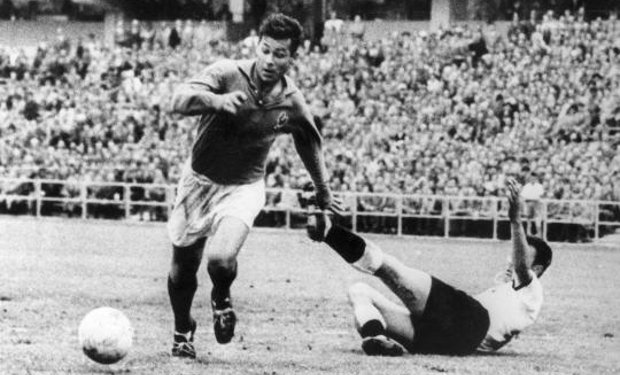
- Just Fontaine scored 13 goals in the 1958 Sweden tournament, a record that no player has matched since then
- The 1958 Sweden World Cup was memorable for the emergence of young talents and the establishment of historic goalscoring records
After the Miracle of Bern, world football had lost its point of reference: Hungary was torn apart by the 1956 uprising and their best players ended up scattered across Europe. The gap was filled by a country carrying an eight-year wound. Brazil came from the Maracanã disaster and arrived in Sweden with a seventeen-year-old kid on the squad list.
🇸🇪 The 1958 World Cup in numbers
- Host nation
- Sweden
- Teams
- 16
- Champions
- 🏆 Brazil
- Runners-up
- Sweden
- Final
- Brazil 5-2 Sweden
- Stadium
- Råsunda · Solna
- Attendance
- 51,800
- Top scorer
- Just Fontaine (France), 13 goals
The kid who shouldn't have played
Brazil brought to Sweden something unheard of at the time: an entire support team, with doctor, dentist and psychologist. The psychologist's name was João Carvalhaes and he ran tests on the squad. His conclusions, which are documented and nowadays feel a bit cringey, were that Pelé was "infantile" and lacked the sense of responsibility needed for a World Cup, and that Garrincha was mentally unfit to play under pressure.
Manager Vicente Feola read the report and ignored it. Both started the tournament on the bench and came on together in the third match, against the Soviet Union. Brazil never lost again.
Pelé scored his first World Cup goal against Wales in the quarters: the 1-0 that sent Brazil into the semis. Then he scored three against France in the semifinal and two in the final. He was 17 years and 249 days old when he lifted the cup.
Thirteen goals: the record that won't be broken
The other story from that World Cup is that of Frenchman Just Fontaine, who in six matches scored thirteen goals. To give you a sense of how mad that is: Mbappé scored eight across the entire 2022 World Cup and that's considered a historical exhibition. Kocsis had done eleven in 1954. Nobody's come close to thirteen since then.
And the most incredible bit: Fontaine wasn't even a starter when the tournament began. He got his chance because someone else got injured and ended up as the top scorer in World Cup history.
The final: 5-2 and the blue shirt
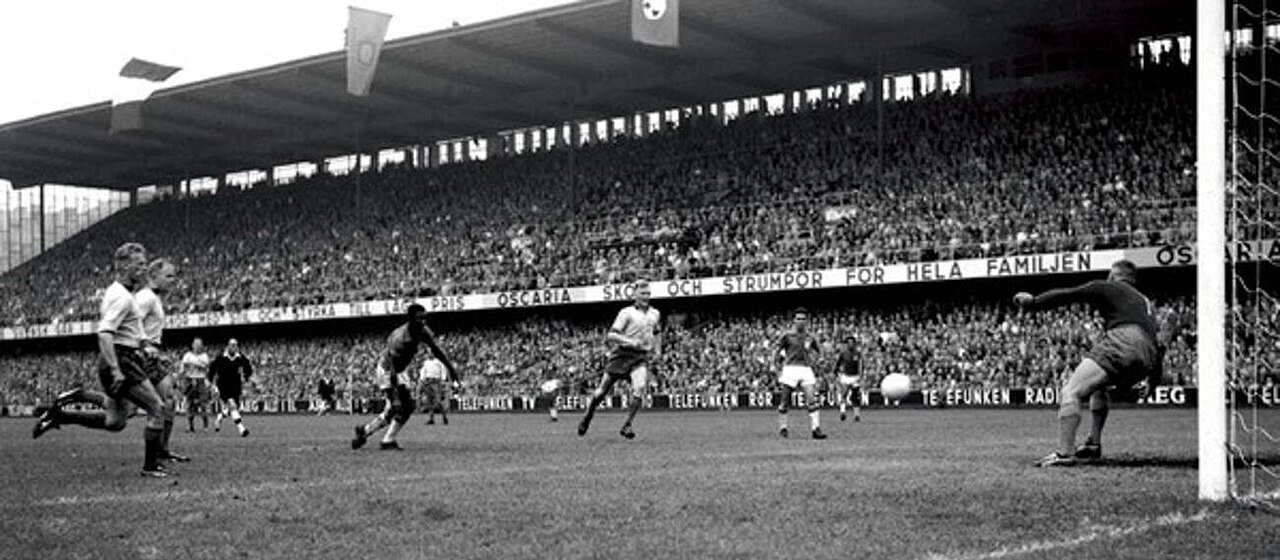
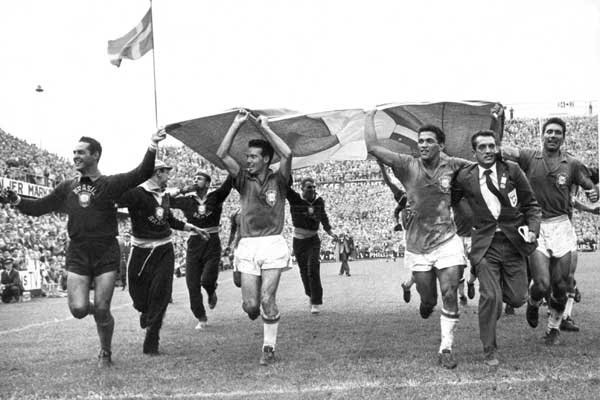
29 June, Råsunda in Solna. Sweden went ahead after four minutes and that was the only time in the entire match that Brazil trailed. Vavá equalized, Vavá turned it around, Pelé made it three with a thigh trap and a chip inside the box that keeps popping up in every highlight reel, Zagallo made it four and Pelé the fifth with a header. 5-2.
Brazil played in blue because Sweden wore yellow and there was no alternative kit prepared. That blue shirt is today one of the most iconic pieces of Brazilian football kit.
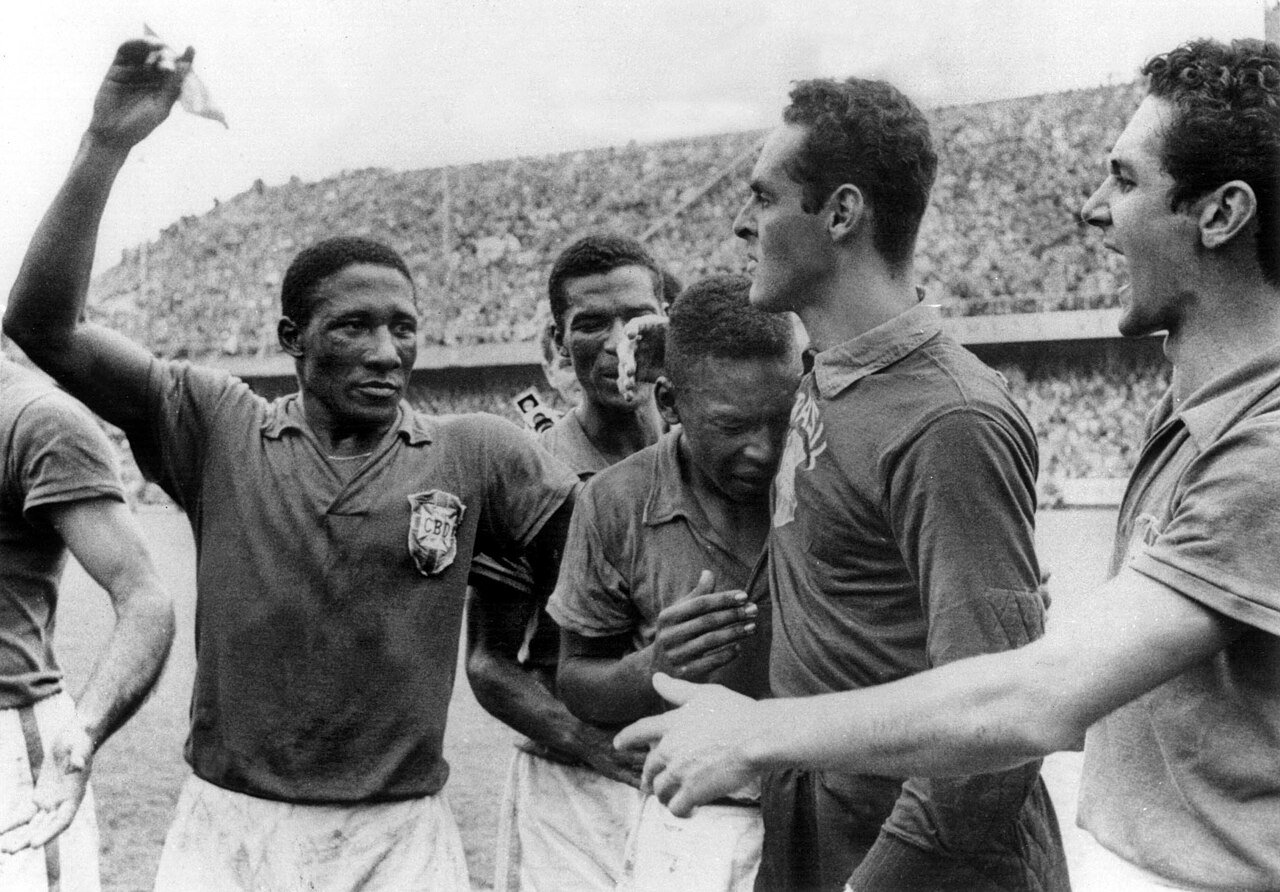
At the final whistle, Pelé broke down crying on the shoulder of goalkeeper Gilmar. The photo is one of the most famous in sports history, and it explains why from that day forward he wasn't just a kid anymore: he was O Rei.
That 1958 was the first World Cup you could watch on television and that's why the whole world got to witness Pelé's birth as a superstar.
That the first televised one was 1954, in Switzerland, broadcast through the Eurovision network — FIFA itself confirms it. What is true about 1958 is that coverage expanded massively and reached far more countries, so the "the whole world saw it" has a grain of truth. But the "first televised World Cup" trophy belongs to Switzerland 54.
That Brazil had no spare kit, that a director rushed out to buy blue shirts from a shop in central Stockholm the night before and that the badges were sewn on by hand.
That the blue part is absolutely true — there was a colour clash with Sweden's yellow and Brazil played in blue — but the details of the purchase vary wildly depending on who's telling it: which shop, what day, who went, whether they were new shirts or the training kit. There's no single documented version. Curiously, Brazil had already played in blue before: in the 6-5 demolition of Poland in 1938, wearing their training gear.
That at eight years old, after seeing his father cry over the Maracanazo, he promised to win him a World Cup. And he delivered in 1958.
That the story comes from Pelé himself, who told it many times throughout his life. There's no way to verify a private conversation from 1950 between a boy and his father, so it's a memory, not a verifiable fact. What does check out is everything else: his father, Dondinho, was a footballer, the family lived in Bauru and all of Brazil was still scarred by that defeat.
What lasted
Brazil won in Europe, and no South American team has done it since: not Brazil, not Argentina, not Uruguay. Of the thirteen Cups won by South Americans, that's the only one lifted on European soil.
And what lasted was the 4-2-4 and the jogo bonito, what lasted was Garrincha — who gets his own chapter in this series at 1962 — and what lasted was the certainty that Brazil was no longer the country of the Maracanazo. The yellow shirt they'd designed to cover that wound was starting to mean the opposite.
- 1958 FIFA World Cup — Wikipedia
- RSSSF — complete 1958 tournament data
- FIFA — the 1954 World Cup was the first televised
- The photos are in the public domain via Wikimedia Commons; each one carries its author and licence in the caption.
- The stories that depend on a protagonist's memory — Pelé's promise to his father, the shirt purchase — are presented here for what they are.

💬 Comments
Have your say, YouTube-comments style but at home. Be polite — decent folk read this.