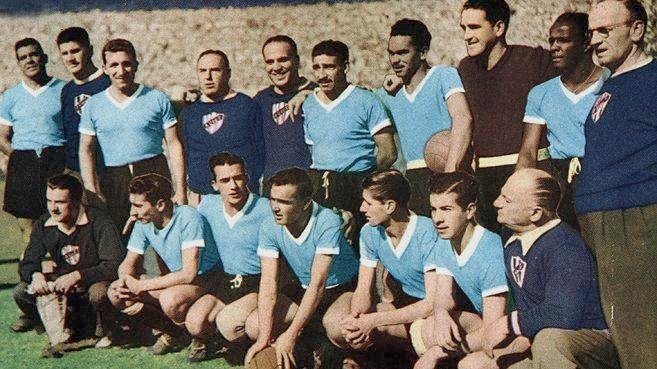
Brazil 1950: the Maracanazo, the only World Cup without a final and Spain's best until 2010

- Brazil 1950 was the only World Cup in history that did not have a traditional final, instead using a decisive final group round
- The Maracanazo was Brazil's traumatic defeat against Uruguay at the Maracanã stadium, considered one of the most significant moments in Brazilian football
- Spain had its best World Cup performance until 2010 in the Brazil 1950 edition
Twelve years without a World Cup. The 1938 edition ended with Europe about to catch fire, and those in 1942 and 1946 weren't played. When the ball rolled again in 1950, it did so in Brazil, in a country that wanted to show the world it was the future. It built the biggest stadium ever seen and prepared for a party. Instead, the opposite happened.
🇧🇷 The 1950 World Cup in numbers
- Host nation
- Brazil
- Teams
- 13
- Champions
- 🏆 Uruguay
- Runners-up
- Brazil
- Final
- Uruguay 2-1 Brazil
- Stadium
- Maracanã · Rio de Janeiro
- Attendance
- 173,850 paying (record in history)
- Top scorer
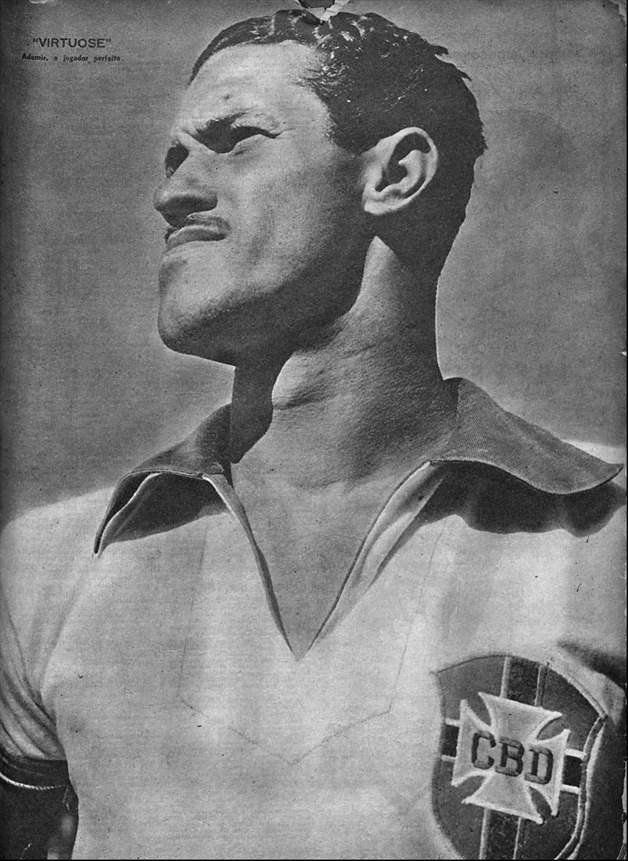
- Ademir (Brazil), 8-9 goals
The only World Cup without a final
This is the first thing to understand, because it explains everything else. Brazil asked for a different format to bring in more revenue, and FIFA granted it: four groups, then a final four-team group stage on a single round-robin basis instead of semi-finals and a final. Champions would be whoever racked up the most points. Frenchman Henri Delaunay walked out of the organizing committee in protest.
Going into the last matchday, the table looked like this:
Brazil 4 points (7-1 over Sweden and 6-1 over Spain, thirteen goals in two matches). Uruguay 3 (2-2 with Spain and 3-2 over Sweden). With a draw, Brazil would finish on 5 and Uruguay on 4: Brazil only needed a draw. Only a Uruguayan victory would turn the tables.
And here's the detail almost nobody makes the connection with: Spain created that one-point margin. If Uruguay had beaten Spain instead of drawing 2-2, they would have arrived level with Brazil and that last match would have been a completely different story.
Spain's best World Cup until 2010
Spain came to Brazil after eliminating Portugal, with Guillermo Eizaguirre as manager and a very strong generation. They won all three group matches: 3-1 over the United States, 2-0 over Chile, and 1-0 over England.
The England one is the match. July 2, Maracanã, minute 49: Gabriel Alonso, a full-back who had strict orders not to cross the halfway line, ditched the gameplan, galloped down the wing and crossed; Gaínza headed it down and Zarra tapped it in. Not even he knew exactly how: "I don't know if it came off my shin or went in off my knee… All I know is it was a goal".
England, making their World Cup debut convinced they owned the sport, went home. The Daily Herald published their match report as an obituary: "Our affectionate remembrance of English football, deceased in Rio de Janeiro on July 2, 1950".
In the final group stage Spain drew 2-2 with Uruguay (two goals from Basora in three minutes), got hammered 6-1 by Brazil, and lost 3-1 to Sweden on the same day and at the same time as the Maracanazo was being played. Fourth place. There was nothing better until South Africa 2010.
Two names to remember: Antoni Ramallets, who wasn't first choice and became goalkeeper because of an Eizaguirre blunder, played such a match against England that he earned the nickname the "Cat of Maracanã"; and Estanislao Basora, who scored four goals, the same as Zarra, and his two came against the future champions.
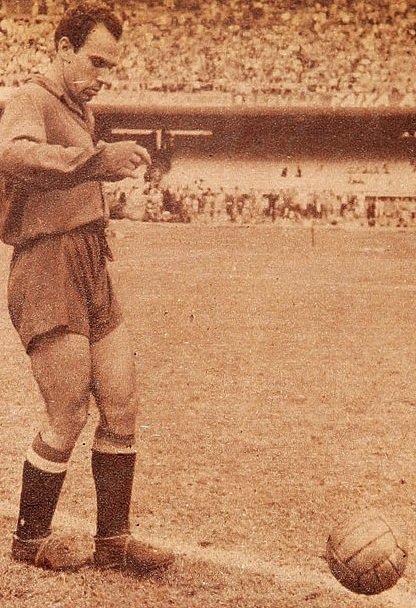
The party that got thrown before kickoff
Brazil arrived at the final match convinced. And not vaguely: documentably convinced.
The Rio newspaper O Mundo ran an early edition on match day with a photo of the squad and the caption "These are the world champions". They had already minted gold medals with each player's name engraved on them. A victory anthem had been composed and rehearsed. Fireworks stood ready. And Jules Rimet was carrying a speech in Portuguese in his pocket to honour the Brazilian champions.
Before the opening whistle, the mayor of Rio rallied the crowd over the loudspeaker: «You, who in just a few hours will be hailed as champions by millions of your compatriots… you, whom I already greet as victors!».
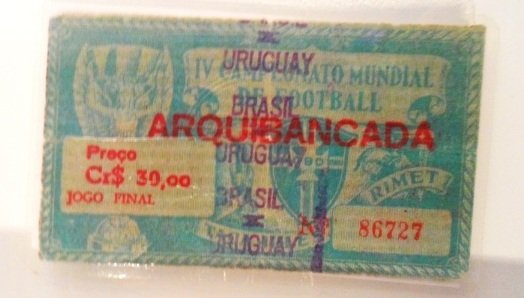
16 July: the silence
In the Uruguayan dressing room, manager Juan López asked them to play defensively. When he left, Obdulio Varela told his teammates the opposite: «Juancito is a good man, but he's got it wrong this time. If we play to defend, we'll end up like Sweden or Spain».
Brazil dominated the first half. Friaça scored in the 47th minute and the Maracanã erupted. Then Varela pulled off the smartest move of the match: he grabbed the ball, claimed an offside that didn't exist and demanded an interpreter to argue with the English referee about it. A few minutes ticked away. The stadium cooled down.
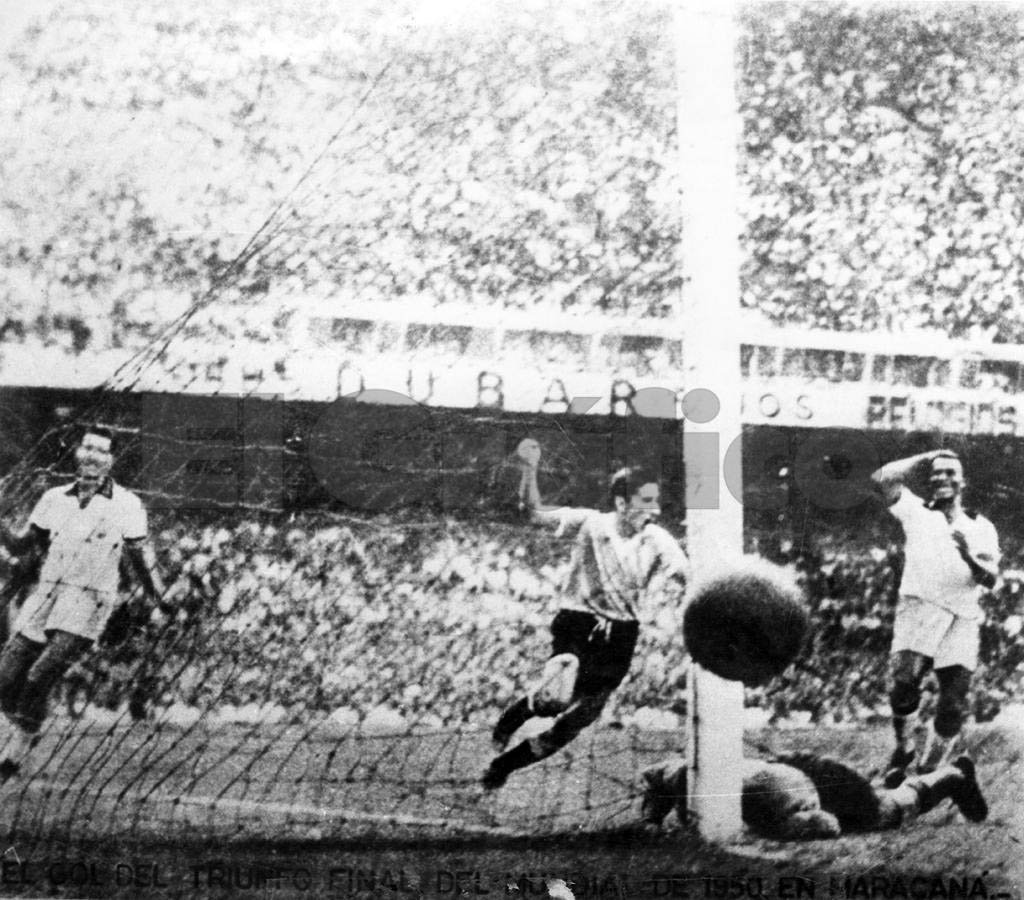
Schiaffino equalised in the 66th minute after a pass from Ghiggia. And in the 79th minute, Ghiggia broke free down the right and shot past Barbosa's near post. 2-1.
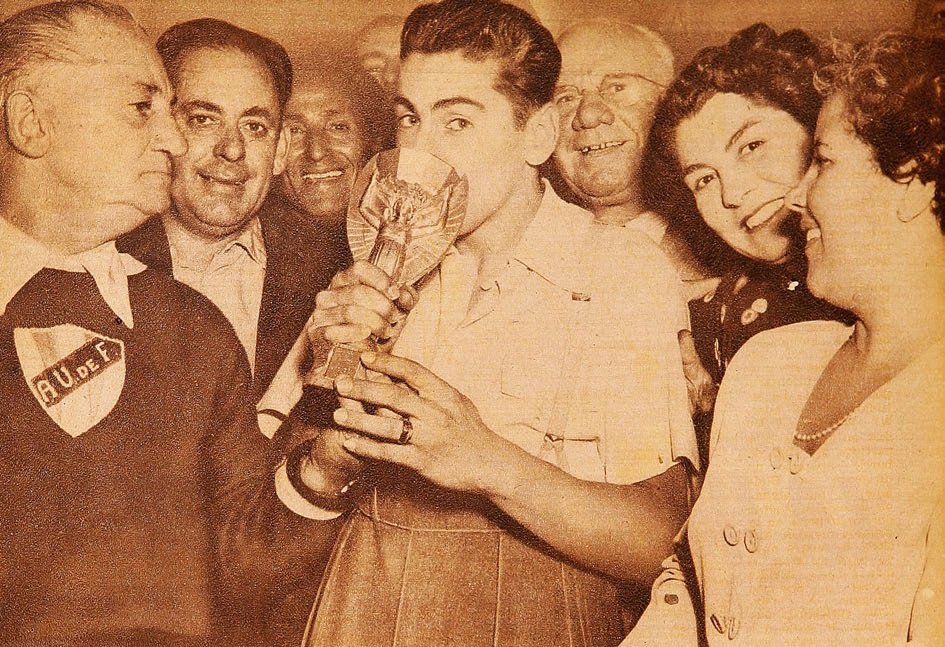
What followed next is what made this match famous: there was no whistle, no uproar. There was silence. Jules Rimet told it himself: «Suddenly there was no guard of honour, no anthems, no speeches at the microphone, no ceremonial trophy presentation… I found myself alone in the crowd, holding the Cup in my arms not knowing what to do. In the end I spotted the Uruguayan captain and handed him the trophy while shaking his hand, unable to say a single word».
Ghiggia summed it up better than anyone: «Only three people have managed to silence the Maracanã: the Pope, Frank Sinatra and me». He died on 16 July 2015, exactly 65 years after his goal.
That after the 2-1, dozens of Brazilians killed themselves. The figures that circulate range from 2 to 34, to 70, to 100.
That there isn't a single contemporary source that documents it. The Brazilian Mundo Esportivo from 21 July, five days later and in tragic tone, mentions no deaths. The figures that circulate contradict each other and grow with the years. Brazilian journalist Geneton Moraes Neto, author of a book about that World Cup, settles it: «I believe the alleged suicides are an urban legend». What the press of the time actually reported was the opposite: the Rio newspaper A Manhã on 18 July 1950 ran the headline that the emotion had been fatal for eight Uruguayans, who died celebrating.
The round figure that's always repeated.
That the official certified figure is 173,850 paid spectators, and it remains the record World Cup attendance recognised by FIFA and Guinness. The 200,000 is an estimate that includes those who got in without tickets, and there were thousands of them. In other words: the real figure doesn't need inflating, it's already the absolute record.
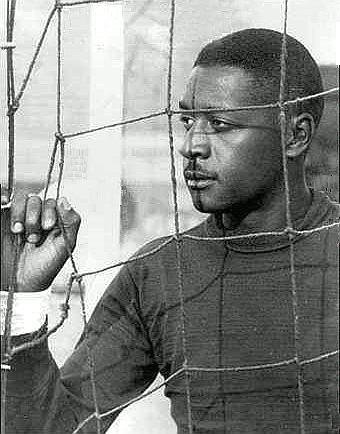
That goalkeeper Barbosa, devastated, burned the Maracanã goalposts in a barbecue to exorcise the goal.
That it's true but people tell it wrong: it wasn't a hot-headed outburst. It happened in 1963, thirteen years later, when the Maracanã replaced its wooden goalposts with new round ones; Barbosa was working at the stadium then, took the old posts home and burned them on a grill with friends. He told the story himself. What's no legend at all is the social punishment: he was barred from the squad's team hotel in 1993 because people feared he'd bring bad luck, and he summed it up like this: «the maximum sentence in Brazil for a crime is thirty years, but I've served a life sentence».
The phrase Obdulio Varela threw at his players before they took the field at the Maracanã, and it's told as if he invented it.
That he did say it — it's documented, and the full version was «Lads, the outsiders are made of wood. Let the show begin» — but he didn't invent it: it's a prior River Plate saying, from the card game truco and other games, meaning that the spectator doesn't get a say. Obdulio didn't create it, he immortalised it.
The bill, and it was always the same people who paid it
Four Brazilian players never wore the shirt again: Augusto, Juvenal, Bigode and Barbosa. The last two, both Black, became the scapegoats for an entire country. And the fact that hurts most from this chapter: Brazil didn't have another Black goalkeeper in the national team until 1995, when Dida arrived. Forty-five years.
The shirt paid for it too. Brazil played in white, and that white became cursed. A public competition was announced to design new kit in the flag's colours and it was won by a lad from Rio Grande do Sul, Aldyr Garcia Schlee — who, by the way, was a Uruguay fan. His design, the yellow shirt, made its debut in 1954.
What was left behind
Uruguay claimed the title playing just four matches, the bare minimum of any World Cup champion in history: their group was down to two teams due to withdrawals and they dispatched Bolivia 8-0 in front of just 5,300 spectators—the tournament's worst attendance.
And a word was left behind. Maracanazo isn't just the name of a match: in Brazil it's the name of a wound. Seventy-five years later it still serves to explain why that country needed to win the World Cups that came after so badly.
- 1950 FIFA World Cup — Wikipedia
- Uruguay v Brazil (1950 FIFA World Cup) — Wikipedia, with the standings before the final match
- RFEF — "A History of the National Team (XI): the 1950 World Cup in Brazil"
- Guinness World Records — World Cup match attendance record (173,850)
- Valerio Moggia, "La leggenda dei suicidi del Maracanazo" (Pallonate in Faccia, 2022), the most rigorous contrast available on the alleged suicides.
- Diário A Manhã (Rio de Janeiro), 18 July 1950, via Biblioteca Nacional de Brasil, for documented deaths in Uruguay.
- Roberto Muylaert, "Barbosa – Um gol faz cinquenta anos," for the history of the goalposts.
- The photos are public domain or Creative Commons via Wikimedia Commons; each carries its author and licence below.

💬 Comments
Have your say, YouTube-comments style but at home. Be polite — decent folk read this.