Spain 1982: The Disgrace of Gijón at El Molinón, the night of Seville and the national team's failure

- Spain was eliminated in the first phase of the 1982 World Cup after losing to Germany on the shameful night of Gijón at El Molinón
- The Spanish national team failed in its objective to win the tournament held in Seville, failing to advance from the group
- The Spanish team suffered a humiliating performance that marked a before and after in the history of Spanish football in the 1980s
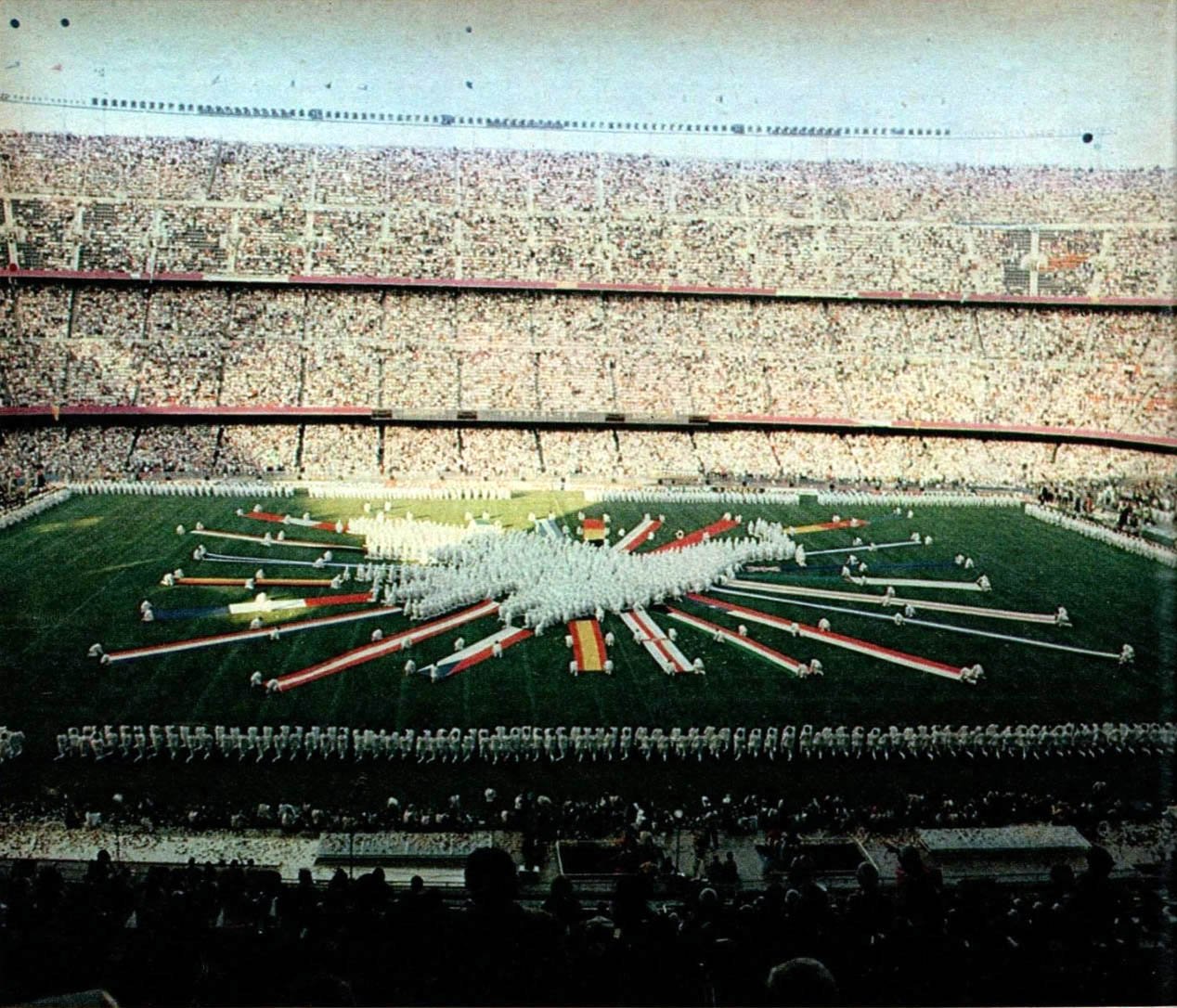
It was the home World Cup. The first one organised in Spain, with 24 teams for the first time, fourteen venues and a mascot that would become the symbol of an entire generation. It went badly on the pitch but left more stories than almost any other.
🇪🇸 The 1982 World Cup by numbers
- Host
- Spain
- Teams
- 24
- Champion
- 🏆 Italy
- Runner-up
- West Germany
- Final
- Italy 3-1 West Germany
- Stadium
- Santiago Bernabéu · Madrid
- Attendance
- 90,000
- Top scorer
- Paolo Rossi (Italy), 6 goals
The Disgrace of Gijón
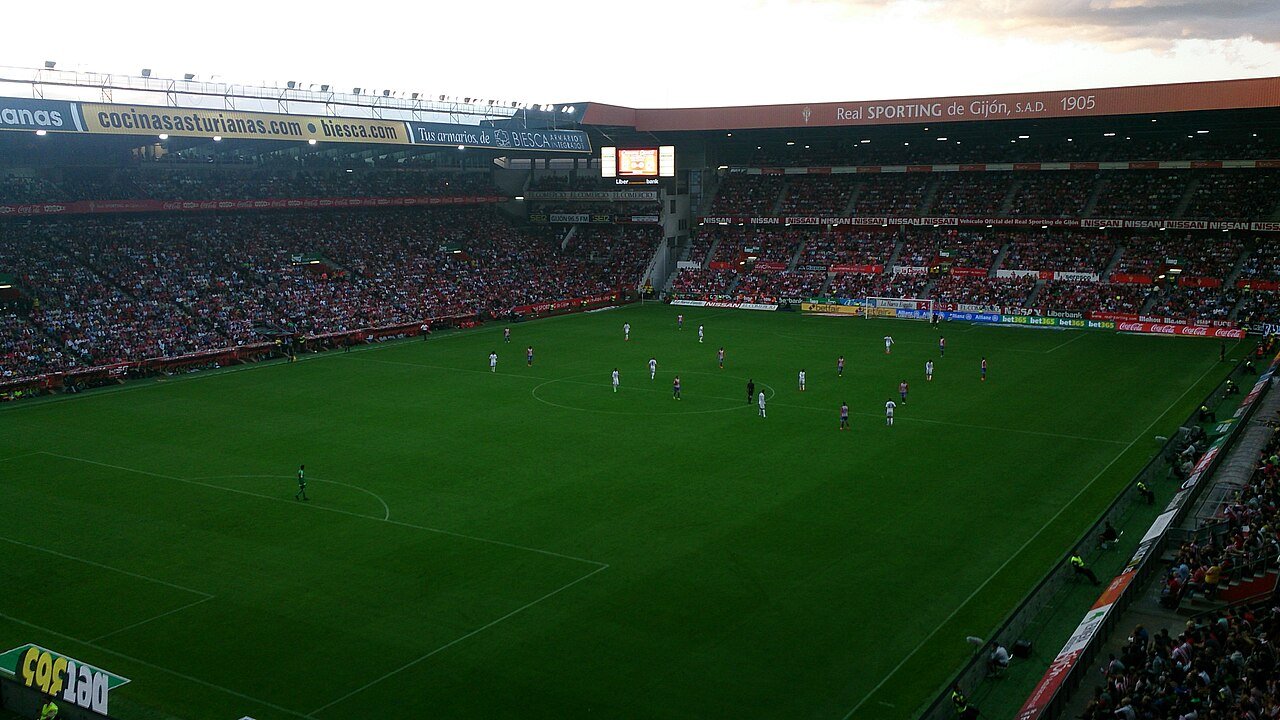
25 June 1982, El Molinón. West Germany versus Austria, final matchday of Group 2. The sums had been done and everyone knew them, because Algeria had already played their match the day before: if Germany won by one or two goals, both teams would go through and Algeria would be heading home.
Hrubesch scored in the tenth minute. And from then on, the two teams simply stopped playing. Eighty minutes of backwards passes, of balls hoofed to the wing, of nobody going near the opposition box. Not a single shot. The stadium started whistling and didn't stop.
Algerian fans were waving banknotes from the stands. The German TV commentator refused to keep covering the match. The Austrian TV commentator asked his viewers to turn their sets off. And Algeria, who in their debut had beaten European champions West Germany 2-1 — one of the greatest shocks in history — went home.
FIFA rejected the Algerian protest and annulled nothing. But from the next World Cup onwards, the rules changed: the final matchday of the group stage is played simultaneously in all matches. That rule, which seems like common sense now, was born at El Molinón.
Spain: five matches and one victory
The national team was a real let-down. With José Santamaría on the bench and the whole country watching, Spain drew 1-1 with Honduras in their opener in Valencia, beat Yugoslavia 2-1 with a retaken penalty amid protests — and let's be fair, that one went Spain's way — and lost 1-0 to Northern Ireland.
They scraped through to the second phase, where they faced a group with West Germany and England at the Bernabéu: 1-2 to Germany and 0-0 with England. Eliminated.
A home World Cup, with expectations through the roof, settled with one victory in five matches. They'd have to wait until 2010 to get rid of that bitter taste.
The Seville incident
8 July, Sánchez Pizjuán. West Germany versus France in the semi-finals. For many people, this is the greatest World Cup match in history: 1-1 after 90 minutes, France went 3-1 up in extra time, Germany equalled at 3 and it ended up being decided by the first penalty shootout in World Cup history.
But what people remember from that night isn't a goal. In the 57th minute, Frenchman Patrick Battiston broke clear towards goal and German goalkeeper Harald Schumacher came out with his hip leading and mowed him down. Battiston was knocked unconscious, lost two teeth and suffered spinal injuries. They carried him off on a stretcher and there were real fears for his life.
The Dutch referee didn't even blow for a foul. Goal kick. Schumacher stayed on the pitch, saved two penalties in the shootout and Germany reached the final.
Sarrià: Italy 3 - Brazil 2
Five days earlier, at the old Sarrià stadium in Barcelona, another match had been played that everyone who saw it remembers to this day. That Brazil side of Sócrates, Zico, Falcão and Éder is the most frequently nominated candidate for the title of greatest team never to win a World Cup. A draw would've done it for them.
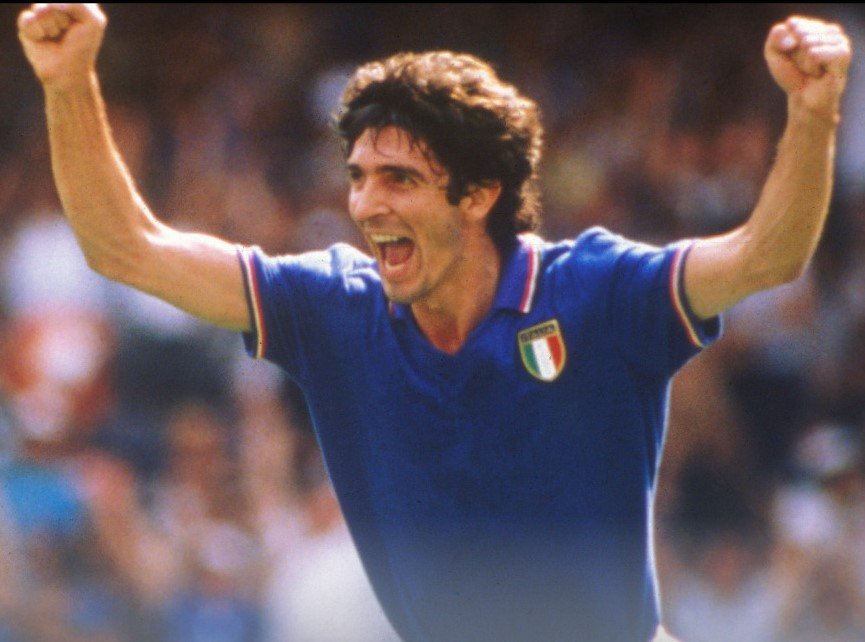
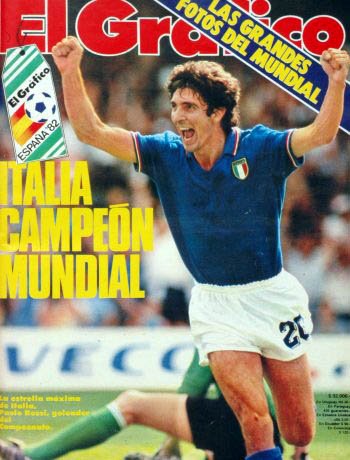
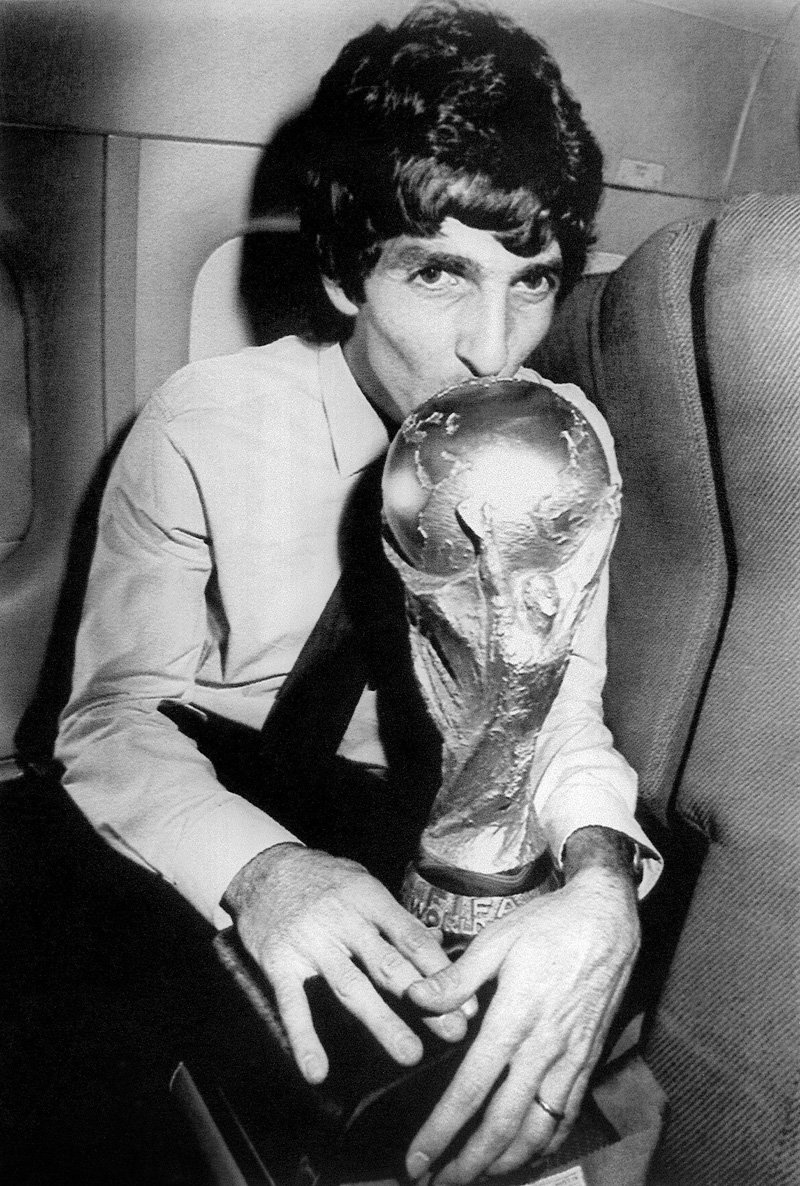
And then they ran into Paolo Rossi, who'd gone the whole tournament without scoring and that afternoon he stuck away three goals. Italy won 3-2, Brazil went home, and that style of Brazilian football went with them.
That the two teams agreed beforehand to leave Algeria out. In Germany it's known as the «Gijón non-aggression pact».
That what happened on the pitch nobody disputes — eighty minutes of non-football, the stadium whistling and two national broadcasters refusing to commentate — but an explicit prior agreement is unproven. Both teams always denied it and no testimony or document has ever surfaced to prove it. You don't need a pact for two teams who know what result suits them to stop attacking: one team just needs to have no interest in scoring, and the other in conceding. FIFA didn't consider it proven either; what they did was change the rules, which is the most eloquent way of admitting the whistlers were right.
That Rossi had just finished serving a ban for match-fixing and they still took him to the World Cup.
That the ban is real: two years for the Totonero betting scandal, which he'd just come out of before the tournament, and manager Bearzot selected him anyway amid fierce criticism. What's worth adding is that Rossi always maintained his innocence, his initial conviction was reduced on appeal, and the case was murky throughout. He arrived at the World Cup unfit, went through the group stage without scoring — and finished with six goals, the Golden Ball and the trophy.
That Naranjito was a hit and the most beloved mascot in World Cup history.
That in 1982 a chunk of the country hated him: he was accused of being naff, babyish and representing nothing. What happened is that the cartoon series, the merchandising and above all the passage of time turned him into a generational icon. Today nostalgia's won by a landslide, but the idea that he was adored from day one is a false memory.
The final, and Tardelli's cry
11 July, Bernabéu, 90,000 people. Italy 3-1 West Germany: Rossi, Tardelli and Altobelli, with Breitner's consolation.
The second goal produced one of football's most iconic images: Marco Tardelli running towards the bench with his face twisted, screaming and crying at the same time. They call it «Tardelli's cry» and he's said himself he's not quite sure what came over him.
The Italian captain, Dino Zoff, was 40 years old: he remains the oldest footballer ever to win a World Cup.
What was left behind
What was left behind was a new rule born in Gijón. What was left was the penalty shootout, which had its debut here and has decided four finals since. What was left was Naranjito. And what was left was that very Spanish feeling of throwing a massive party and then watching it from the sidelines.
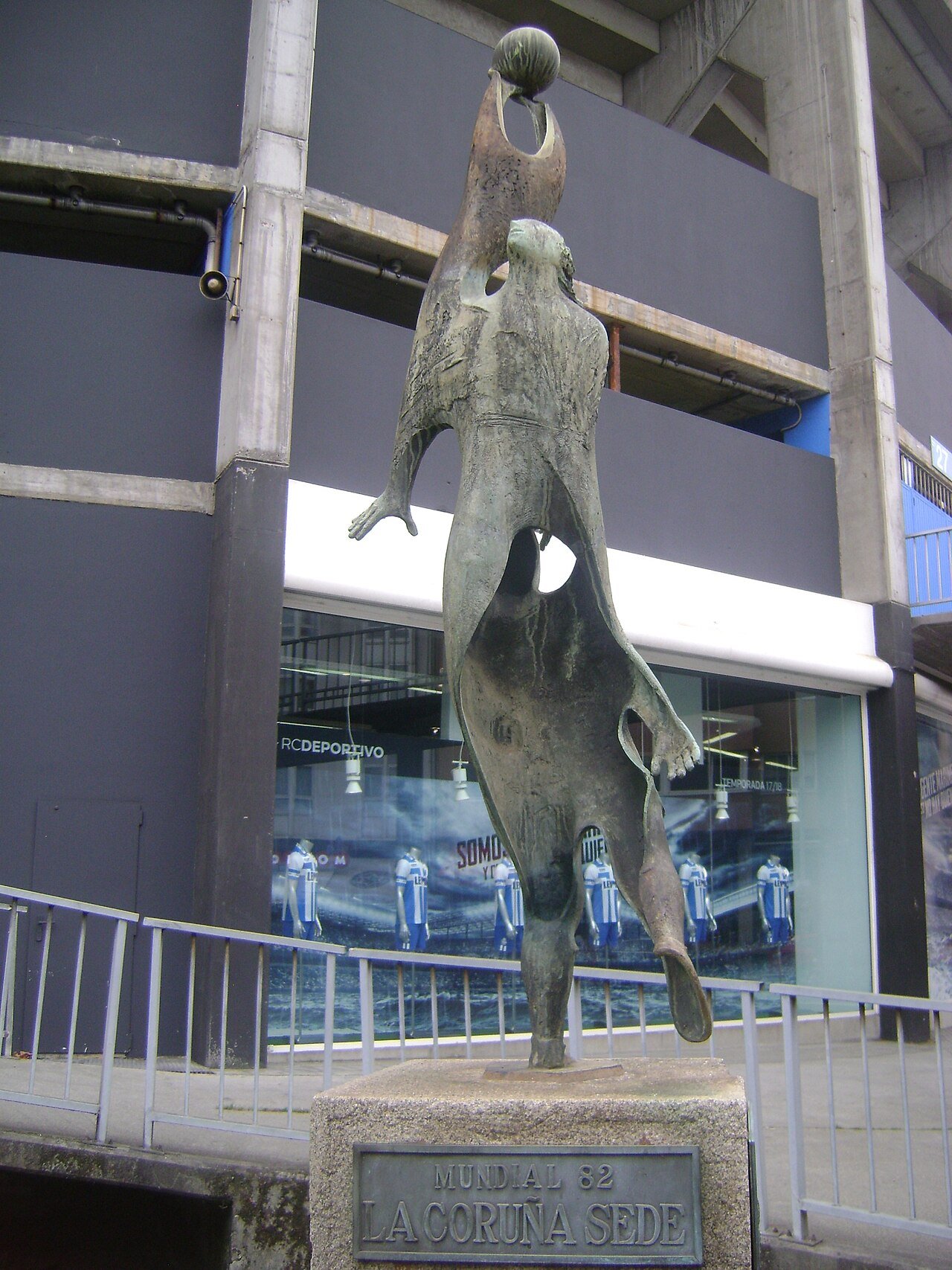
In A Coruña there's a statue commemorating that World Cup. It's one of the few physical things still standing from all of it.
- 1982 FIFA World Cup — Wikipedia
- RSSSF — complete tournament data from 1982
- On the Germany-Austria match at El Molinón: what happened on the pitch is documented down to the detail, but a prior pact between both squads has never been proven. That's how we're telling it.
- The photos are public domain or Creative Commons via Wikimedia Commons; each one carries its author and licence below.

💬 Comments
Have your say, YouTube-comments style but at home. Be polite — decent folk read this.