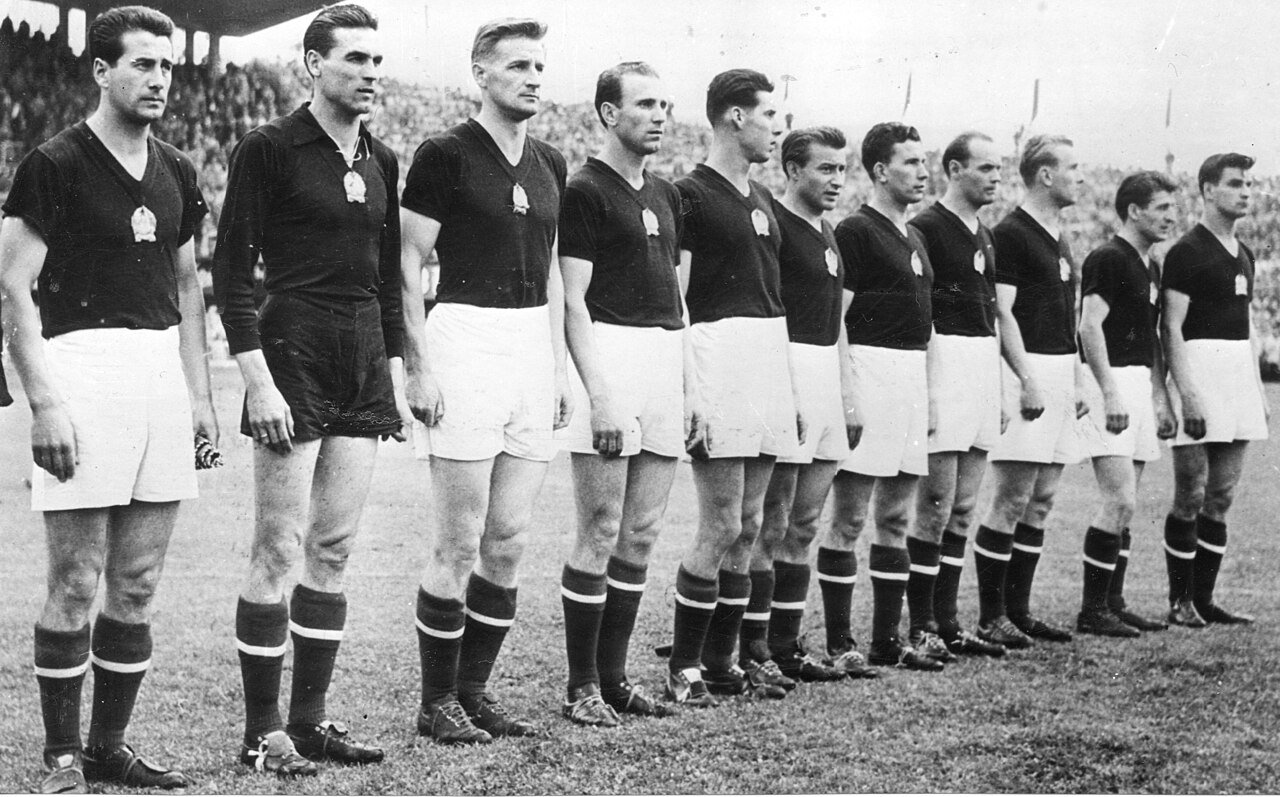
Switzerland 1954: The Miracle of Bern, Invincible Hungary and the draw that left Spain out

- Switzerland 1954 was the setting for the 'Miracle of Berna', where West Germany achieved a historic victory against the heavily favored Hungary in the tournament final
- Hungary arrived as an unbeaten team after an impressive streak of victories, but was surprised in the decisive match
- A draw determined that Spain was left out of participation in the Switzerland 1954 World Cup
If the Maracanazo was the greatest shock in World Cup history, this ranks right up there — and some say it's even more shocking. Because in 1950, Uruguay were world champions; in 1954, West Germany was a ruined country that had just been readmitted to international football.
🇨🇭 The 1954 World Cup by numbers
- Host nation
- Switzerland
- Teams
- 16
- Champions
- 🏆 West Germany
- Runners-up
- Hungary
- Final
- West Germany 3-2 Hungary
- Stadium
- Wankdorfstadion · Bern
- Attendance
- 62,500
- Top scorer
- Sándor Kocsis (Hungary), 11 goals
The greatest side ever to win nothing (and lose a World Cup final)
You need to understand what that Hungary team was. Olympic champions in 1952. Four years without losing a match. And most importantly: in November 1953 they went to Wembley and beat England 6-3, England's first home defeat to a continental side. In case anyone doubted it, they repeated the dose in Budapest in May 54: 7-1.
Puskás, Kocsis, Hidegkuti, Bozsik, Czibor, Grosics. The Aranycsapat, the Golden Team. Between 1950 and 1956 they played fifty matches and lost exactly one. The one on 4 July 1954.
Sitting in the Wembley crowd that day of the 6-3, there was a German gentleman named Sepp Herberger. As he left, he said just one sentence: «I've seen what I wanted to see».
The weirdest format a World Cup has ever had
Sixteen teams, four groups… but only two matches per team. In each group, two seeded teams were hand-picked, and the seeded teams didn't face each other, nor did the unseeded ones. If there was a 90-minute draw, extra time was played in the group stage; and if it stayed level, it remained a draw. Goal difference didn't count: tied teams on points were resolved with another match, and if needed, a drawing of lots.
With such a system, all sorts happened, including two teams from the same group playing twice while two others never met. They abolished it immediately after.
Spain knocked out by a slip of paper in a cup
This is Spain's chapter in this World Cup, and it's one that stings. Spain were battling head-to-head with Turkey for qualification.
They won 4-1 at Chamartín on Epiphany. Lost 1-0 in Istanbul in March. And three days later, decider in Rome: 2-2 after extra time, with a goal from Escudero in the 79th minute. There were no penalties — that didn't enter the rulebook until 1970. So they decided it with a draw.
Here's how: they put two slips of paper in a cup, one reading SPAGNA and one TURCHIA in Italian, and blindfolded a fourteen-year-old lad who was hanging around the stadium with a white handkerchief, Franco Gemma. He pulled one out. The man who took it from his hand shouted: «Turchia!».
Spain had scored more goals than Turkey across the entire tie (6-4) and they were out. They didn't return to a World Cup until 1962. The manager resigned, the federation president resigned, and the whole board stepped down.
And there's a second, murkier layer to it. Ladislao Kubala played in the Istanbul match for Spain despite not meeting the three-year residency requirement FIFA demanded — Spain's federation itself admits this in its official history today. Minutes before the Rome decider, the head of the Spanish delegation came into the dressing room with a telegram from the Italian federation president: «Attention équipe espagnole situation joueur Kubala». It didn't explicitly forbid anything. But fear did the job. Kubala stayed out and no one ever knew who sent that telegram.
Let's set the record straight on two myths: it's often said the draw was a coin toss — FIFA itself once claimed this — and also that the USSR was in the group and withdrew. Neither is true: it was slips of paper, and the USSR didn't debut in a qualifying round until 1958.
The 8-3 that changed everything
In the group stage, the draw paired Hungary and West Germany. Herberger made seven changes and lost 8-3. The humiliation was so complete that he received letters at home suggesting he hang himself "in a way the rope could still be used afterwards". He read them aloud in the dressing room before the next match.
In that same 8-3, Werner Liebrich broke Puskás's ankle, forcing him to miss the quarter-finals and semi-finals.
Germany then beat Turkey 7-2 in the play-off, Yugoslavia 2-0 in the quarter-finals and Austria 6-1 in the semi-final. And they reached the final against the team that had put eight past them.
The Battle of Berne
The quarter-final between Hungary and Brazil on 27 June, played in the rain, has earned its own place in history. 42 fouls, two penalties and three red cards. Hungary won 4-2, but the real drama came after: Brazilian players stormed the Hungarian dressing room and a brawl broke out. Manager Gusztáv Sebes had to get four stitches in his face. Hungarian riot police with batons pulled them apart.
English referee Arthur Ellis recalled it years later: "I thought it would be the best match I'd ever see… I don't know if politics and religion had something to do with it, but they behaved like animals". FIFA didn't sanction anyone.
The final: 0-2 in eight minutes, then 3-2
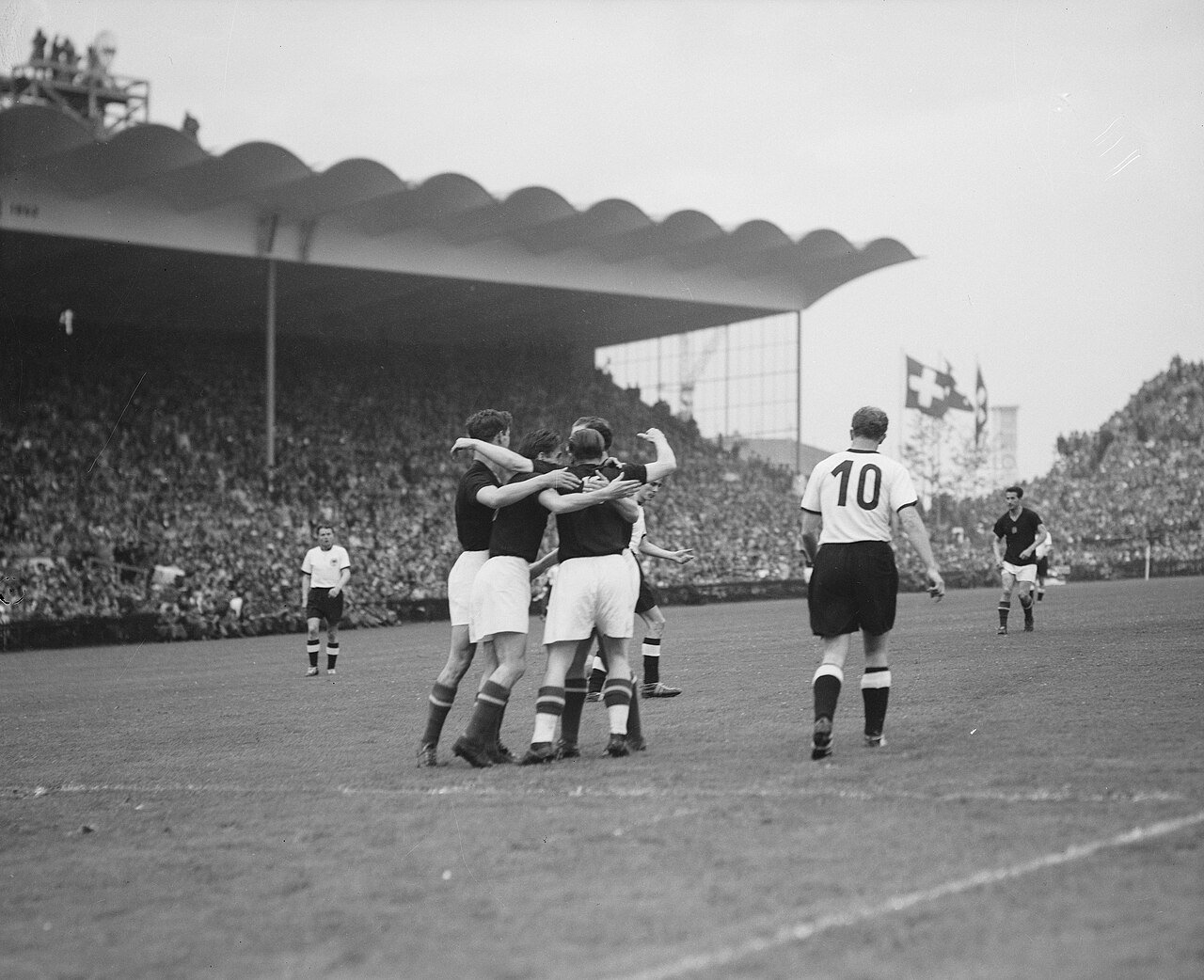
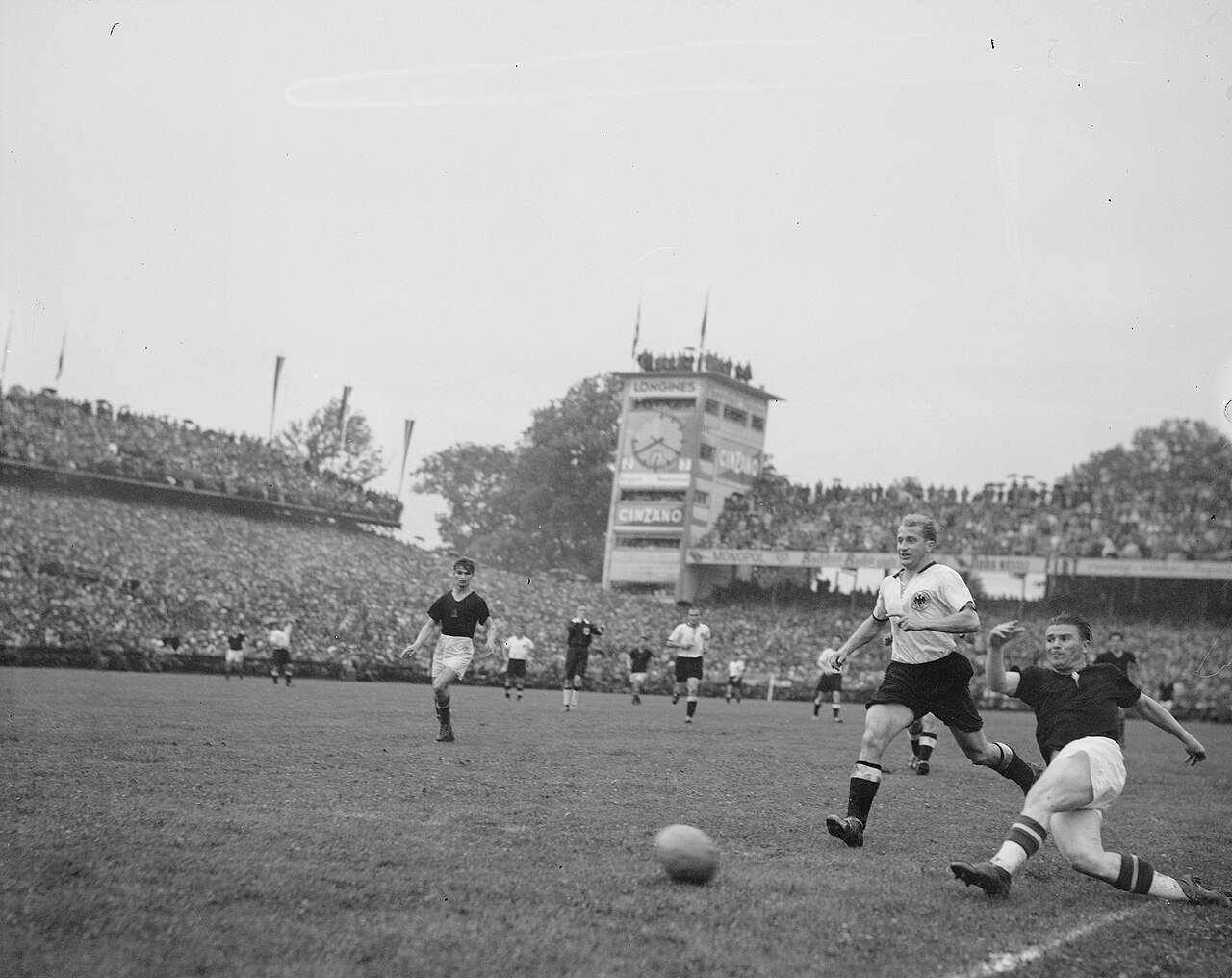
4 July 1954, Wankdorf in Berne, under torrential rain. Hungary went 2-0 up in eight minutes — Puskás in the 6th, Czibor in the 8th — and it looked like another thrashing was coming.
But Germany levelled before the quarter-hour: Morlock in the 10th and Rahn in the 18th. And in the 84th minute, Helmut Rahn again: 3-2. Two minutes later, Puskás scored to make it 3-3 but Welsh linesman Mervyn Griffiths ruled it out for offside.
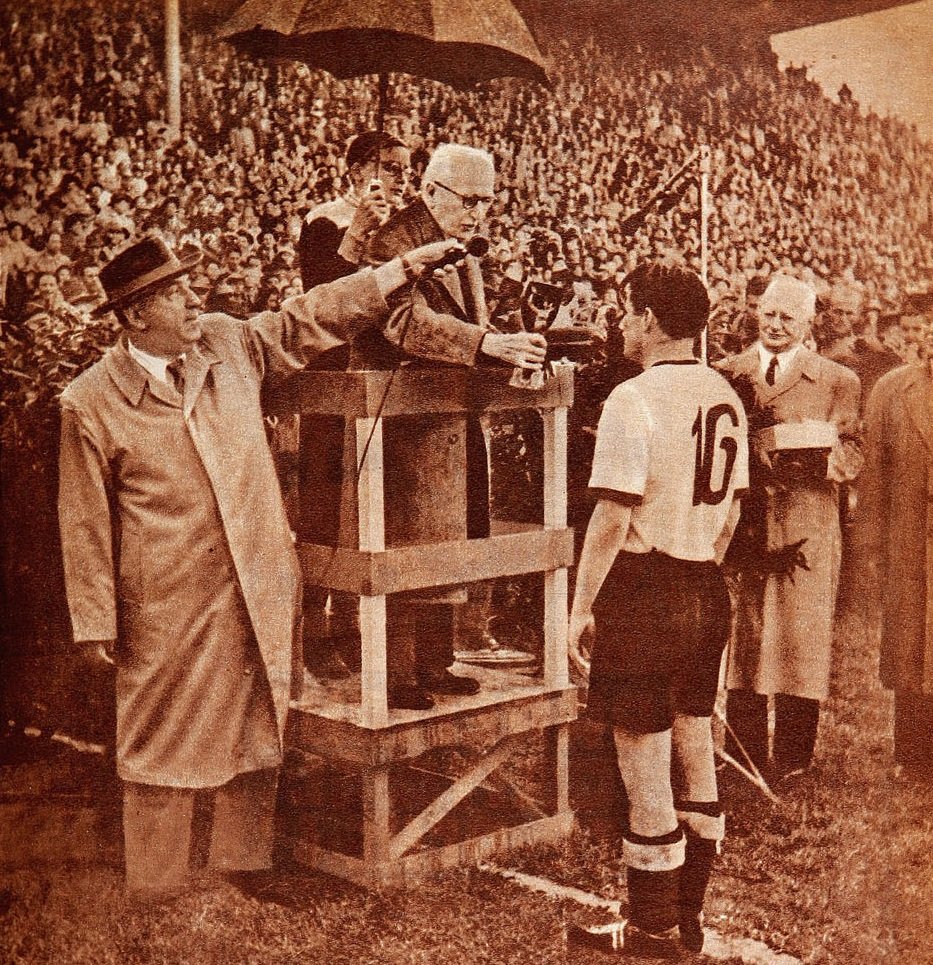
It was the first time since the Second World War that the German national anthem had been heard at a world sporting event.
That the German fox gifted the match deliberately with a reserve team so the Hungarians would get overconfident and never see his real eleven.
That he made seven changes, not eleven, and that in that 3-8 loss, six of the eleven who'd play in the final were on the pitch, Fritz Walter and Rahn included. And most importantly, the documented reason is different: he had written DFB permission from April, two months before the tournament, because under that format goal difference didn't count and he calculated they'd end level on points with Turkey. He was saving energy for the play-off, not trying to fool anyone. If Hungary got cocky as a side effect, that was just a bonus. The real plan had been in motion for eight months, since Wembley.
That Adi Dassler invented interchangeable studs, swapped them for the Germans at half-time because of the mud, and that decided the final.
That the material advantage is plausible and even Germany's Patent Office acknowledges it… which is precisely who dismantles the rest. Dassler invented nothing: screw-in studs were patented by Ludwig Wacker in 1925 and by Bremen cobbler Alexander Salot in 1949, whose team was already wearing them from 1947. Dassler only registered a utility model in 1952. The patent office itself says it with irony: he won Herberger as an advisor, became the national team's supplier "and then was able to weave the legend through publicity". The scene of changing studs at half-time comes from the 2003 film, not from a 1954 source.
That Germany won the World Cup doped up on Pervitin, methamphetamine.
That you need to separate three things. That there were injections is proven: the DFB's own report from 8 November 1954 admitted it. That those poorly sterilised syringes transmitted hepatitis is also proven, and that's the serious part: five players with jaundice weeks later, Morlock hospitalised for six weeks, and the life expectancy of the group was notably worse than Germany's 1966 squad. That the contents were methamphetamine is not proven — it's an inference, and even the doctors who studied the hepatitis don't endorse it. The official version, "Vitamin C", convinces nobody either: that could be taken orally, no needles needed. No samples were kept and there were no anti-doping controls until 1966.
That the footage proves the 3-3 was legal and Hungary were robbed of the World Cup.
That the footage proves nothing: the official television footage doesn't capture Puskás's position at the moment of the pass. What exists are testimonies and inferences from historians, mainly from the German substitutes who were sitting at that angle. It's a "probably legal" reconstruction, not proof. And context matters: in that final, nine offsides were called against Germany and three against Hungary, and there was another dubious play in Germany's 2-2 equaliser.
What losing cost Hungary
In Budapest they had already printed the commemorative stamps for the champions. And behind the Népstadion, seventeen pedestals had been erected for seventeen statues of the players, larger than life-size. The German federation writes today that they remain there "as a monument to criminal recklessness".
Goalkeeper Gyula Grosics, whom part of the country blamed for the third goal, was accused of espionage, placed under house arrest and forcibly transferred from Honvéd to a provincial club. The radio commentator was benched for a season. There were demonstrations in Budapest that started over football and turned against Rákosi's regime; Grosics would later say that in those protests lay "the seed of the 1956 uprising" — though that's his reading, not a settled historical thesis.
The epilogue is lovely and almost nobody tells it: in 1990, after the Iron Curtain fell, the Germans invited the surviving Hungarian players to Fritz Walter's 70th birthday. After that they got together every year for decades, alternating countries. Grosics: "I believe the friendship between the old Hungarian and German players can be called the most extraordinary in the world".
The most goal-filled World Cup in history
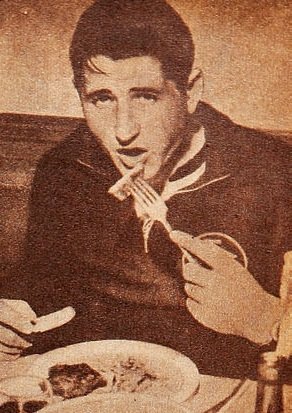
140 goals in 26 matches: an average of 5.38. Nobody's beaten it and nobody's going to — the second-highest is 1938, with 4.66. Out of this one came crackers like Austria 7-5 Switzerland, which with its twelve goals remains the highest-scoring match in World Cup history.
Mind you, we shouldn't dress it up as magic: a good chunk of that average comes down to the format — extra time in the group stage, two knockout play-offs and a fair few runaway results.
And one last thing, because it sums everything up perfectly. They call it the «Miracle of Bern», but Herberger had been planning it for eight months since that 6-3 thrashing at Wembley: he marked Hidegkuti with a midfielder instead of a defender, tasked a winger with chasing Bozsik to save Fritz Walter's legs, had his assistant lodged in the Hungarian hotel and written permission since April. He settled it himself: «Did we get lucky, did the Hungarians have bad luck? I'd say we won fair and square».
- 1954 FIFA World Cup — Wikipedia
- RSSSF — complete tournament data and Spain-Turkey playoff
- DPMA, German Patent and Trade Mark Office — debunking the myth of Adidas screw studs
- Deutsches Ärzteblatt (2010) — «The viral hepatitis of the Heroes of Bern»
- RFEF — «History of the National Team: the unhappy 1950s», with Kubala's telegram
- FIFA — how Turkey knocked Spain out in the Rome draw
- Panenka (Aitor Lagunas), «Who was Franco G.?», the only original investigation into the draw's mascot boy.
- The photos are public domain or Creative Commons via Wikimedia Commons; each carries its author and licence at the bottom.

💬 Comments
Have your say, YouTube-comments style but at home. Be polite — decent folk read this.