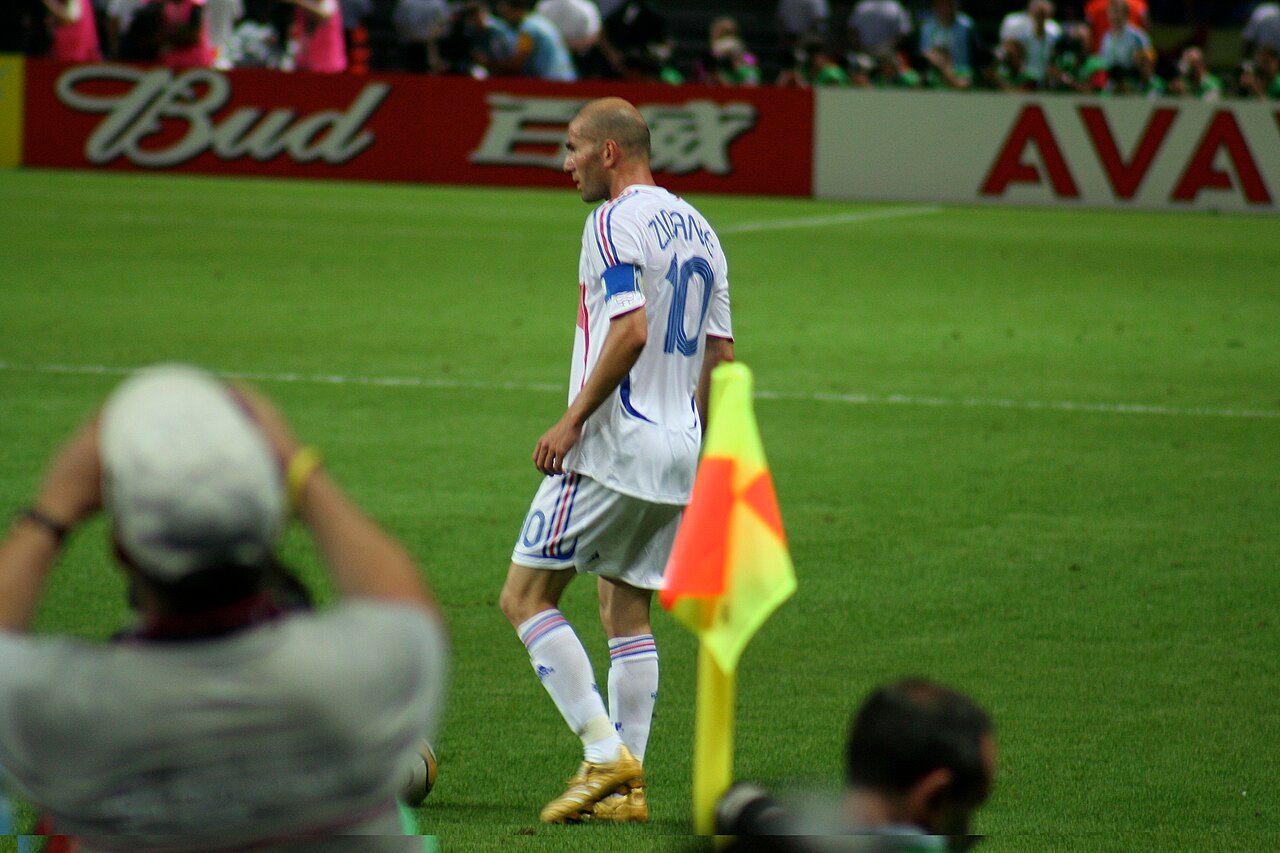
Germany 2006: Zidane's headbutt in his final match and Italy's triumph in the storm

- Zinedine Zidane played his last international match in the Germany 2006 final with a headbutt that marked an iconic moment of his career
- Italy won the 2006 World Cup in adverse weather conditions, demonstrating their ability to triumph in the midst of a storm
- The Germany 2006 tournament went down in history as one of the most memorable World Cups for its protagonists and decisive moments
Some careers end with a lap of honour. Zidane's ended with him walking across the centre of Berlin's Olympic Stadium, passing the World Cup trophy without looking at it, heading for the dressing room. It's one of the most bizarre images sport has ever given us.
🇩🇪 The 2006 World Cup by the numbers
- Host nation
- Germany
- Teams
- 32
- Champions
- 🏆 Italy
- Runners-up
- France
- Final
- Italy 1-1 (5-3 pens.) France
- Stadium
- Berlin Olympic Stadium · Berlin
- Attendance
- 69,000
- Top scorer
- Miroslav Klose (Germany), 5 goals
The headbutt
The final was 1-1. Zidane had scored in the 7th minute from a penalty with a Panenka chip, the ball hitting the crossbar and going in. Materazzi had equalled with a header shortly after.
110th minute of extra time. The two walk together, exchange words, Zidane takes a few steps away, turns around and headbutts him in the chest, knocking him to the ground. The referee didn't see it directly; it was flagged by the VAR team. Red card.
France lost on penalties. Zidane never played again.
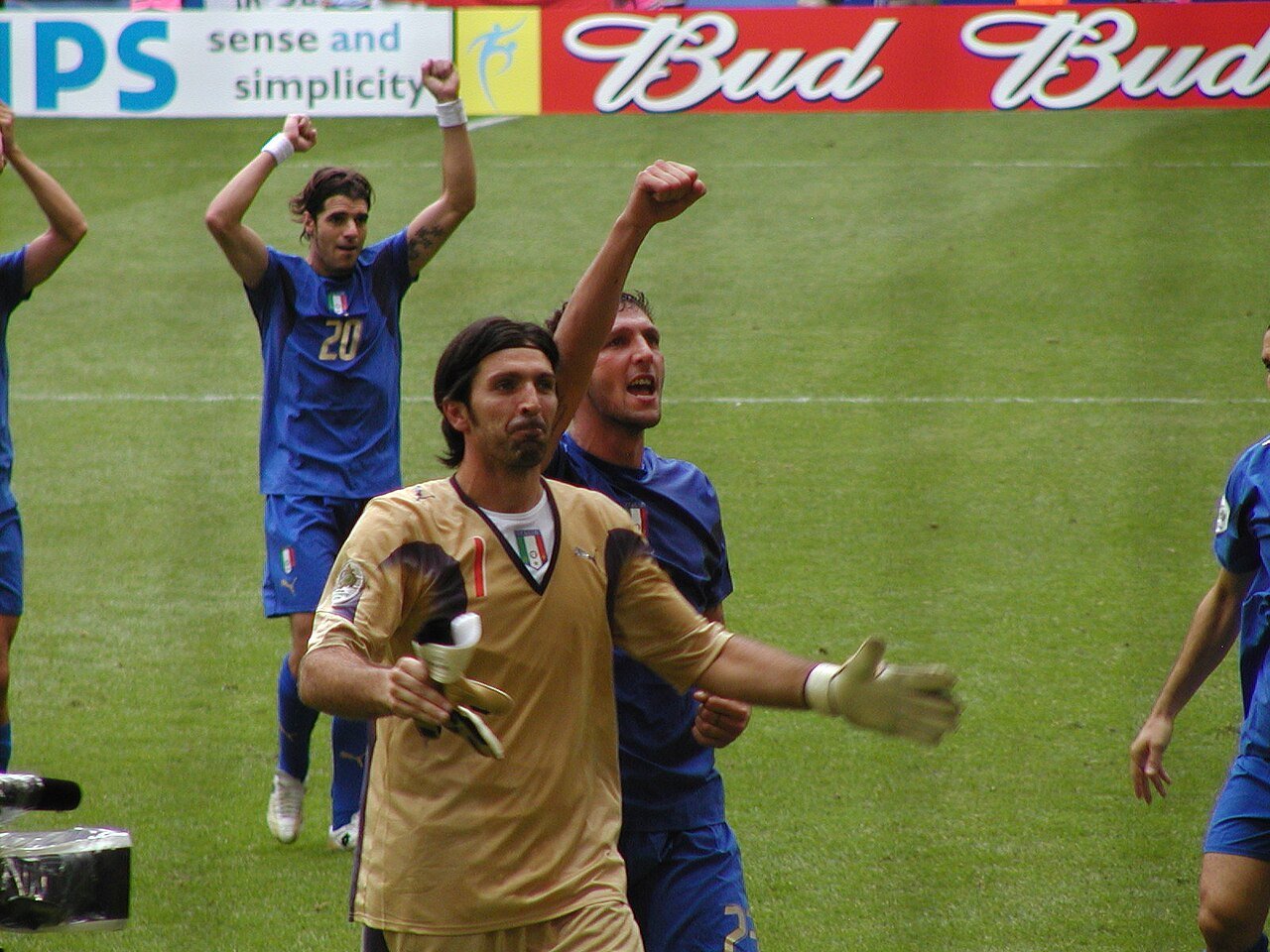
Italy champions in the middle of the Calciopoli scandal
While the World Cup was being played, the biggest scandal in Italian football was exploding: Calciopoli, a match-fixing conspiracy involving dodgy referee assignments that ended with Juventus relegated to the second division and stripped of two league titles, and with Milan, Fiorentina and Lazio all punished.
Thirteen of the twenty-three players in that Italian squad belonged to implicated clubs. They won the World Cup with their clubs burning behind them, and several of them returned to teams playing in the second tier.
The World Cup where Germany made peace with its flags
They called it Sommermärchen, the summer fairy tale. Germany set up giant screens in the streets — the Berlin Fan Mile pulled in hundreds of thousands of people — and for the first time since the war the country filled with German flags without it feeling uncomfortable. It was a social shift still talked about there today.
On the pitch, Germany finished third, with Miroslav Klose as the top scorer.
Spain's story, and the Battle of Nuremberg
Spain won all three of their group matches — including a 4-0 thrashing of Ukraine — and in the last 16 they faced France. They lost 3-1 after going ahead, with Zidane scoring the third. Another early exit to add to the collection.
And in that same last-16 tie, the wildest match of the century was played: Portugal 1-0 Netherlands, known as the Battle of Nuremberg. The Russian referee handed out 16 yellow cards and 4 reds. It's still the record for cards in a World Cup match.
That the insult which sparked the headbutt was racist or religious in nature, aimed at Zidane's Algerian background. That's what everyone assumed for days.
That Materazzi denied it from the start and has always stuck to the same story: he publicly admitted in 2010 that he insulted Zidane's sister after a row over a shirt, and denied ever calling him a terrorist or making any reference to his background or religion. Zidane has never contradicted this; he said they were «very harsh» words about his mother and sister, apologised to the children watching and at the same time said he couldn't regret it, because doing so would be admitting the other guy was right. A FIFA commission sanctioned both: three matches for Zidane and two for Materazzi.
That FIFA gave the award for best player of the tournament to a footballer who'd just been sent off in the final, which would be mad.
That the journalists' vote closed before the match ended, and there's your explanation for the mix-up. FIFA even considered taking it away from him and didn't. Either way, the sporting case holds up: Zidane had a huge tournament, with decisive performances against Spain and Brazil, and scored in the final. The weird bit isn't the award: it's the timing.
That the Italian match-fixing scandal had something to do with the 2006 title.
That they're two separate things with no documented connection. Calciopoli was a referee assignment racket in the Italian league, investigated and punished by Italian sporting authorities; no one has ever accused the national team's run through Germany of anything. What is true, and it's a cracking story, is the context: those players became world champions without knowing which division they'd be playing in when they got back home.
What remained
Italy's fourth title remained, putting them just one Copa behind Brazil. The model of a World Cup as an urban festival with giant screens remained, and hasn't been abandoned since. And the image of Zidane walking past the trophy remained, and has become a painting, a sculpture and analytical material for half of France.
Four years later, in South Africa, it would be someone's turn who'd been waiting eighty years.
- 2006 FIFA World Cup — Wikipedia
- RSSSF — complete 2006 tournament data
- On what Zidane and Materazzi said to each other: this collects the public statements from both parties, which are essentially consistent, not the third-party versions that circulated those days.
- Photo note: match material belongs to agencies. Images are public domain or Creative Commons.