1 September: Gullit, the dreadlocks and Mandela
Ruud Gullit
«the Black Tulip»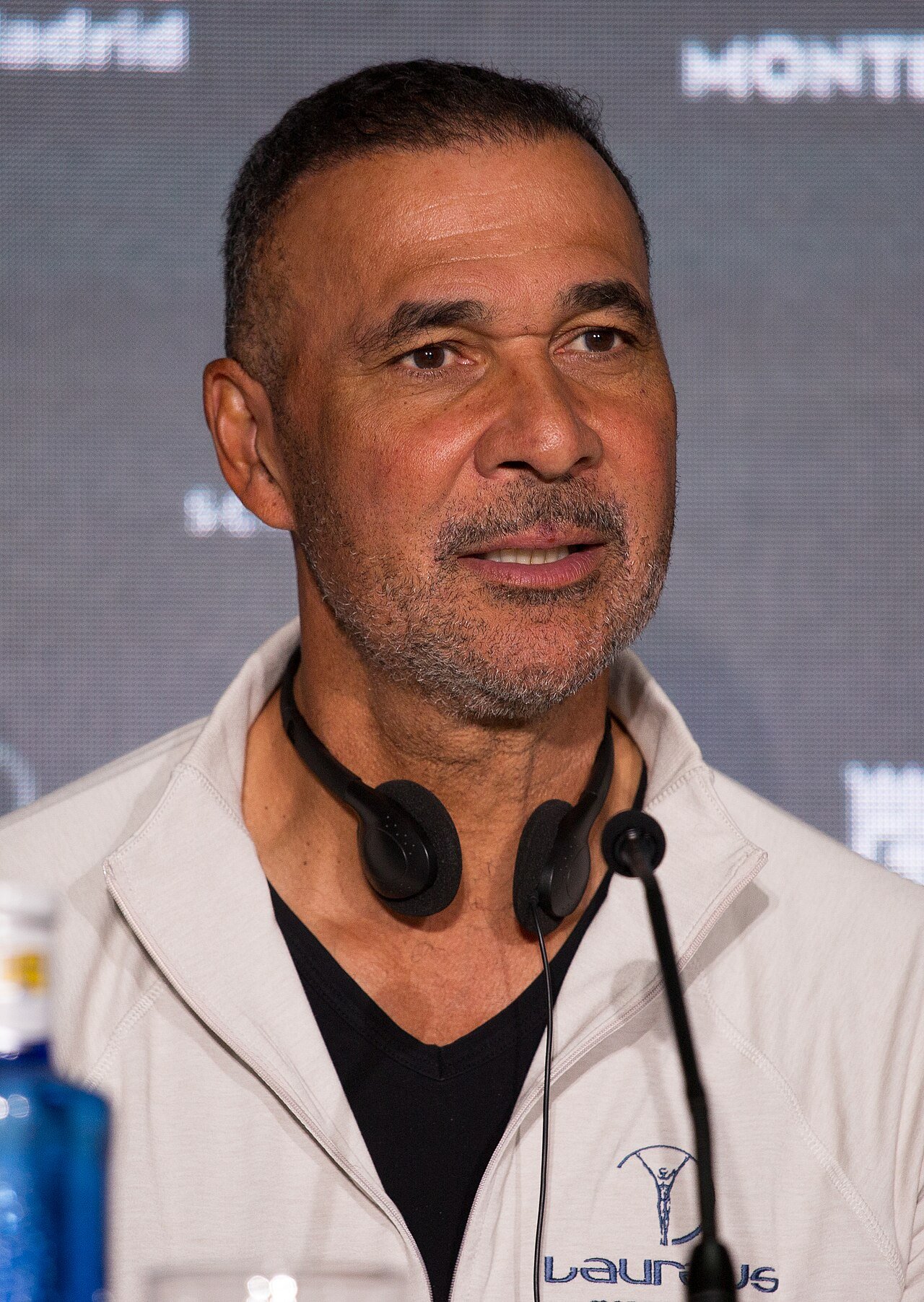
- DWS Amsterdam 1975-1979
- HFC Haarlem 1979-1982 · 32 goals
- Feyenoord Rotterdam 1982-1985 · 30 goals
- PSV Eindhoven 1985-1987 · 46 goals
- A.C. Milan 1987-1993 · 35 goals
- Unione Calcio Sampdoria 1993-1994 · 15 goals
- A.C. Milan 1994 · 3 goals
- Unione Calcio Sampdoria 1994-1995 · 9 goals
- Chelsea Football Club 1995-1998 · 4 goals
Amsterdam, Haarlem and the dreadlocks
The son of a Surinamese teacher and a Dutch mother, he grew up in Amsterdam and made his top-flight debut for Haarlem at sixteen. From there he went to Feyenoord, where a veteran Johan Cruyff taught him how to take charge on the pitch, and then to PSV.
He was almost six foot three, ran like a winger and had the touch of a number ten. He was used as a sweeper, a holding midfielder, a central midfielder and a striker. In the eighties that was not normal; today he would be the most expensive player in the world.
And there were the dreadlocks, which in the European football of the day were almost a statement. He also had a reggae band.
Sacchi's Milan
In 1987 Milan paid a world-record fee for him. With Arrigo Sacchi on the bench and Marco van Basten and Frank Rijkaard alongside him, the three Dutchmen, that side changed football: high pressing, a high line, offside as a weapon.
In their first season they took the scudetto from Maradona's Napoli. Then came two European Cups in a row, in 1989 and 1990. They won the 1989 final against Steaua 4-0, with two goals from him and two from Van Basten.
A footnote for this very page: Frank Rijkaard was also born in September, on the 30th.
The Ballon d'Or that belonged to someone else
He won the Ballon d'Or in 1987 and, on receiving it, dedicated it to Nelson Mandela, who had by then been in prison in South Africa for twenty-four years.
It was neither an empty nor an improvised gesture: Gullit came from the Dutch anti-apartheid movement, where Free Nelson Mandela was sung at concerts. He has said that in Italy a great many people did not even know who Mandela was, and that what the dedication achieved was to get people talking about the issue in a country where nobody did.
1988, the Netherlands' only title
The Netherlands had lost two World Cup finals in the seventies with the best generation they had ever had. At Euro 1988, with Gullit as captain, they finally won something: in the final against the Soviet Union he scored the first and Van Basten the second, that impossible volley from the edge of the box.
To this day it is the only major title the Dutch national team has won.
A manager, and the first to do it
He finished his career in England, at Chelsea, where he became player-manager. In 1997 he won the FA Cup: he was the first foreign manager to lift the oldest cup in football, and the first black manager to win a major trophy in England.
Since then he has been above all a pundit, one of the best around: he explains football the way he played it, seeing everything a second before everyone else.
Also born on 1 September
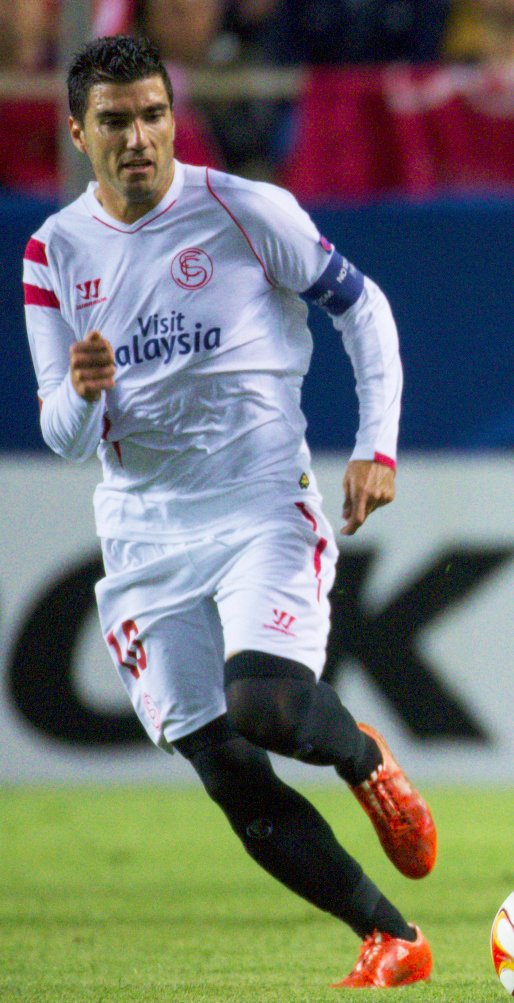
José Antonio Reyes, the king of the Europa League
From Utrera, he made his debut for Sevilla at sixteen, and even then everyone in Andalusia knew what they had. In January 2004 he joined Arsenal and was part of the Invincibles, the only side to win an entire Premier League season without losing a match.
He holds a record nobody else has: five Europa Leagues. Two with Atlético Madrid (2010 and 2012) and three in a row with Unai Emery's Sevilla (2014, 2015 and 2016). No footballer has won the competition more often.
He died on 1 June 2019 in a car crash on the road to Utrera, on his way back from training with Extremadura. He was thirty-five; a cousin of his also died in the accident. Sevilla retired the number he made his debut with, and Extremadura's stadium now bears his name.
- Sevilla Atlético Club 1999-2001 · 1 goals
- Sevilla Fútbol Club 2000-2004 · 21 goals
- Arsenal Fútbol Club 2004-2007 · 16 goals
- Real Madrid Club de Fútbol 2006-2007 · 6 goals
- Atlético de Madrid 2007-2012 · 8 goals
- Sport Lisboa e Benfica 2008-2009 · 4 goals
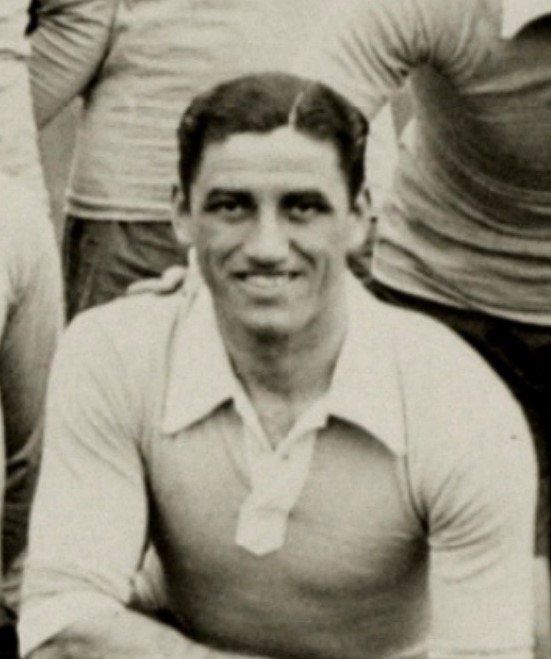
José Pedro Cea, the man from the first final
An inside forward for Nacional and for the Uruguay side that ruled world football before there was a World Cup: Olympic gold in 1924 and 1928 and champions of the first World Cup ever played, at home, in 1930.
In the 1930 final against Argentina, with Uruguay 2-1 down at half-time, he scored the equaliser that turned the game around. It finished 4-2. In the semi-final against Yugoslavia he had scored three.
He died on 18 September 1970, seventeen days after turning seventy.
- Centro Atlético Lito 1922-1927 · 111 goals
- Club Atlético Bella Vista 1928 · 17 goals
- Club Nacional de Football 1929-1934 · 138 goals
🔴⚪ Sporting Gijón players born this day
They played for Sporting Gijón and were born on this same day. There is only their data here: we would rather name them than leave them out, and rather give the bare facts than invent a story.
Darío Scotto 🔴⚪
- Club Atlético Platense 1987-1992 · 26 goals
- Real Sporting de Gijón 1992 · 3 goals
- Club Necaxa 1993
- Club Atlético Rosario Central 1994-1995 · 15 goals
- Boca Juniors 1995-1996 · 7 goals
- Club Atlético Rosario Central 1996-1997 · 2 goals
A new one goes live every day at midnight (Spain time). We will let you know in your browser, and also when there is a new article. Turn it off whenever you like.
Dates, clubs, individual awards and photos come from Wikidata and Wikimedia Commons, under free licences, and update themselves. Ages are not written anywhere: they are calculated the moment you open the page, so this page always shows the right age, this year and twenty years from now. If any of these players signs for another club or wins an award, their profile picks it up on its own. What is written by hand is the story and the judgement: who the day belongs to, and why.