18 September: Ronaldo, O Fenômeno
Ronaldo
«O Fenômeno»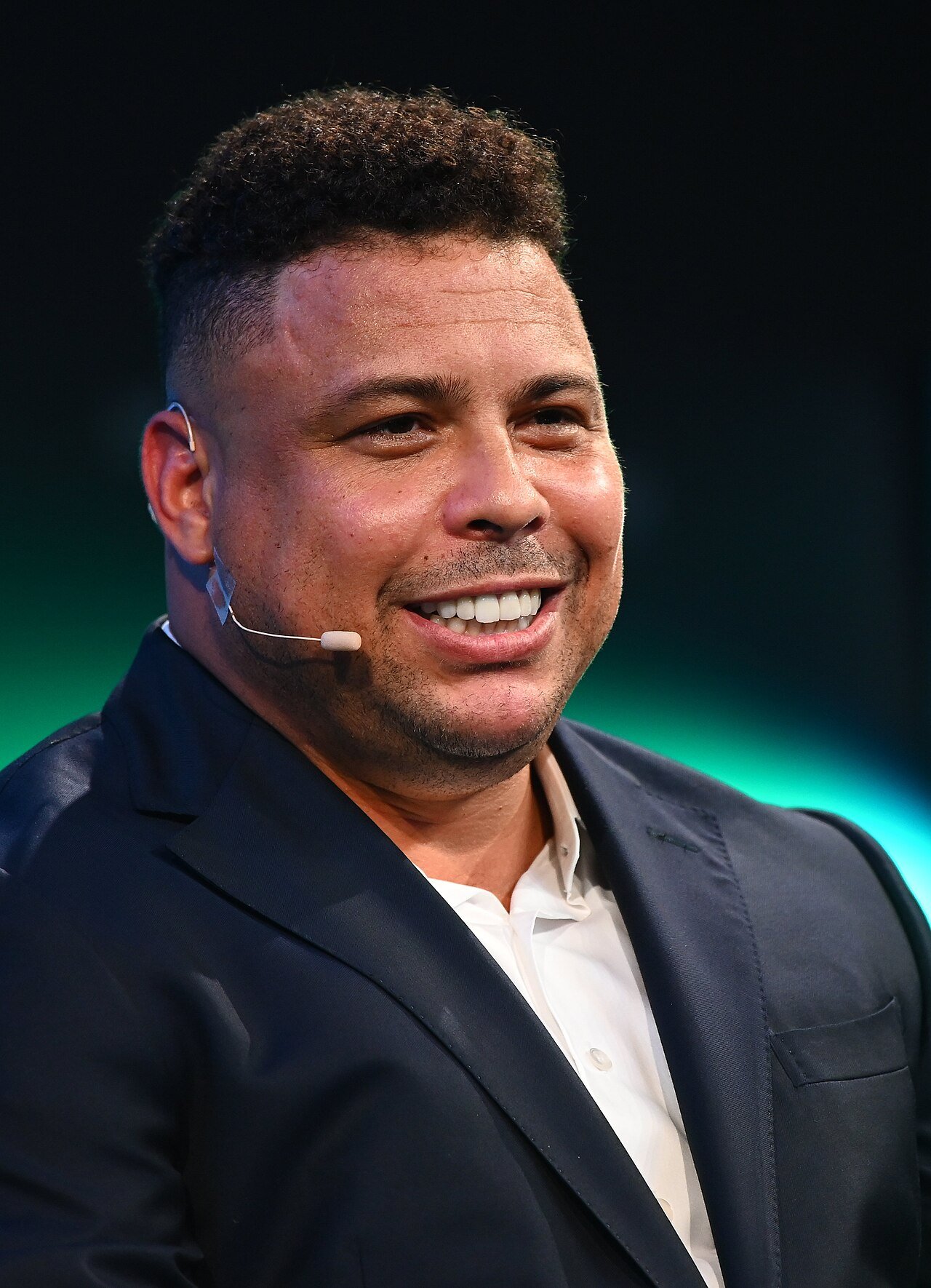
- Cruzeiro Esporte Clube 1993-1994 · 12 goals
- PSV Eindhoven 1994-1996 · 42 goals
- Fútbol Club Barcelona 1996-1997 · 34 goals
- Inter de Milán 1997-2002 · 49 goals
- Real Madrid Club de Fútbol 2002-2007 · 104 goals
- A.C. Milan 2007-2008 · 9 goals
- Sport Club Corinthians Paulista 2009-2011 · 35 goals
The kid from Bento Ribeiro
He grew up in Bento Ribeiro, a suburb on the edge of Rio. At seventeen he was already at Cruzeiro scoring at a rate that made no sense for his age, and at seventeen and a half he was in Brazil's squad for the 1994 World Cup in the United States.
He did not play a single minute. He spent the tournament on the bench watching Romário and Bebeto win the Cup. He is a 1994 world champion who never set foot on the pitch: he was the age of a youth-team player.
From there he went to PSV, and from PSV to Barcelona in 1996.
The Barcelona season
One season, 1996-97, and people still talk about it. 34 goals in 37 league games, the Pichichi, and a way of playing that looked like nothing else: a man of six foot and fourteen stone who set off from the halfway line at a winger's pace and reached the box without losing the ball.
The goal against Compostela, picking the ball up in his own half, leaving half their defence behind with his stride and scoring while they were pulling at him, is probably the most watched individual goal of nineties Spanish football. That year he won the Cup Winners' Cup, the Copa del Rey and the first of his three FIFA World Player awards.
And then he left. Inter paid his release clause and Barcelona lost him after a single season.
1998: the final he played without playing
He reached the World Cup final in France as the best player of the tournament. Hours before the game he suffered convulsions in his hotel room and was taken to hospital for tests.
He was not on the first team sheet handed in. Then he was. He played all ninety minutes and was not himself in any of them. Brazil lost 3-0 to France and spent twenty years arguing about what happened that afternoon. He was twenty-one.
The knees
In November 1999, playing for Inter, he ruptured the patellar tendon in his right knee. He came back five months later, in April 2000, to play in the Coppa Italia final.
He lasted seven minutes. The knee went completely, this time a full rupture. The image of Ronaldo sitting on the grass at the Olimpico, face in his hands, surrounded by doctors, is one of the worst football has produced. He was twenty-three and half the world thought his career was over.
He was out for almost two years.
2002: eight goals and a haircut
He came back for the World Cup in Korea and Japan with nobody sure what was left of him. He scored eight goals, including both in the final against Germany, and Brazil won their fifth World Cup.
He shaved his head leaving a triangle of hair at the front, and years later explained it quite matter-of-factly: he had a thigh injury and wanted the press to talk about something else. It worked so well that the haircut is remembered almost as much as the goals. That year he won his second Ballon d'Or, five years after the first and with two broken knees in between.
Madrid and the record
He joined Real Madrid in 2002 and scored on his debut, with the Bernabéu on its feet despite itself. He won two league titles and was one of the Galácticos until 2007.
At the 2006 World Cup in Germany, well past his best, he scored three goals and reached fifteen World Cup goals: an all-time record, ahead of Gerd Müller. He held it for eight years, until Miroslav Klose overtook him in 2014.
He finished at Milan and went back to Brazil, to Corinthians, where he retired in 2011. Since then he has owned clubs on both sides of the Atlantic, Valladolid among them.
That the sponsor pressured the national team into fielding the best player of the tournament despite what had happened that morning, because it had contracts signed and a campaign under way.
That it has never been proven. The story became so popular that the Brazilian parliament opened an inquiry into the CBF's contracts with the brand; it found no evidence that the line-up was manipulated. What is documented is the medical episode that morning, the first team sheet handed in without him and the change afterwards. That commercial pressure existed in the football of the time is obvious; that it decided that line-up has never been shown.
Also born on 18 September
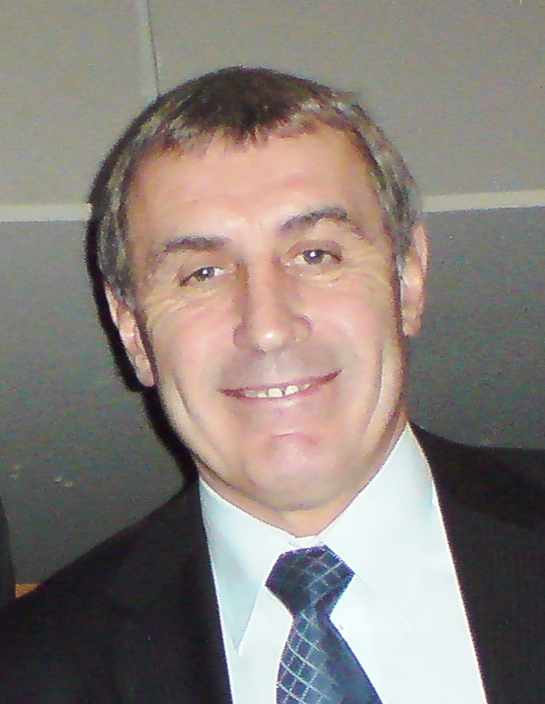
Peter Shilton, the man with 125 caps
He is the most capped player in England history: 125 caps, a record still standing decades later. He also played more than a thousand league games, another mark that will probably never be broken.
With Brian Clough's Nottingham Forest he won two European Cups in a row, in 1979 and 1980, with a side that had come up from the Second Division three years earlier.
But if he is remembered forever it will be for a jump that fell short. On 22 June 1986, at the Azteca, he was the goalkeeper Maradona beat with the Hand of God. Four minutes later he also conceded the Goal of the Century. He has never forgiven the first: decades later he was still saying it would have been enough for Maradona to admit it.
- Leicester City Football Club 1966-1974 · 1 goals
- Stoke City Football Club 1974-1977
- Nottingham Forest Football Club 1977-1982
- Southampton Football Club 1982-1987
- Derby County Football Club 1987-1992
- Plymouth Argyle Football Club 1992-1995
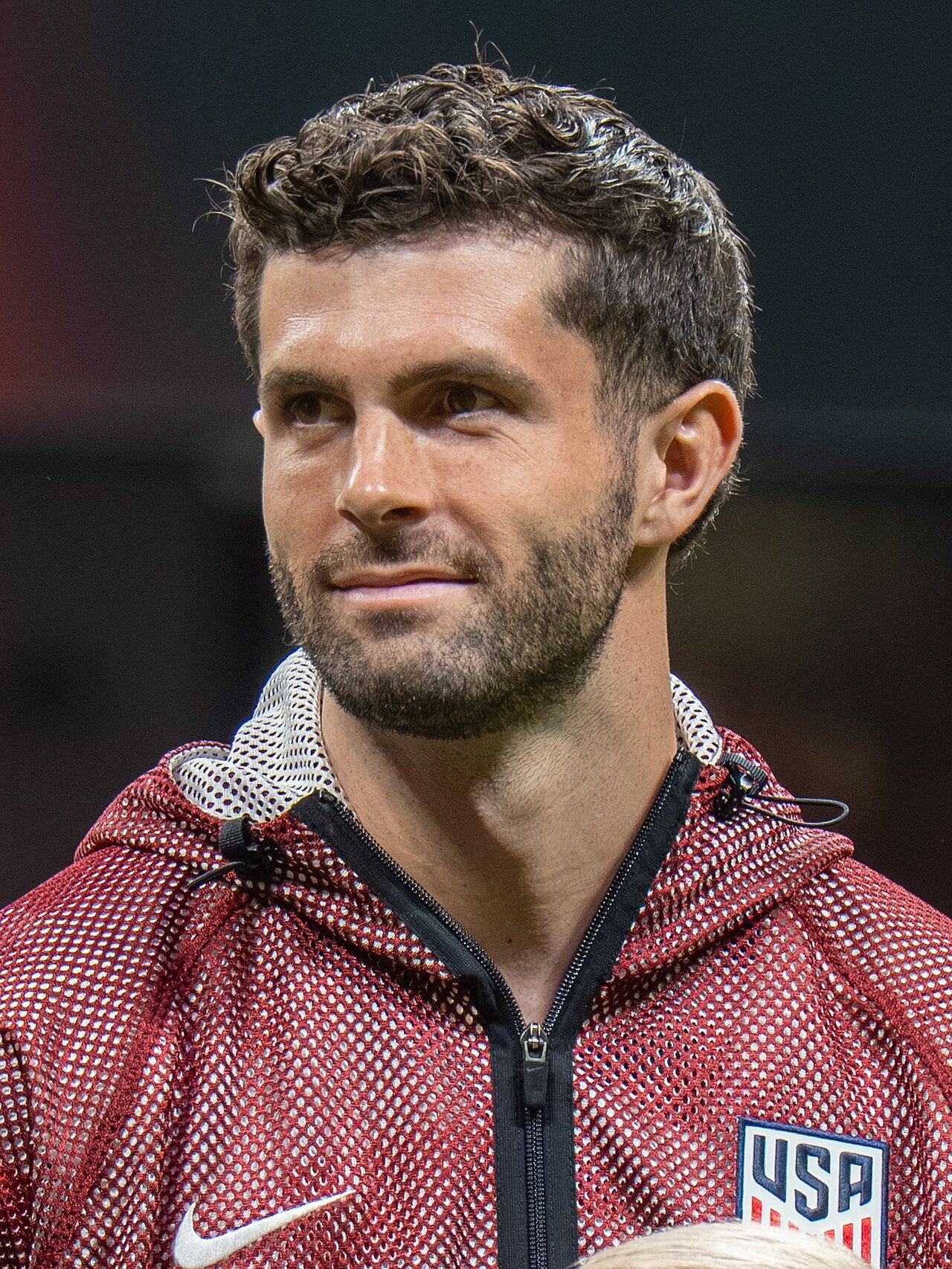
Christian Pulisic, the host nation's captain
The best footballer the United States has produced and the first from his country to win the Champions League, with Chelsea in 2021. He came through at Borussia Dortmund, where he made his debut at seventeen.
He became the face of American football just as his country was hosting the World Cup. He also holds Croatian nationality through his grandfather, and considered playing for Croatia before choosing the United States.
- Borussia Dortmund 2016-2019 · 10 goals
- Borussia Dortmund 2019 · 3 goals
- Chelsea Football Club 2019-2023 · 20 goals
- A.C. Milan since 2023 · 31 goals
🔴⚪ Sporting Gijón players born this day
They played for Sporting Gijón and were born on this same day. There is only their data here: we would rather name them than leave them out, and rather give the bare facts than invent a story.
Ricardo Bango 🔴⚪
- Real Oviedo Vetusta 1985-1988
- Real Oviedo 1987-1992 · 27 goals
- Sevilla Fútbol Club 1992-1995 · 12 goals
- Real Sporting de Gijón 1995-1998 · 8 goals
- Real Oviedo 1998-2000 · 3 goals
- Atlético Celaya 2001-2002 · 1 goals
Juan Eraña 🔴⚪
- Barakaldo Club de Fútbol 1959-1961
- Sociedad Deportiva Indautxu 1961-1962 · 1 goals
- Real Sporting de Gijón 1962-1970 · 22 goals
- Club Deportivo Ensidesa 1970-1971
- Unión Deportivo Gijón Industrial 1972-1974
Juan José Valencia de la Serna 🔴⚪
- Antiguoko 1986-1990
- Athletic Club 1990-1991
- Barakaldo Club de Fútbol 1991
- Bilbao Athletic 1991-1992
- Athletic Club 1992-1999
- Sevilla Fútbol Club 1999-2000
A new one goes live every day at midnight (Spain time). We will let you know in your browser, and also when there is a new article. Turn it off whenever you like.
Dates, clubs, individual awards and photos come from Wikidata and Wikimedia Commons, under free licences, and update themselves. Ages are not written anywhere: they are calculated the moment you open the page, so this page always shows the right age, this year and twenty years from now. If any of these players signs for another club or wins an award, their profile picks it up on its own. What is written by hand is the story and the judgement: who the day belongs to, and why.