5 October: Real Madrid's golden forward line
Kopa, Rial, Di Stéfano, Puskás and Gento
The five
On the right, Raymond Kopa, the Frenchman signed from Stade de Reims who would win the Ballon d'Or that year. At inside right, Héctor Rial, an Argentine, Di Stéfano's partner since 1954. In the centre, Alfredo Di Stéfano, the soul of the team. At inside left, Ferenc Puskás, captain of the Hungary side that had amazed the world, arriving at thirty-one after almost two years without playing. And on the left, Paco Gento, the fastest winger of his time.
Most legendary forward lines have a name and a handful of years. This one, with those five, had exactly one season.
One season and one European Cup
In the 1958-59 league that Madrid side were not champions: Helenio Herrera's Barcelona won it. But in Europe they had no rival. After knocking out Atlético Madrid in a semi-final that needed a replay, they won the final in Stuttgart 2-0 against Stade de Reims, Kopa's old club.
It was Madrid's fourth European Cup in a row. That summer Kopa went back to Reims and Rial left the club soon after. Without them, but with Di Stéfano, Puskás and Gento, Madrid won a fifth in Glasgow in 1960, with a 7-3 against Eintracht that many consider the greatest match in the competition's history.
Also born on 5 October
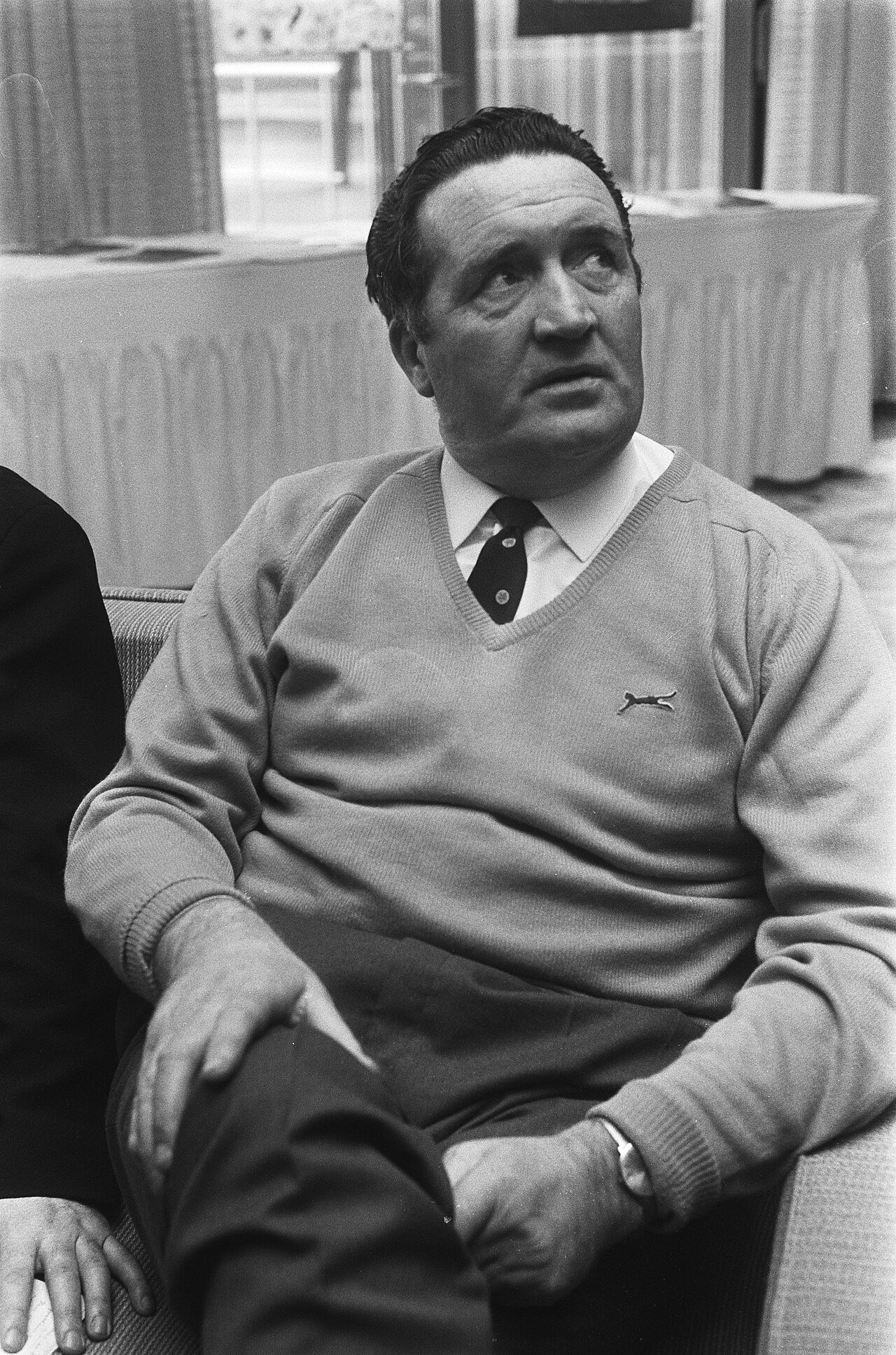
Jock Stein, the man behind the Lisbon Lions
Born on 5 October 1922. A miner before he was a footballer, as Celtic manager he won the first European Cup by a British club in 1967, in Lisbon against Inter. Every player in that side had been born within a few miles of Glasgow, and in Scotland they are known as the Lisbon Lions.
He won nine Scottish league titles in a row and died in 1985 on Scotland's bench in Cardiff, of a heart attack in the closing minutes of the game that earned his country a play-off for the World Cup in Mexico.
- Albion Rovers F.C. 1942-1950 · 4 goals
- Llanelli Association Football Club 1950-1951 · 5 goals
- Celtic Football Club 1951-1957 · 2 goals
- Scottish Football League XI 1954
Omar Asad, the goal against Milan
Striker for Carlos Bianchi's Vélez Sarsfield. In the 1994 Intercontinental Cup final in Tokyo he scored the second goal of the 2-0 against Capello's Milan, a volley from an almost impossible angle. It is the most famous goal in the club's history. He played his last game on 5 October 1997.
- Club Atlético Vélez Sarsfield 1992-2000 · 23 goals
🔴⚪ Sporting Gijón players born this day
They played for Sporting Gijón and were born on this same day. There is only their data here: we would rather name them than leave them out, and rather give the bare facts than invent a story.
Narciso Rodríguez 🔴⚪
- Real Sporting de Gijón
Cesáreo Bachiller 🔴⚪
- Atlético de Madrid
- Granada Club de Fútbol
- Real Sporting de Gijón
Another 54 internationally known footballers were born on this day. We do not list them for the sake of it: only those with a story to tell make it here.
📅 The almanac: pick any date
Every day of the year has its story. Highlighted days are already out: click to see who was born or what happened on that date. The faded ones go live on their day, at midnight (Spain time). 19 published.
Football almanac · Elopi23
January
Nothing from this month is out yet. One goes live each day, on its own date.
February
Nothing from this month is out yet. One goes live each day, on its own date.
March
Nothing from this month is out yet. One goes live each day, on its own date.
April
Nothing from this month is out yet. One goes live each day, on its own date.
May
Nothing from this month is out yet. One goes live each day, on its own date.
June
Nothing from this month is out yet. One goes live each day, on its own date.
July
Nothing from this month is out yet. One goes live each day, on its own date.
August
Nothing from this month is out yet. One goes live each day, on its own date.
September14 ★
- 11 September: Ruud Gullit
- 1111 September: Franz Beckenbauer
- 1818 September: Ronaldo
- 2020 September: Henrik Larsson
- 2121 September: Sándor Kocsis
- 2222 September: Thiago Silva
- 2323 September: Quini
- 2424 September: Marco Tardelli
- 2525 September: Karl-Heinz Rummenigge
- 2626 September: Michael Ballack
- 2727 September: Francesco Totti
- 2828 September: Javi Poves
- 2929 September: Andriy Shevchenko
- 3030 September: Frank Rijkaard
October5 ★
November
Nothing from this month is out yet. One goes live each day, on its own date.
December
Nothing from this month is out yet. One goes live each day, on its own date.
★ published · ✎ written, waiting for their day · the red circle is today
A new one goes live every day at midnight (Spain time). We will let you know in your browser, and also when there is a new article. Turn it off whenever you like.
Dates, clubs, individual awards and photos come from Wikidata and Wikimedia Commons, under free licences, and update themselves. Ages are not written anywhere: they are calculated the moment you open the page, so this page always shows the right age, this year and twenty years from now. If any of these players signs for another club or wins an award, their profile picks it up on its own. What is written by hand is the story and the judgement: who the day belongs to, and why.