23 September: Quini, the Wizard of El Molinón
Quini
«El Brujo (the Wizard)» 🔴⚪ SPORTING GIJÓN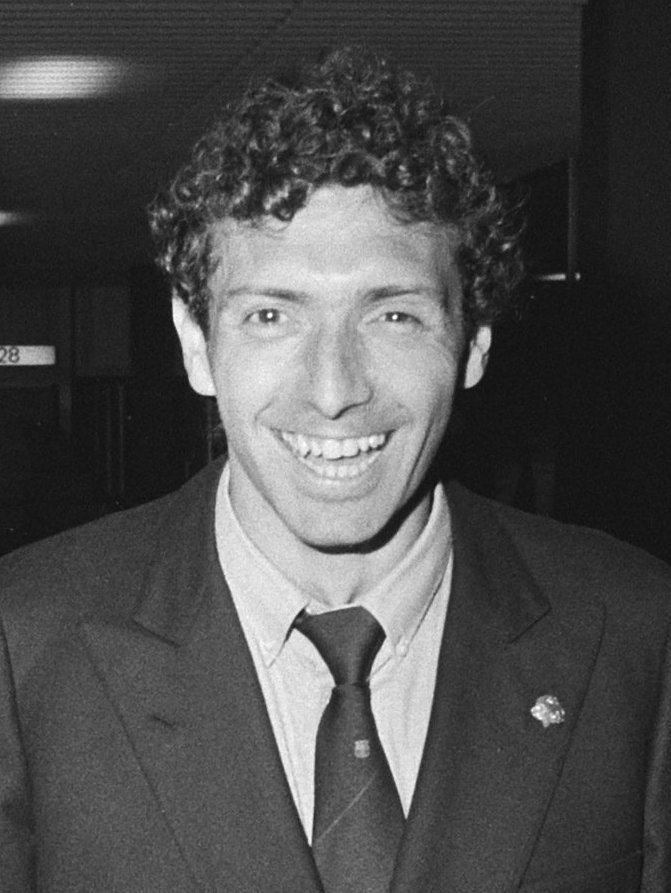
- Club Deportivo Ensidesa 1967-1968 · 17 goals
- Real Sporting de Gijón 1968-1980 · 214 goals
- Fútbol Club Barcelona 1980-1984 · 54 goals
- Real Sporting de Gijón 1984-1987 · 17 goals
From Llaranes to El Molinón
He was born in Oviedo on 23 September 1949, but his childhood belonged to Avilés. The family moved to Llaranes, the neighbourhood the ENSIDESA steelworks built for its workers, when he was five; his father worked at the plant. He inherited his nickname from his father too: his father was already «Quini».
He was the eldest of three brothers and all three ended up in football. Jesús was Sporting's goalkeeper for seventeen seasons, and drowned in 1993; Rafael, «Falo», kept goal for the reserve team. Enrique started playing with the Salesians, on a cinder pitch he himself remembered like this: «my first football pitch was La Carbonilla, which, as the name says, was fine coal dust spread over hard ground».
In 1967 he moved up to C. D. Ensidesa, in the fourth tier. And there he nearly got lost: they played him on the right wing and the goals disappeared. Real Oviedo showed an interest; his father said no, so as not to have to travel every day. What saved his career was a coach, José Luis Molinuevo, who put him back in the middle of the attack. In a game against Sporting's reserve side he scored four goals, and the Gijón scouts needed nothing more.
Sporting signed him on 9 November 1968. He made his debut on 22 December at the Benito Villamarín, a 1-0 defeat to Betis. The following Sunday he scored his first goal, a header against Racing de Ferrol. He spent fifteen seasons at the club, in two spells: 1968-1980 and 1984-1987.
Seven Pichichis, 219 goals
Quini won the Pichichi trophy seven times, a number no other Spaniard has matched: five in the top flight, 1973-74, 1975-76 and 1979-80 with Sporting and 1980-81 and 1981-82 with Barcelona, and two more in the Second Division with Sporting, in 1969-70 and 1976-77.
That detail says a lot about his career: he was Spain's top scorer playing for a team that went up and down. The first Pichichi, twenty-four goals in the Second Division, came with promotion in 1970 after ten years down there. The 1975-76 one, twenty-one goals, came with a relegation: he was the top scorer in La Liga and Sporting still went down.
In the top flight he played 448 games and scored 219 goals. When he retired he was the fourth highest scorer in La Liga history, behind only Zarra, Di Stéfano and César. Of those 219, 165 came for Sporting, still the club's record in the top division.
With the national team it was different: thirty-five caps and only eight goals. He made his debut on 28 October 1970 against Greece, at La Romareda, coming off the bench and scoring. He played at the 1978 World Cup in Argentina, the 1982 World Cup in Spain and Euro 1980, but seldom with the freedom he had at club level: he was often told to man-mark. He told it with a wry smile: in a Spain-Germany game in 1974 he was sent out to shut down Beckenbauer, Spain won 1-0, he did the job, and the next day the papers gave him a zero.
George Best's elbow
The part of his career almost nobody remembers is the one that nearly ended it. On 16 February 1972, in Hull, Spain were playing Northern Ireland. Quini went up for a cross and an elbow from George Best fractured his left cheekbone.
The federation had him flown straight back to Spain. He was operated on in Madrid, a delicate procedure carried out through the inside of his mouth. He spent more than a year below his best and missed practically the whole 1972-73 season. He was twenty-two. The next season he won his first top-flight Pichichi.
The jeers at El Molinón and the four goals
In 1974, with the old retention rule still in force, Quini could not leave even though half the country wanted him. Frustrated, he gave an interview to the Catalan paper Dicen that the Gijón press picked up and that went down very badly in Gijón.
On 7 October 1974, against Español, El Molinón greeted him with a monumental barracking: in the warm-up, when he came out, every time he touched the ball. Quini scored four goals. At the final whistle, the same stadium that had whistled him ninety minutes earlier sent him off with an ovation.
Barcelona: 82 million pesetas and goal number 3,000
Cruyff's Barcelona had already tried in 1976, with an offer that rose from forty to fifty million pesetas. Sporting said no, and Quini even considered giving up football: he had an offer from a Catalan textile firm and, as he told it, if it was not «sorted out» he would quit.
It took four more years. In June 1980 Barcelona paid 82 million pesetas and took him, just turned thirty. He was the signing of the summer. And it worked: Pichichi in each of his first two seasons at the Camp Nou, something rare at that age.
On 24 January 1982, against Castellón, he headed Barcelona's 3,000th goal in the top flight. In four seasons there he won every team trophy on his record: two Copas del Rey (1981 and 1983), the 1982 Cup Winners' Cup, the 1983 League Cup and the Spanish Super Cup. The first of those Copas del Rey he won, with two goals of his own, against his own Sporting.
Twenty-five days
On 1 March 1981 Barcelona had beaten Hércules 6-0 at the Camp Nou. Quini scored two. Leaving the stadium on his way to the airport, where his wife and children were arriving that night from Asturias, two men held him at gunpoint, put him in his own car and then in a DKW van. They were not terrorists: they were ordinary criminals with no record who wanted a hundred million pesetas.
What followed shook the country. Barcelona's dressing room fell apart: Bernd Schuster, who had become close friends with the Asturian, said he did not want to play, «besides legs I have a heart, I just want Quini back», and the federation refused to postpone anything. The team took one point from four games and threw away a league title that was within reach. When Ramírez came on to replace him at the Calderón, he wore 14 instead of Quini's 9. Five thousand people waited for the team at El Prat chanting «Quini, freedom!».
Swiss banking caught the kidnappers. They had demanded the hundred million be paid into a Swiss account, pretending that Barcelona had to collect money from the watchmaker Omega. Spanish and Swiss police cooperation managed to lift banking secrecy and identify the account holder: Víctor Manuel Díaz Esteban, an electrician, aged twenty-six. When he went to withdraw the first million pesetas he was identified and arrested on his way to the airport. He confessed where Quini was.
At ten at night on 25 March the police entered a mechanic's workshop on Jerónimo Vicens street in Zaragoza and brought him out of a hidden pit. At half past two in the morning he arrived in Barcelona in a SEAT 131, gaunt and with twenty-five days of beard, among thousands of people.
And then he did what almost nobody expected: he withdrew his complaint and publicly forgave his kidnappers. Barcelona pressed on with the case, seeking thirty-five million in damages and twenty-three years in prison. The sentence, on 15 January 1982, gave them ten years in prison and five million pesetas for the player. Quini turned the money down.
He went back on the pitch and went back to scoring. That same season Barcelona won the Copa del Rey and he was their top scorer, with eleven goals.
Coming home
In 1984, about to turn thirty-five, he announced his retirement. Barcelona organised a testimonial that turned out to be controversial: Quini wanted Maradona, just sold to Napoli and a friend of his, to play, and president José Luis Núñez flatly refused. Cruyff, Kempes, Arconada, N'Kono and his brother Castro played. Maradona did not.
A month after the testimonial he changed his mind. He went back to Sporting and played three more seasons; his last league game was on 14 June 1987, against Barcelona. Then he stayed at the club for good: assistant coach, team delegate and, in the end, club ambassador. «My life is at this club and I want to die here», he said in 2015.
He died of a heart attack on 27 February 2018. The next day Gijón city council voted unanimously to rename the stadium El Molinón-Enrique Castro «Quini». Fourteen thousand people went to the funeral. He is buried in La Carriona cemetery in Avilés, next to his brother Jesús. In 2024 a statue of him was unveiled outside the stadium's main entrance.
That the 1981 kidnapping was the work of ETA, GRAPO or the far right. That is what was taken for granted in those days and what many people still repeat.
That there was no organisation behind it: they were ordinary criminals with no record who wanted a hundred million pesetas, and they were caught by following the money to a Swiss account. The hoax has a specific, documented origin: on 2 March 1981 La Vanguardia received a fake call from someone claiming to represent a «Catalan-Spanish Battalion» who justified the kidnapping because «a separatist team cannot win the league». It was a lie, but Spain had just been through Tejero's attempted coup, eight days earlier, and everyone thought of terrorism first. The reality was far shabbier: a pit in a mechanic's workshop in Zaragoza.
That before he sang he kept goal for Real Madrid's first team, or for Castilla.
That he was a goalkeeper in the club's youth teams, at under-19 level, and never played an official game for the first team. The Castilla part is also impossible on the dates: the reserve side was not called Real Madrid Castilla until 1972, ten years after the accident that ended his career. That he was in Madrid's academy is true; the rest has grown over the years.
Also born on 23 September
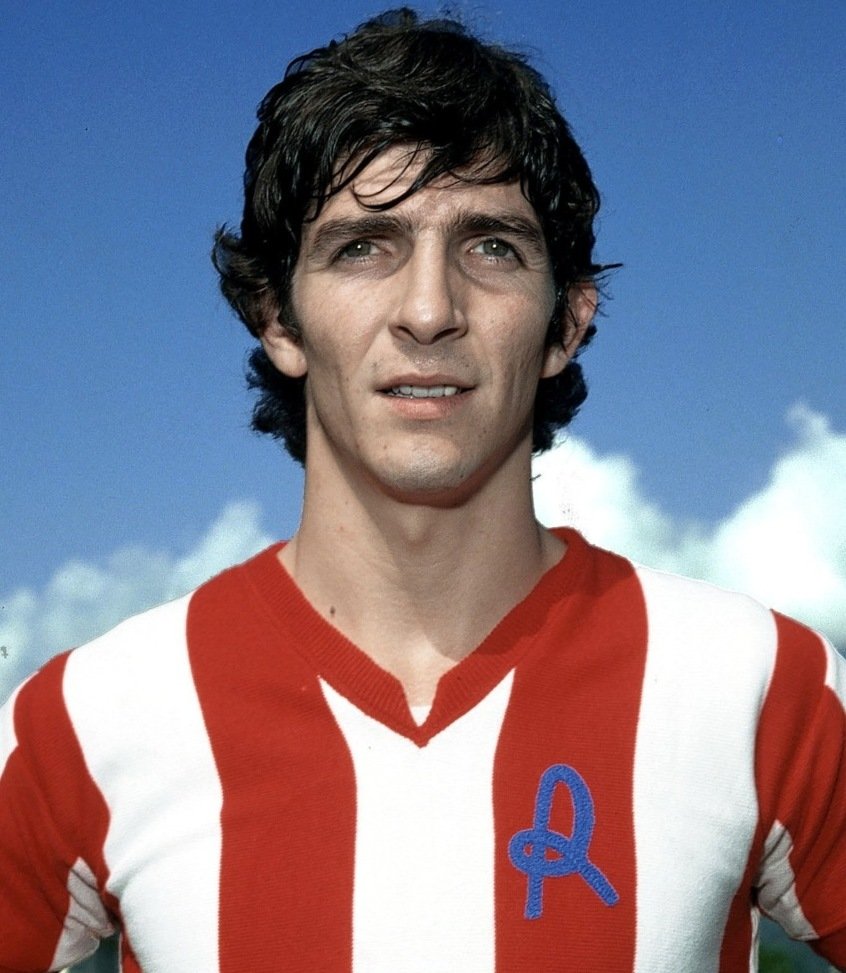
Paolo Rossi, Pablito
If one career sums up how fast football can change, it is his. At Lanerossi Vicenza he did something nobody had done: top scorer in Serie B and, the following year, in Serie A. With twenty-four goals in 1977-78 he took a newly promoted side to second place, behind Juventus. In Italy they called that team «Real Vicenza».
In 1980 the Totonero scandal broke, the betting and match-fixing affair that rocked Italian football, and Rossi was among those accused. He always protested his innocence. The ordinary courts acquitted him, partly because fixing a match was not even a crime in Italy at the time, but sporting justice upheld the punishment: a three-year ban, cut to two on appeal.
He played again in April 1982. He went to the World Cup in Spain with three games in two years, and Enzo Bearzot took a storm of criticism for picking him. Rossi went through the first round without scoring. And then, in four games, he did this: a hat-trick against Brazil in the 3-2 that knocked out the best team at the tournament, two against Poland in the semi-final and the first goal of the final against West Germany.
Six goals. He took the Golden Boot, the Golden Ball of the tournament, the World Cup and, at the end of the year, the Ballon d'Or. No footballer has won those four things in the same year, before or since. With Juventus he won two scudetti, the Cup Winners' Cup and the 1985 European Cup, the one at Heysel. He died on 9 December 2020.
- Juventus 1973-1975
- Calcio Como 1907 1975-1976
- Vicenza Calcio 1976-1980 · 60 goals
- Perugia Calcio 1979-1980 · 13 goals
- Juventus 1981-1985 · 24 goals
- A.C. Milan 1985-1986 · 2 goals
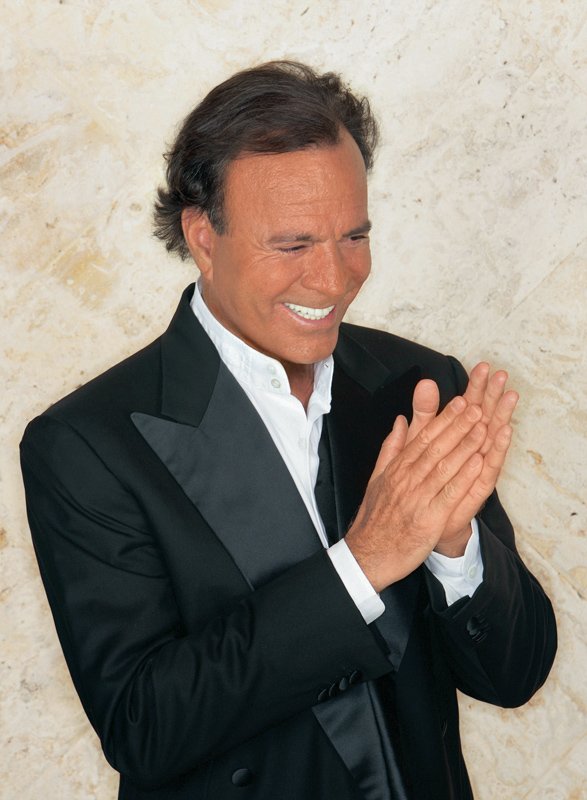
Julio Iglesias, the goalkeeper who ended up singing
The biggest name born on 23 September is not a footballer's, but it started out as one. Julio Iglesias was a goalkeeper in Real Madrid's academy, in the under-19 side, sharing a dressing room with lads who did reach the first team: Velázquez, Grosso, Pedro de Felipe. He was studying law and had one subject left to finish.
At two in the morning on 22 September 1962, the eve of his birthday, the car he was travelling home in with some friends crashed on the Majadahonda road. The medical report said there was no hope of him walking again. He spent a year and a half partly paralysed and gave up football.
In hospital, a young nurse called Eladio Madaleno gave him a guitar to exercise his fingers. It was not a romantic present: it was physiotherapy. Strumming it, he began setting to music the poems he wrote while recovering. One of them was called La vida sigue igual, and on 17 July 1968 he won the Benidorm Festival with it.
He is the best-selling Spanish-language artist in history. And it all starts with a car crash on the night before his birthday.
- Real Madrid youth teams (under-19)
Another 51 internationally known footballers were born on this day. We do not list them for the sake of it: only those with a story to tell make it here.
A new one goes live every day at midnight (Spain time). We will let you know in your browser, and also when there is a new article. Turn it off whenever you like.
Dates, clubs, individual awards and photos come from Wikidata and Wikimedia Commons, under free licences, and update themselves. Ages are not written anywhere: they are calculated the moment you open the page, so this page always shows the right age, this year and twenty years from now. If any of these players signs for another club or wins an award, their profile picks it up on its own. What is written by hand is the story and the judgement: who the day belongs to, and why.