25 September: Rummenigge, two Ballons d'Or and a summer at El Molinón
Karl-Heinz Rummenigge
«Kalle»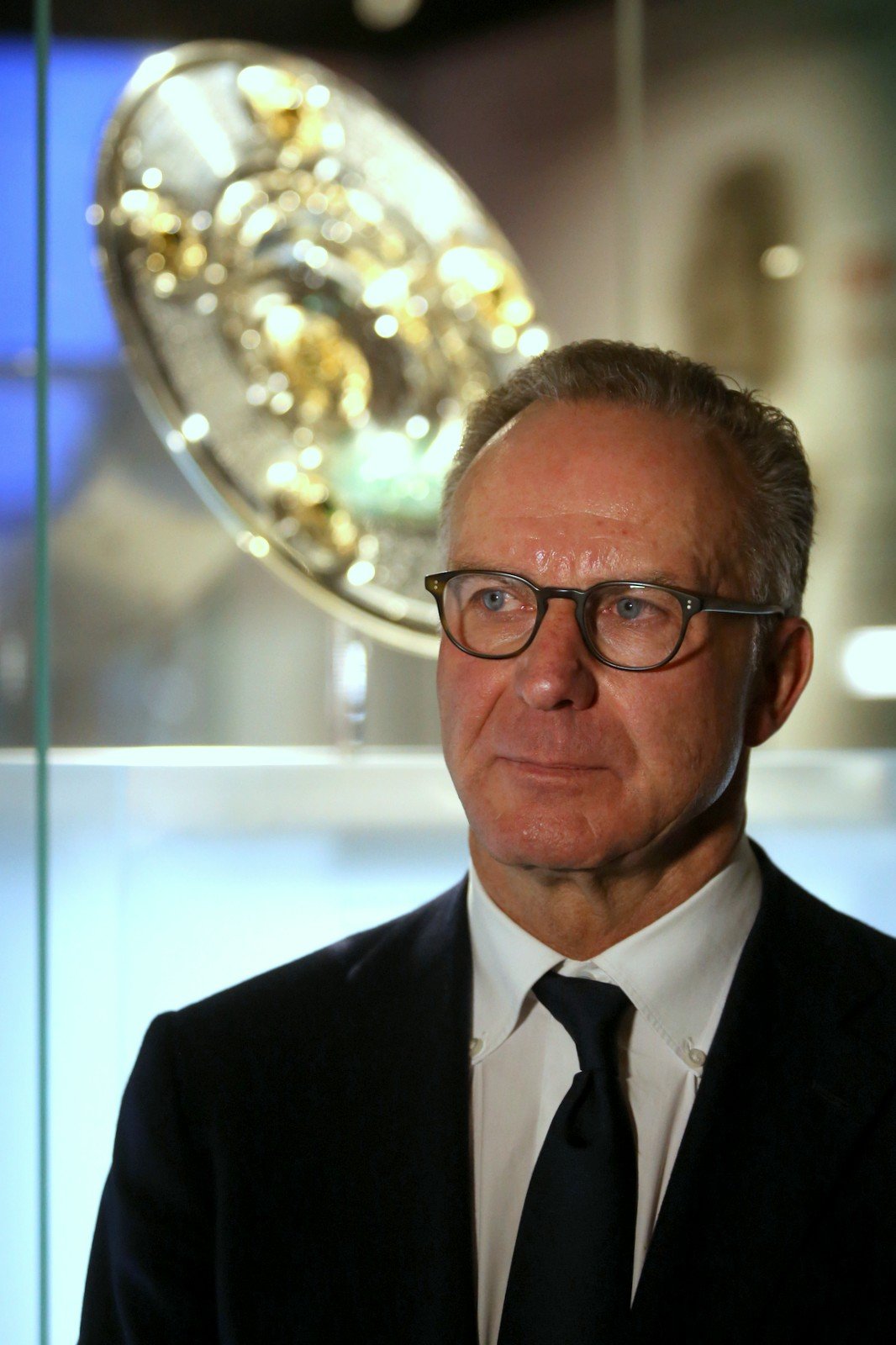
- F. C. Bayern Múnich 1974-1984 · 162 goals
- Inter de Milán 1984-1987 · 24 goals
- Servette Football Club Genève 1987-1989 · 34 goals
From Lippstadt to Bayern
He joined Bayern Munich in 1974 from his home-town club, Lippstadt, aged nineteen and with a reputation as a shy winger. He landed in the dressing room of Beckenbauer, Müller and Maier, the one that was starting to win the European Cup, and won two of those three, in 1975 and 1976, as well as the Intercontinental Cup.
As that generation faded, he became Bayern. Bundesliga top scorer in 1980, 1981 and 1984, champion in 1980 and 1981, and Ballon d'Or winner in those same two years. In 1980 he was also a European champion with West Germany in Italy.
Gijón, summer 1982
At the World Cup in Spain, West Germany were drawn in the Asturias group and, as seeds, played all three of their games at El Molinón; Austria, Algeria and Chile met each other at the Tartiere in Oviedo.
The opener, on 16 June, was one of the biggest shocks in World Cup history: Algeria won 2-1. Madjer put the Africans ahead, Rummenigge equalised and Belloumi scored the second straight from the restart. Four days later, at the same ground, Rummenigge scored a hat-trick against Chile (4-1) and got the group back on track.
The third game is the one Gijón has never forgotten. On 25 June, West Germany and Austria both knew a 1-0 German win would put them through and eliminate Algeria. Hrubesch scored after ten minutes and for the remaining eighty nobody tried anything. The El Molinón crowd went from whistling to chanting «let them kiss!», and the local paper El Comercio ran the match report in its crime section. That game forced FIFA to play the final group matches at the same time from then on.
Seville and Madrid
Rummenigge went into the knockout rounds carrying an injury. In the Seville semi-final against France, the one with Schumacher's challenge on Battiston, he started on the bench. France took the lead in extra time and Derwall sent him on; the French went 3-1 up, but Rummenigge made it 3-2, Fischer equalised with an overhead kick and West Germany won the first penalty shoot-out in World Cup history.
He captained the side in the final at the Bernabéu and lost 3-1 to Italy. Four years later, in Mexico, he captained them in the final again and lost again, to Maradona's Argentina: he scored the 2-1 that began the German comeback, and Burruchaga decided the game six minutes from time.
Inter, Geneva and the boardroom
In 1984 Inter paid a fortune for him, but injuries meant his three seasons in Italy fell short of what he had been. He ended his playing days at Servette in Geneva, finishing as top scorer in the Swiss league in his final season.
He then went back to Bayern through the boardroom door: vice-president and, for almost two decades, the club's chief executive. Few footballers have carried so much weight at the same club both on and off the pitch.
That the Austrian, also born on 25 September, with 805 official goals, scored more than anyone in football history, ahead of Pelé, Messi or Cristiano Ronaldo.
That it depends on who is counting. The 805 figure is the one credited to him by the RSSSF and the IFFHS, and FIFA has used it, but it includes goals from games other statisticians do not regard as official, such as regional selections or lower divisions. On stricter criteria his tally falls to around 759. What nobody disputes is his firepower: by those same counts, more than a goal and a half per league game across his career, and five seasons as the top scorer on the whole continent.
Also born on 25 September
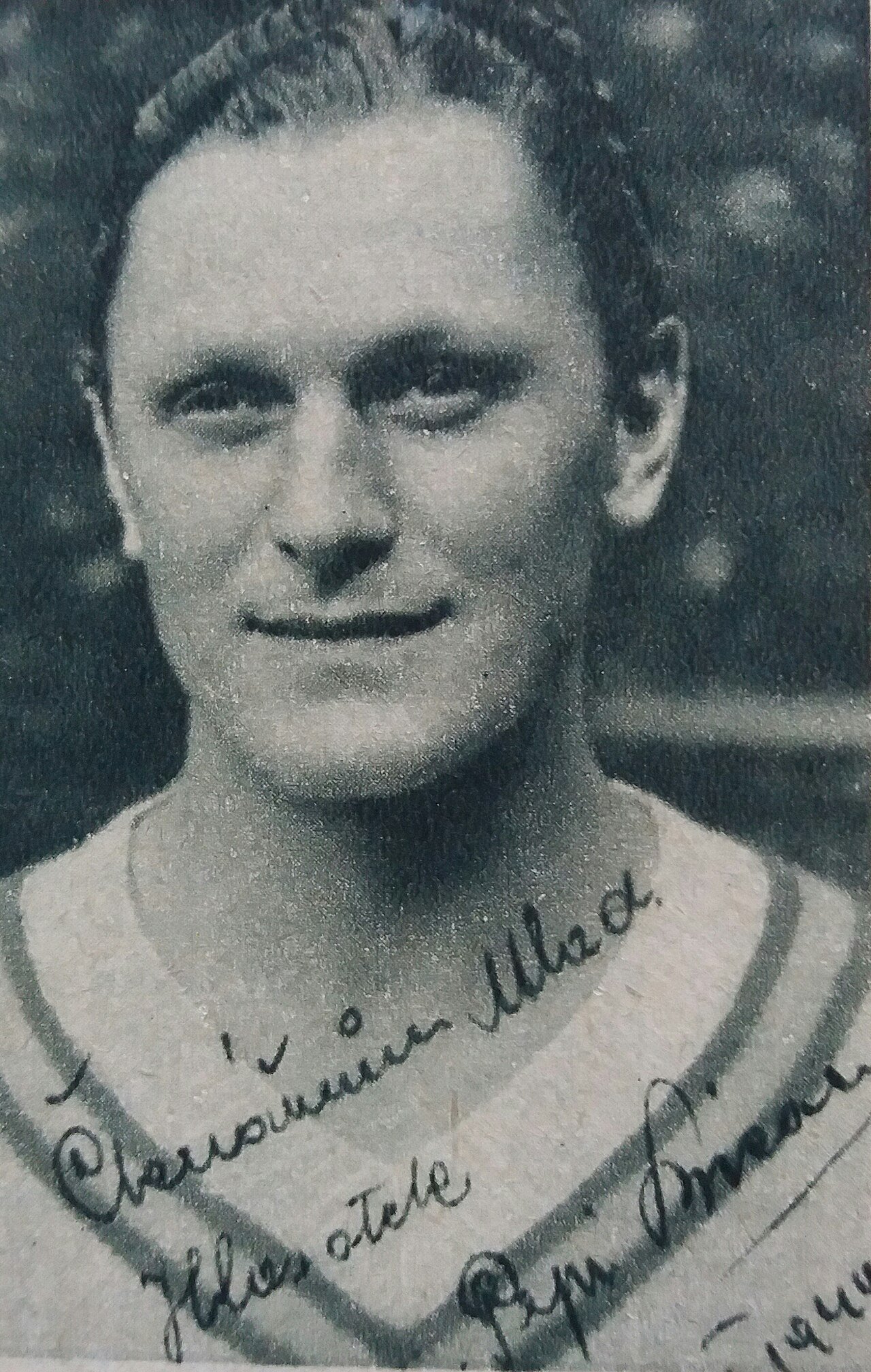
Josef Bican, Pepi
Born in Vienna in 1913, he played at the 1934 World Cup for Austria, the Wunderteam, and in 1937 moved to Slavia Prague, where he scored the vast majority of his goals. He played for three different national teams: Austria, Czechoslovakia and Bohemia and Moravia during the occupation.
His career was split by the war and then by the politics of his country, and that is why for decades he was almost unknown outside central Europe. The statistics rescued him: when the great stars began to approach 800 goals, his name appeared on every list.
- SK Rapid Viena 1931-1935 · 78 goals
- FC Admira Wacker Mödling 1935-1937 · 18 goals
- SK Slavia Praga 1937-1948 · 427 goals
- FC Vítkovice 1949-1951 · 74 goals
- FC Hradec Králové 1952-1953 · 53 goals
- SK Slavia Praga 1953-1955 · 22 goals
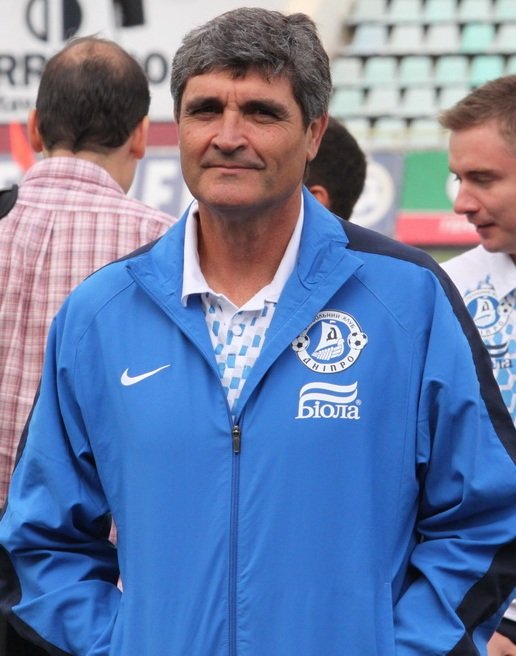
Juande Ramos, the man with two UEFA Cups
From Pedro Muñoz in La Mancha, he led Sevilla to the best period in their history up to then: two UEFA Cups in a row, in 2006 against Middlesbrough (4-0) and in 2007 against Espanyol on penalties, and in between a UEFA Super Cup in which they thrashed Ronaldinho's Barcelona 3-0.
He then won a League Cup with Tottenham and managed Real Madrid for half a season, in 2008-09.
- Elche Club de Fútbol 1973-1977
- Alicante Club de Fútbol
- Linares Club de Fútbol
- Club Deportivo Eldense
- Club Deportivo Alcoyano
- Club Deportivo Dénia
🔴⚪ Sporting Gijón players born this day
They played for Sporting Gijón and were born on this same day. There is only their data here: we would rather name them than leave them out, and rather give the bare facts than invent a story.
José Díez Calleja 🔴⚪
- Real Betis Balompié
- Real Sporting de Gijón
📅 The almanac: pick any date
Every day of the year has its story. Highlighted days are already out: click to see who was born or what happened on that date. The faded ones go live on their day, at midnight (Spain time). 10 published.
Football almanac · Elopi23
January
Nothing from this month is out yet. One goes live each day, on its own date.
February
Nothing from this month is out yet. One goes live each day, on its own date.
March
Nothing from this month is out yet. One goes live each day, on its own date.
April
Nothing from this month is out yet. One goes live each day, on its own date.
May
Nothing from this month is out yet. One goes live each day, on its own date.
June
Nothing from this month is out yet. One goes live each day, on its own date.
July
Nothing from this month is out yet. One goes live each day, on its own date.
August
Nothing from this month is out yet. One goes live each day, on its own date.
September10 ★
October
Nothing from this month is out yet. One goes live each day, on its own date.
November
Nothing from this month is out yet. One goes live each day, on its own date.
December
Nothing from this month is out yet. One goes live each day, on its own date.
★ published · ✎ written, waiting for their day · the red circle is today
A new one goes live every day at midnight (Spain time). We will let you know in your browser, and also when there is a new article. Turn it off whenever you like.
Dates, clubs, individual awards and photos come from Wikidata and Wikimedia Commons, under free licences, and update themselves. Ages are not written anywhere: they are calculated the moment you open the page, so this page always shows the right age, this year and twenty years from now. If any of these players signs for another club or wins an award, their profile picks it up on its own. What is written by hand is the story and the judgement: who the day belongs to, and why.