11 September: Beckenbauer, the Kaiser
Franz Beckenbauer
«der Kaiser»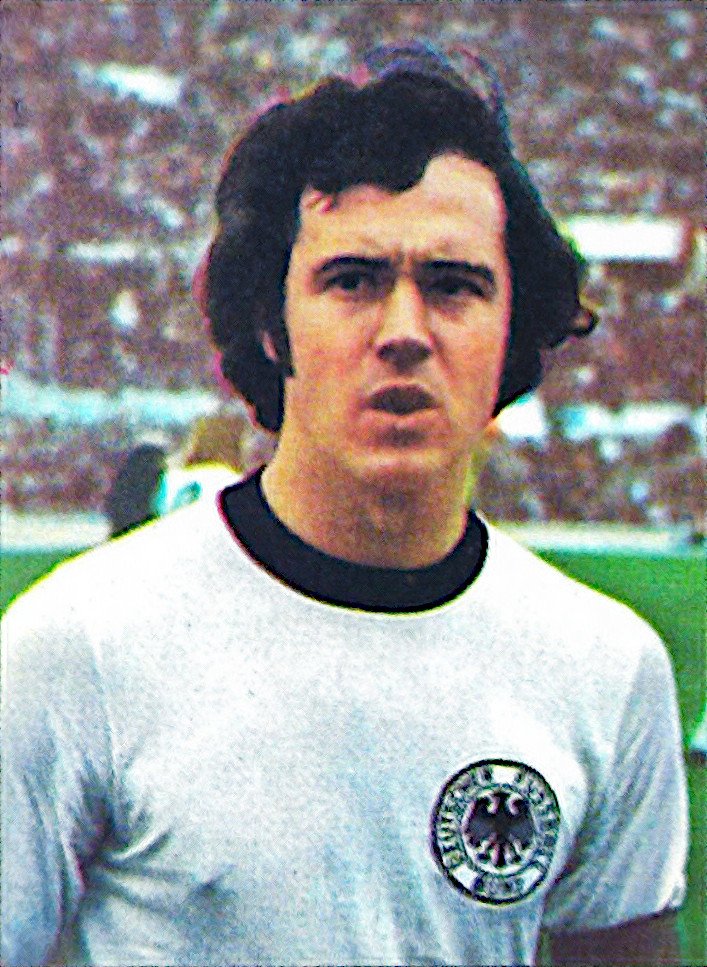
- F. C. Bayern Múnich 1965-1977 · 64 goals
- New York Cosmos 1977-1980 · 17 goals
- Hamburgo S.V. 1980-1982
- New York Cosmos 1983 · 2 goals
Post-war Munich
He was born in Munich in September 1945, four months after the end of the war, in a city in ruins. His father was a postman.
As a boy he supported 1860 Munich, not Bayern, and he told the story of how he ended up on the other side a thousand times: in a youth match against 1860 an opponent slapped him, and that put him off ever wearing their shirt. He went to Bayern, then the small club in town. With him in the side, it stopped being that.
The man who invented a position
Before Beckenbauer, the last defender cleared the ball. With him, the last defender started the attack: he received with his back to goal, turned and strolled forward with the ball, looking for a pass instead of a hoof. So elegant that his nickname, Kaiser, came from the way he moved rather than from what he won.
That idea, that the man who should take the fewest risks is the one who starts the play, is the root of almost everything asked of a centre-back today. Without that invention there is no Guardiola and no centre-backs playing out from the back.
1966, 1970, 1974
He played in three World Cups and all three are history for different reasons.
In 1966 he lost the final at Wembley to England, the one with the ghost goal that is still argued about. He was twenty.
In 1970, in the semi-final against Italy at the Azteca, the 4-3 after extra time known as the Game of the Century, he dislocated his shoulder. West Germany had already made the two substitutions the rules allowed. He had his arm strapped to his body in a sling and played the rest of the match like that, extra time included. The photograph of Beckenbauer bandaged in the middle of the pitch is one of the images football lives on.
In 1974, on home soil, he was the captain who lifted the Cup after beating Cruyff's Netherlands in the final. That same summer his Bayern began a run of three European Cups in a row.
New York and home again
In 1977 he joined the New York Cosmos, where he played alongside Pelé and Carlos Alberto in the most extravagant project football had seen. He stayed four seasons and won three North American league titles.
He returned to Germany to retire at Hamburg, winning one more Bundesliga in 1982.
1990: the other side of the touchline
With hardly any coaching experience, the federation put him in charge of the national team in 1984. He lost the 1986 World Cup final to Maradona's Argentina and won the 1990 final against Argentina, in Rome.
That put him in a club of three: world champion as a player and as a manager. Mário Zagallo had done it before him and Didier Deschamps has done it since. Nobody else.
The shadow of 2006
He was the man who brought the 2006 World Cup to Germany and chaired its organising committee. Years later, Der Spiegel uncovered a payment of 6.7 million euros whose destination did not add up, and investigations were opened in Germany and Switzerland into how the hosting rights had been won.
Beckenbauer always denied buying anything and admitted a mistake in how that money was handled. The Swiss case expired in 2020 without a verdict, and he died in January 2024 without any court ever ruling on his responsibility.
Also born on 11 September
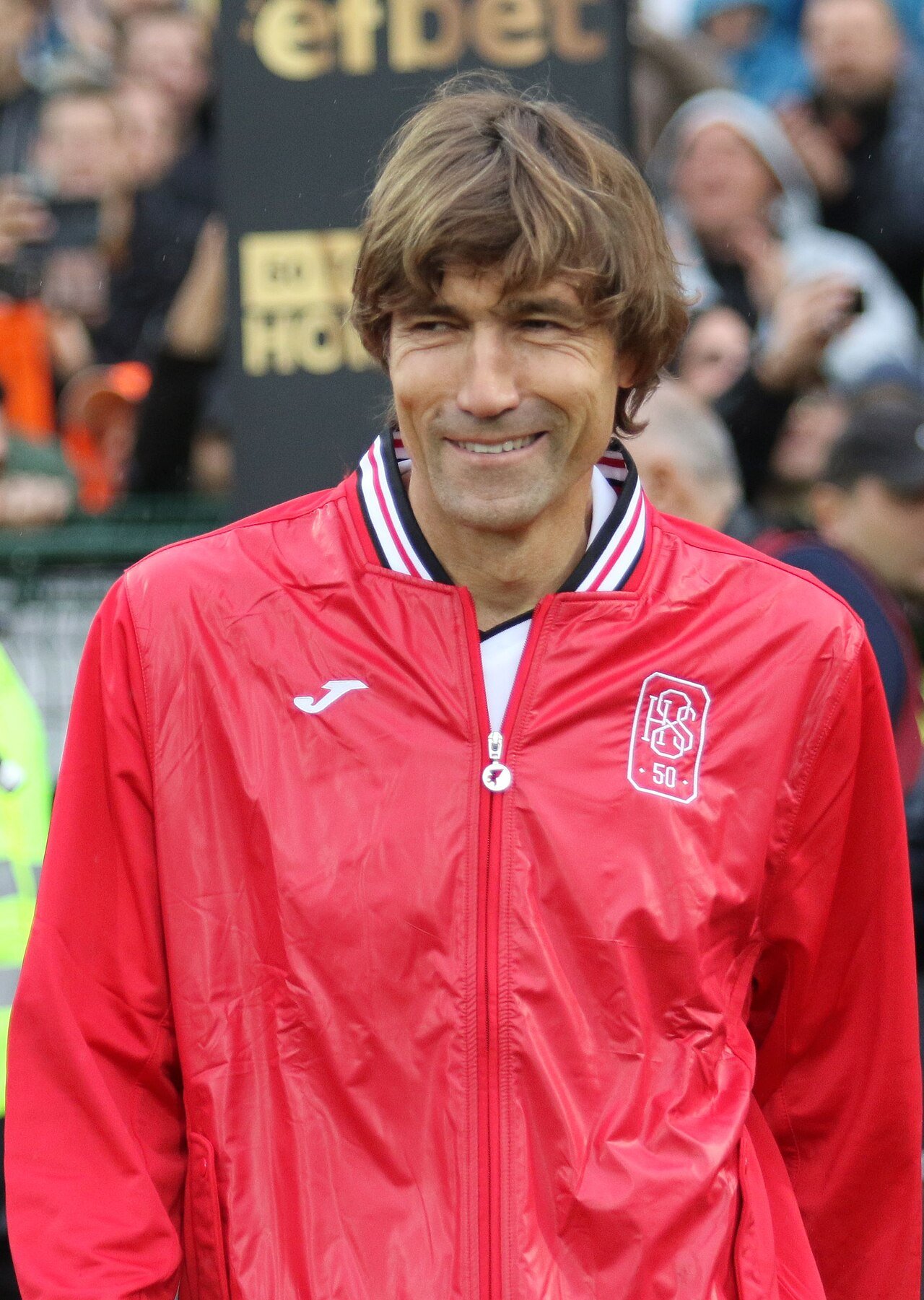
Julio Salinas, the man who came back to life at El Molinón
A striker from Bilbao who played almost everywhere you could play in Spain: Athletic, Atlético, Barcelona, Deportivo, Sporting Gijón and Alavés. At Barça he was one of the men of Cruyff's Dream Team: four league titles in a row and the European Cup at Wembley in 1992, a final he started.
He arrived at El Molinón in 1995, aged thirty-three and written off as finished. In that first season he scored eighteen league goals and four more in the cup, and those goals took him back into the national team for Euro 96. Few players have brought themselves back to life so late.
He won 56 caps and played in three World Cups. And he carries a huge injustice: he is remembered more for a chance he missed against Italy in the quarter-finals of USA 94 than for the twenty-two goals he did score for Spain. That match, by the way, is the one with Tassotti's elbow on Luis Enrique that the referee did not see.
- Bilbao Athletic 1981-1984 · 62 goals
- Athletic Club 1982-1986 · 29 goals
- Atlético de Madrid 1986-1988 · 36 goals
- Fútbol Club Barcelona 1988-1994 · 85 goals
- Real Club Deportivo de La Coruña 1994-1995 · 16 goals
- Real Sporting de Gijón 1995-1996 · 28 goals
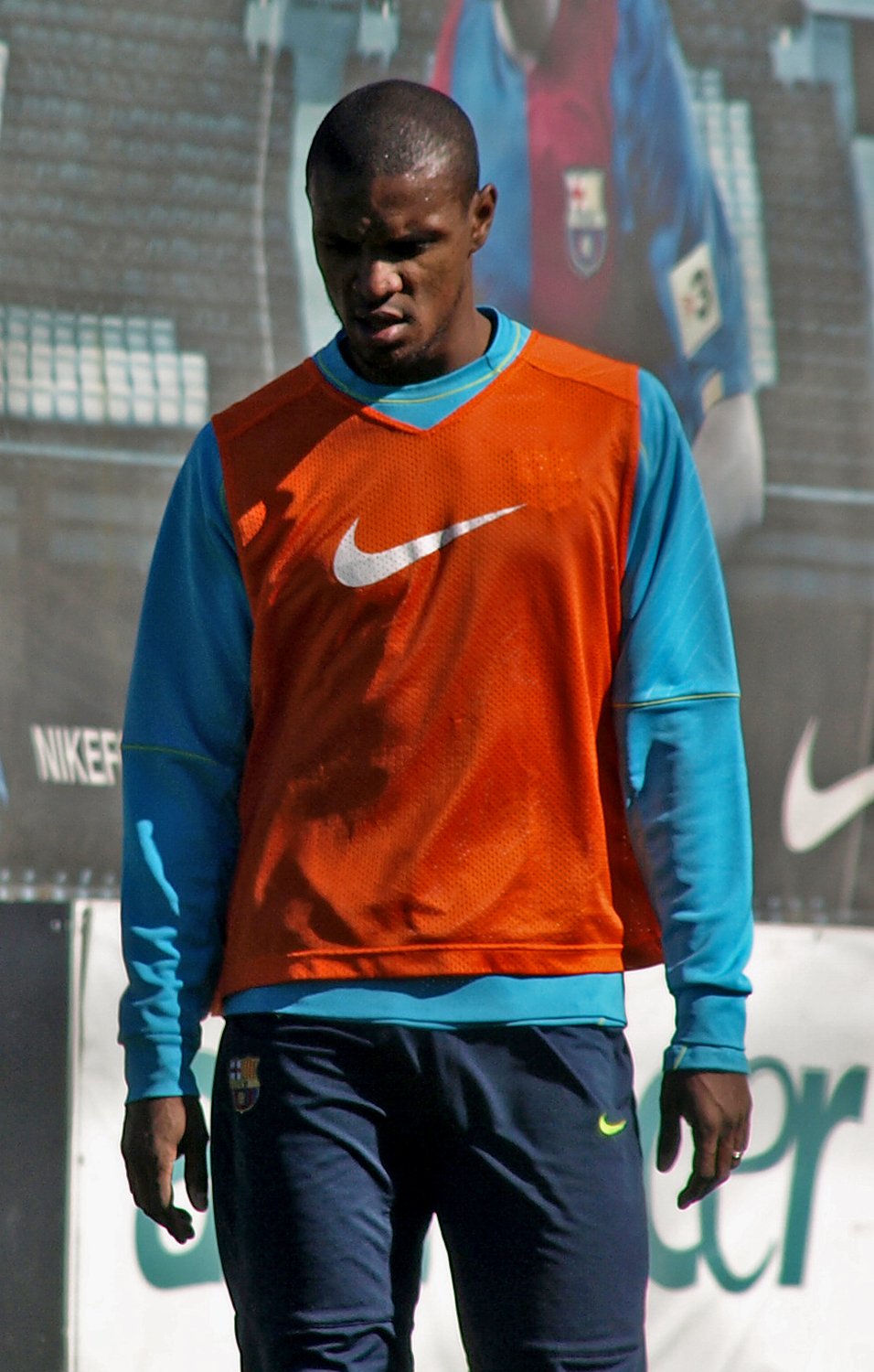
Éric Abidal, captain for one night
The French full-back of Guardiola's Barcelona, a footballer who made himself undroppable in a side where that was incredibly hard to do.
In March 2011 a tumour was found in his liver and he had surgery. Two and a half months later he played in the Champions League final at Wembley against Manchester United. At the final whistle, Carles Puyol, the captain, took off his armband and handed it to him so that he could lift the trophy. It is one of the most remembered gestures in recent football.
The following year he needed a liver transplant. He played again in April 2013, almost a year later, and carried on for two more seasons.
- AS Lyon Duchère 1999-2000
- A.S. Monaco F.C. 2000-2002
- Lille Olympique Sporting Club 2002-2004
- Olympique de Lyon 2004-2007
- Fútbol Club Barcelona 2007-2013
- A.S. Monaco F.C. 2013-2014
A new one goes live every day at midnight (Spain time). We will let you know in your browser, and also when there is a new article. Turn it off whenever you like.
Dates, clubs, individual awards and photos come from Wikidata and Wikimedia Commons, under free licences, and update themselves. Ages are not written anywhere: they are calculated the moment you open the page, so this page always shows the right age, this year and twenty years from now. If any of these players signs for another club or wins an award, their profile picks it up on its own. What is written by hand is the story and the judgement: who the day belongs to, and why.