21 September: Kocsis, the Golden Head
Sándor Kocsis
«the Golden Head»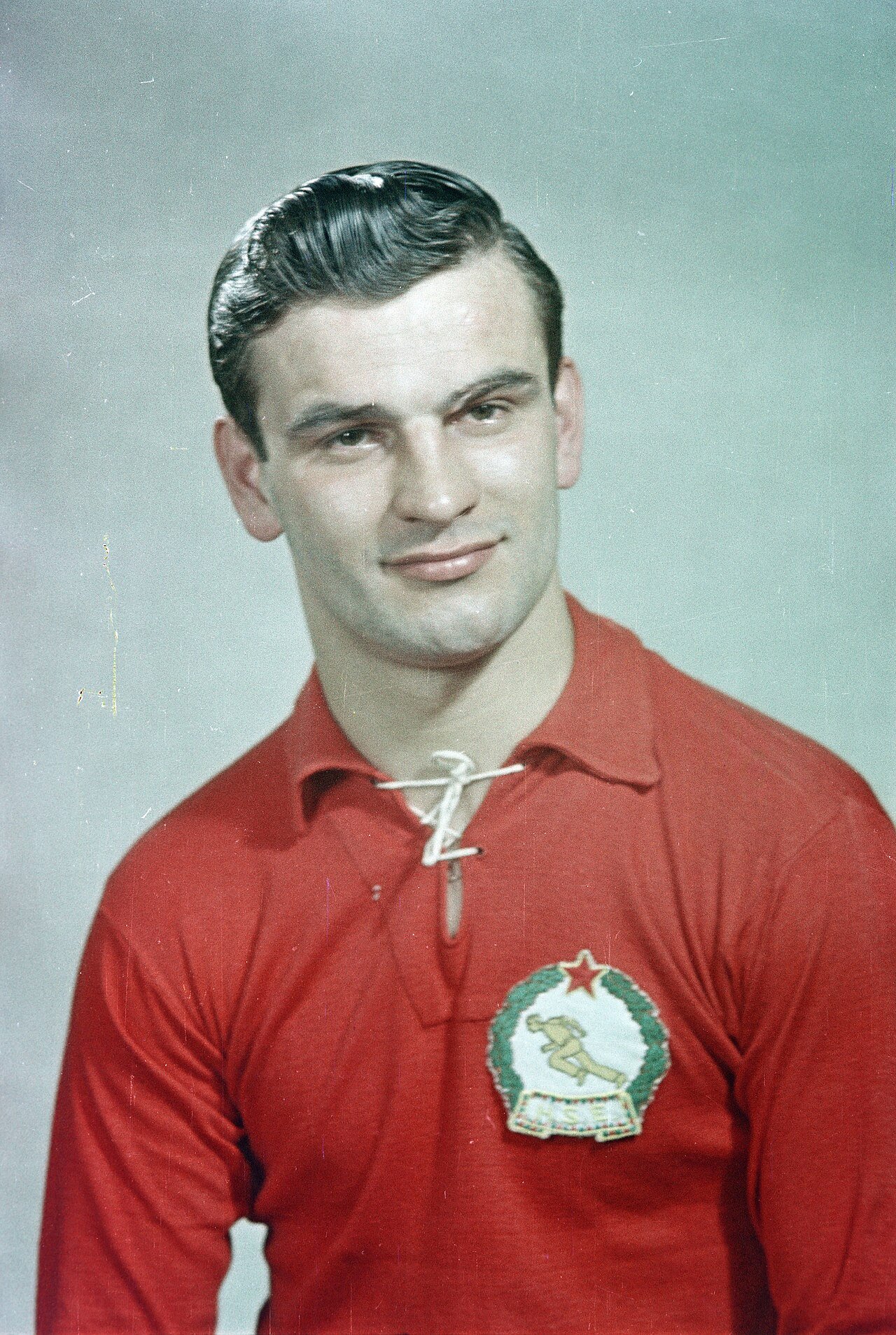
- Ferencváros T.C. 1946-1950 · 67 goals
- Budapest Honvéd FC 1950-1957 · 153 goals
- SC Young Fellows Juventus 1957-1958 · 7 goals
- Fútbol Club Barcelona 1958-1965 · 42 goals
The Golden Team
Between 1950 and 1956 Hungary were quite simply the best team in the world. They went four and a half years without losing, won Olympic gold in 1952 and in 1953 beat England 6-3 at Wembley: England's first home defeat to a side from outside the British Isles.
They called it the Aranycsapat, the Golden Team. Puskás was the name and the captain; Kocsis was the goalscorer. They played together at Honvéd, the army club, where Kocsis once scored 33 goals in 26 league games in a single season.
Eleven goals at one World Cup
At the 1954 World Cup in Switzerland, Kocsis did something nobody had done: eleven goals in one tournament. He scored two hat-tricks. In the semi-final against Uruguay, the holders and still unbeaten at World Cups, the game went to extra time and he scored both headers that knocked them out. Hungary won 4-2.
He finished that year with 23 international goals in twelve months, a mark that is still a world benchmark.
And then came the final. Hungary were 2-0 up after eight minutes against West Germany, a team they had beaten 8-3 in the group stage. They lost 3-2. It was the Miracle of Bern, probably the greatest upset in World Cup history, and the best team in the world never won one.
From Honvéd to the Camp Nou
In 1956, with Honvéd on tour in Europe, the Budapest uprising broke out. Several players decided not to go back, Kocsis among them. The Hungarian federation banned them and he spent a year and a half unable to play.
In 1958 he joined Barcelona, where he was reunited with Kubala and Czibor, another of the Hungarians. He stayed seven seasons: 42 goals in 75 league games, two league titles in a row (1959 and 1960), two Fairs Cups and the Spanish cup.
He played in the 1961 European Cup final against Benfica, the first Barcelona ever lost. He scored one of the goals. It finished 3-2 to the Portuguese, with Barça hitting the post twice.
The end
He retired in 1966 and stayed in Barcelona, where he ran a restaurant business and briefly coached Hércules.
He died in Barcelona on 22 July 1979, aged forty-nine, after a long illness. In 2012 his remains were moved to Budapest and now rest in St Stephen's Basilica, next to those of Puskás.
Also born on 21 September
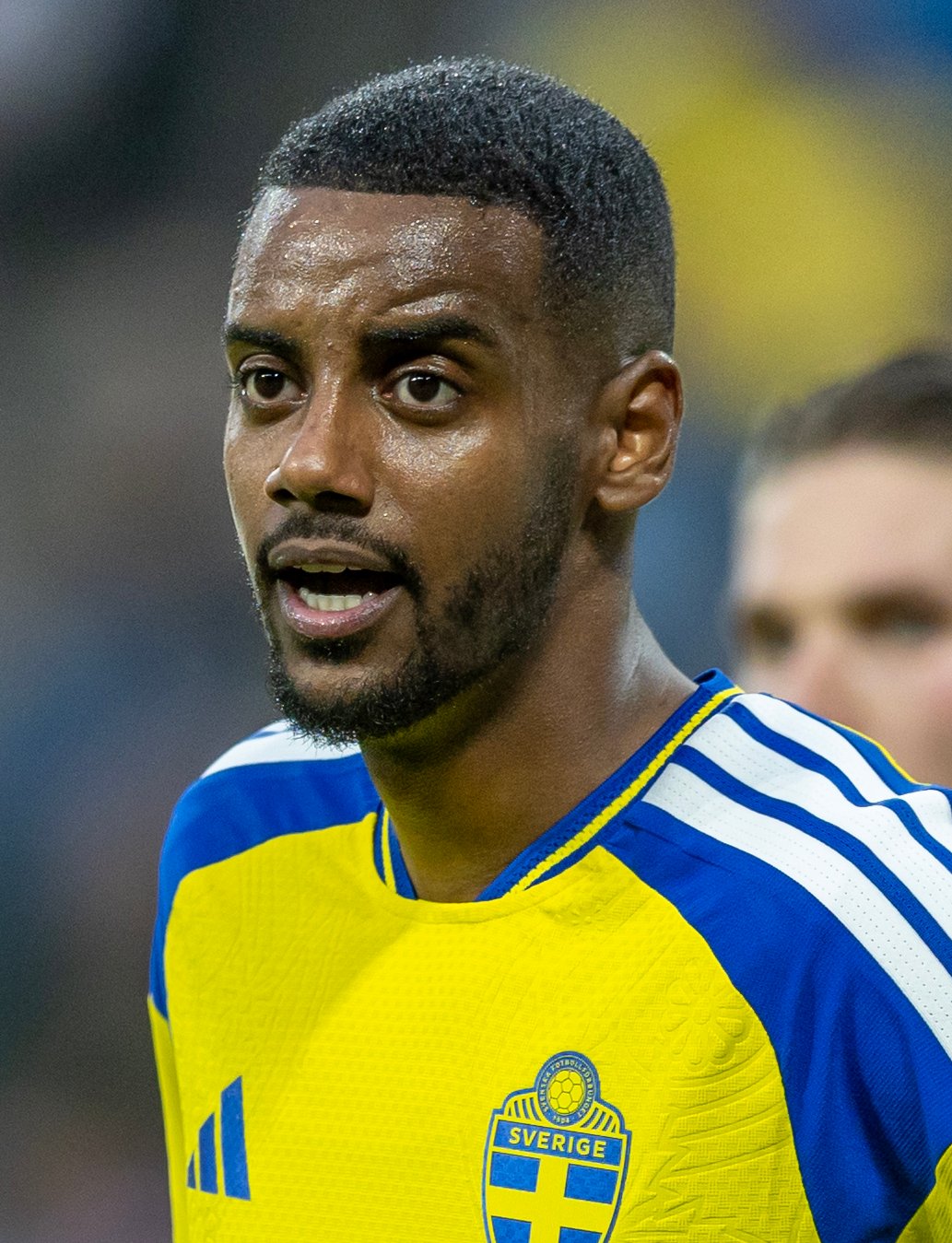
Alexander Isak, the striker of record transfer fees
A Swede of Eritrean parents, he made his debut in the Swedish league at sixteen, breaking Zlatan Ibrahimović's record as the youngest, and was compared to him from day one for reasons that had more to do with his passport than his style.
He went to Borussia Dortmund too early and it did not work out. He fixed that at Real Sociedad, where between 2019 and 2022 he became the player he had promised to be and won a Copa del Rey, the 2020 final played in 2021, behind closed doors, against Athletic.
From there he moved to Newcastle, where he became one of the best strikers in the Premier League and the subject of some of the highest transfer figures ever discussed for a striker.
- AIK Estocolmo 2016-2017 · 10 goals
- Borussia Dortmund 2017-2019
- Willem II Tilburg 2019 · 13 goals
- Real Sociedad de Fútbol 2019-2022 · 33 goals
- Newcastle United Football Club 2022-2025 · 54 goals
- Liverpool Fútbol Club since 2025 · 6 goals
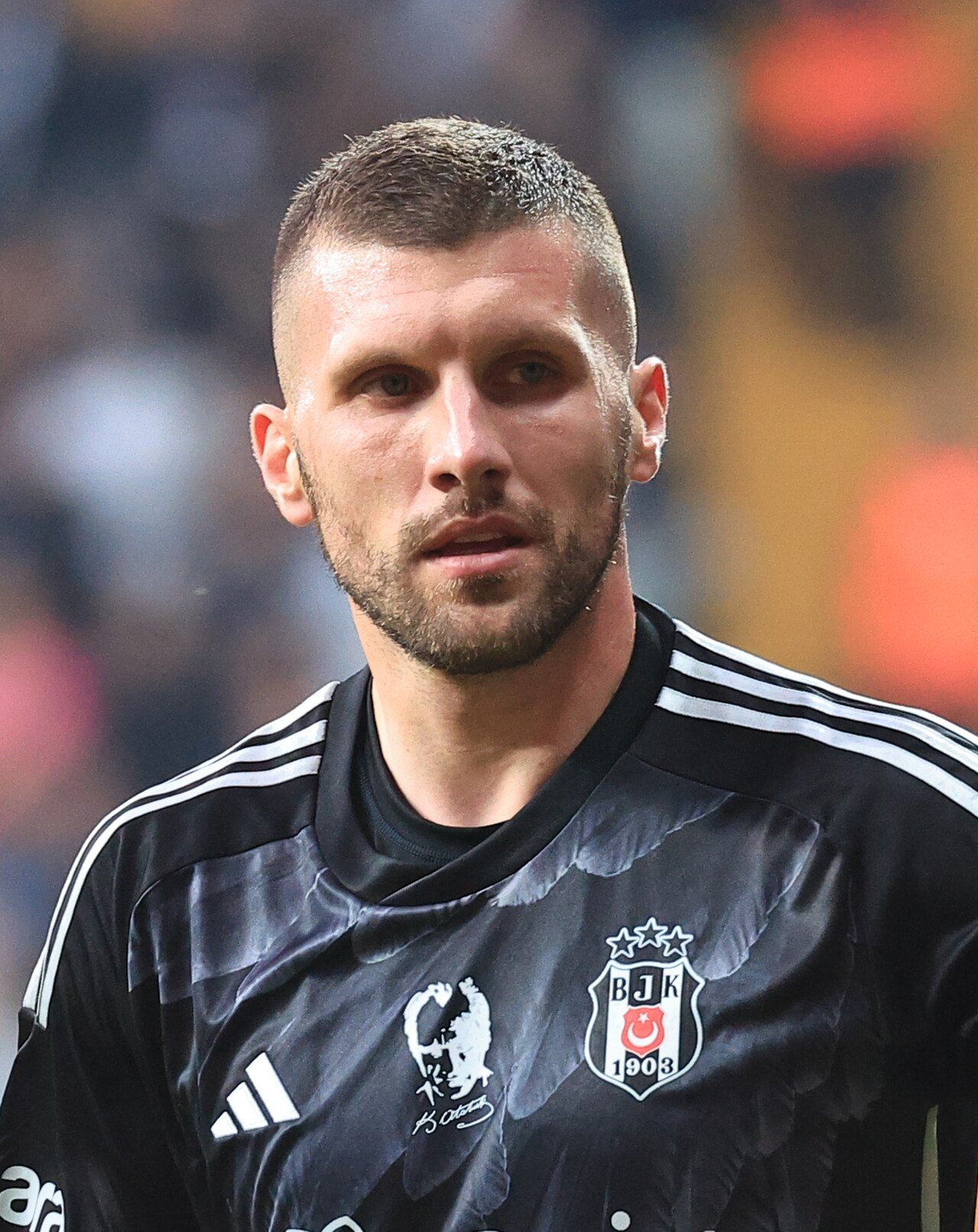
Ante Rebić, the man for the big games
A Croatian winger who turns up on the days that matter. At the 2018 World Cup he started for the side that reached the final, and scored in the 3-0 win over Argentina in the group stage.
Before that, in 2017, he had decided a German Cup final for Eintracht Frankfurt with both goals against Bayern. He then played for Milan, where he won the 2022 scudetto.
- RNK Split 2011-2013 · 16 goals
- ACF Fiorentina 2013-2018 · 2 goals
- RB Leipzig 2014-2015
- Eintracht Frankfurt 2016-2018 · 8 goals
- Hellas Verona Football Club 2016
- Eintracht Frankfurt 2018-2020 · 9 goals
A new one goes live every day at midnight (Spain time). We will let you know in your browser, and also when there is a new article. Turn it off whenever you like.
Dates, clubs, individual awards and photos come from Wikidata and Wikimedia Commons, under free licences, and update themselves. Ages are not written anywhere: they are calculated the moment you open the page, so this page always shows the right age, this year and twenty years from now. If any of these players signs for another club or wins an award, their profile picks it up on its own. What is written by hand is the story and the judgement: who the day belongs to, and why.