26 September: Ballack and Bearzot
Michael Ballack
«the eternal runner-up»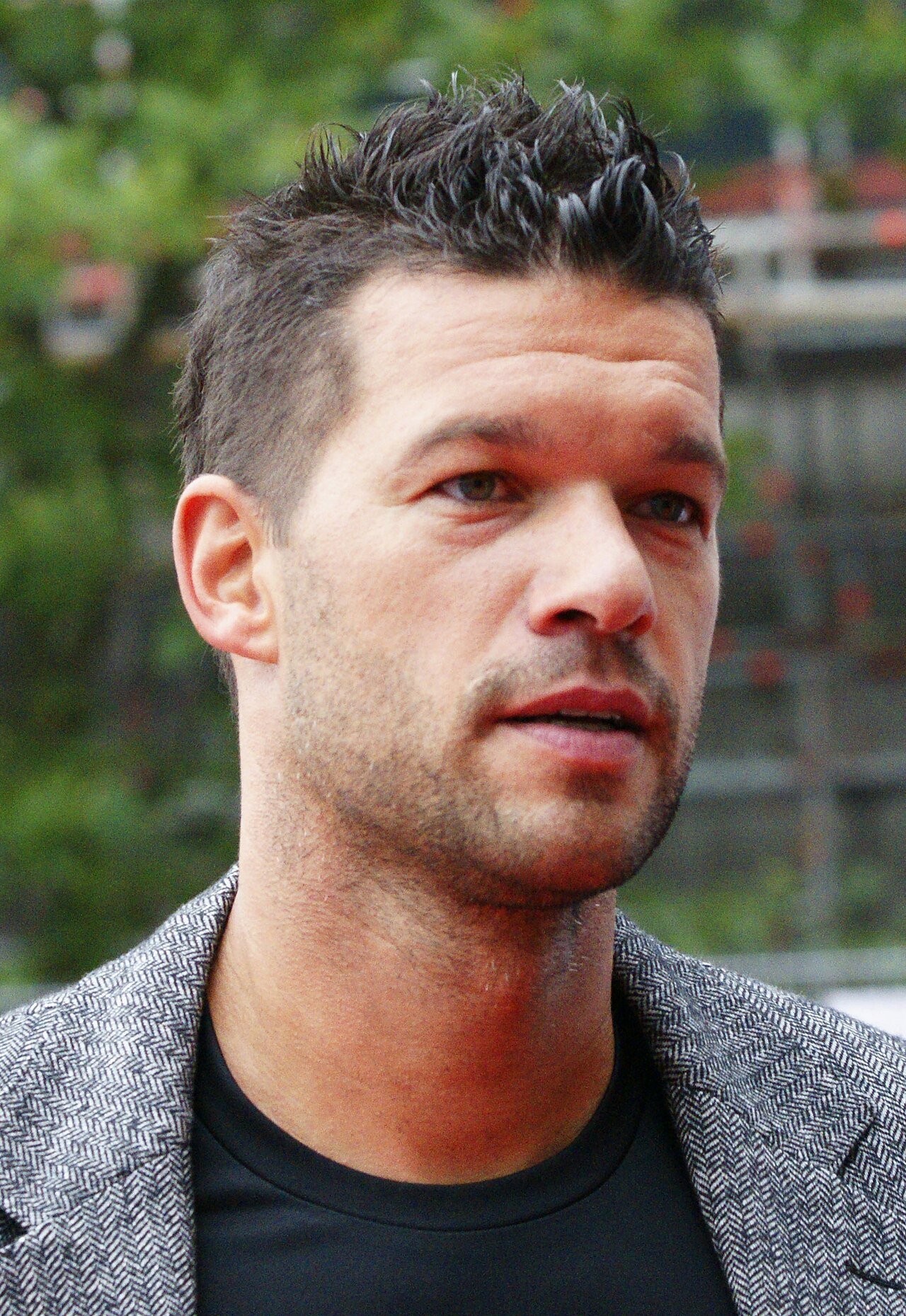
- Chemnitzer FC 1995-1997 · 5 goals
- 1. FC Kaiserslautern 1997-1999 · 4 goals
- 1. FC Kaiserslautern II 1997-1998 · 8 goals
- Bayer 04 Leverkusen 1999-2002 · 27 goals
- F. C. Bayern Múnich 2002-2006 · 44 goals
- Chelsea Football Club 2006-2010 · 17 goals
- Bayer 04 Leverkusen 2010-2012 · 2 goals
A boy from East Germany
He was born in Görlitz, on the Polish border, when the German Democratic Republic still existed, and grew up in Karl-Marx-Stadt, the city that went back to being Chemnitz after reunification. He made his debut for Chemnitzer FC and in 1997 joined Kaiserslautern.
There he lived through something unrepeatable: Kaiserslautern had just come up from the second division and won the 1998 Bundesliga as a newly promoted side. Ballack was a twenty-one-year-old substitute, but he was already in the picture.
2002: the year of three runner-up finishes
At Klaus Toppmöller's Bayer Leverkusen he became a star, and the 2001-02 season defines his career. Leverkusen lost the Bundesliga in the final weeks, lost the cup final to Schalke and lost the Champions League final in Glasgow to Real Madrid, the one with Zidane's volley. Three second places in three weeks.
A month later came the World Cup in Korea and Japan. In the semi-final against the co-hosts, Ballack picked up a yellow card that ruled him out of the final, and four minutes later scored the goal that put Germany into it. He knew he would not play. Germany lost it 2-0 to Brazil and he watched from the bench.
Bayern, Chelsea and Vienna
With Bayern he won three league and cup doubles in four seasons, and in 2006 he joined Mourinho's Chelsea. In London he won a Premier League, three FA Cups and a League Cup, but he lost the Champions League final again in 2008, in Moscow: on penalties against Manchester United, even though he scored his.
That same summer he captained Germany in the Euro final in Vienna. Spain won it, with Fernando Torres's goal, and that night began the greatest era in Spanish national team history.
The final blow
In May 2010, in the FA Cup final against Portsmouth, a tackle from Kevin-Prince Boateng broke his ankle. He missed the World Cup in South Africa, the one he was going to play as captain. Germany became a new, young team at that tournament, and Ballack was never called up again.
He went back to Leverkusen and retired in 2012. The eternal runner-up label follows him around, but few careers show so clearly that in football losing a final means, first of all, having got there.
Also born on 26 September
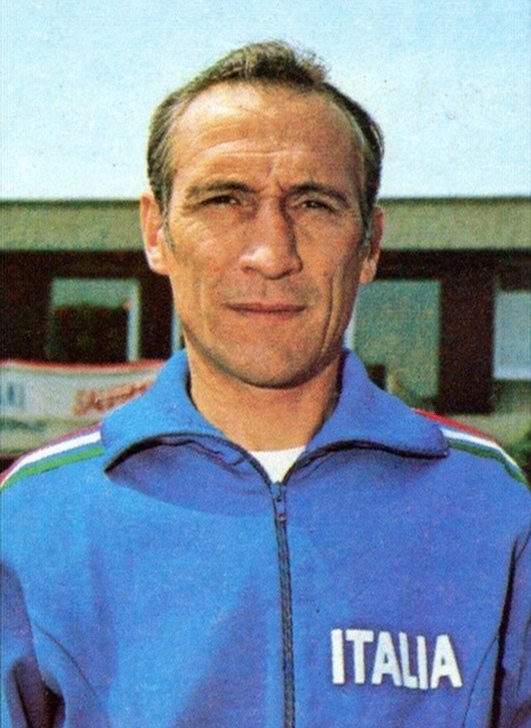
Enzo Bearzot, the Old Man
From Aiello in Friuli, he was an unremarkable midfielder for Inter and Torino with a single cap for Italy. As a manager, though, he is among the greats: he was Italy's manager from 1975 to 1986, more than a hundred games in charge of the azzurri.
His 1978 World Cup in Argentina, with a more attacking football than Italy were used to, ended in fourth place. Spain 1982 started terribly: three draws in the first round and a press calling for his head, above all for having picked Paolo Rossi, who was coming off a two-year ban. The players answered with the silenzio stampa, the first great media blackout by a national team at a World Cup, and Bearzot backed them to a man.
What happened next is written on this very page, day by day: Gentile shutting down Maradona and Zico, Rossi scoring six goals, Tardelli screaming at the Bernabéu. Rossi was born on 23 September, Tardelli on the 24th, Bearzot on the 26th and Gentile on the 27th. Half a World Cup was born in one week.
He died in Milan in December 2010. Always with his pipe between his teeth.
- A.S. Pro Gorizia 1946-1948 · 2 goals
- Inter de Milán 1948-1951
- Catania Football Club 1951-1954 · 5 goals
- Torino Football Club 1954-1956 · 1 goals
- Inter de Milán 1956-1957
- Torino Football Club 1957-1964 · 7 goals
🔴⚪ Sporting Gijón players born this day
They played for Sporting Gijón and were born on this same day. There is only their data here: we would rather name them than leave them out, and rather give the bare facts than invent a story.
Marcelino Elena 🔴⚪
- Real Sporting de Gijón "B" 1990-1994 · 3 goals
- Real Sporting de Gijón 1994-1995
- Real Club Deportivo Mallorca 1996-1999 · 13 goals
- Newcastle United Football Club 1999-2003
- Club Polideportivo Ejido 2003-2004
Another 45 internationally known footballers were born on this day. We do not list them for the sake of it: only those with a story to tell make it here.
📅 The almanac: pick any date
Every day of the year has its story. Highlighted days are already out: click to see who was born or what happened on that date. The faded ones go live on their day, at midnight (Spain time). 11 published.
Football almanac · Elopi23
January
Nothing from this month is out yet. One goes live each day, on its own date.
February
Nothing from this month is out yet. One goes live each day, on its own date.
March
Nothing from this month is out yet. One goes live each day, on its own date.
April
Nothing from this month is out yet. One goes live each day, on its own date.
May
Nothing from this month is out yet. One goes live each day, on its own date.
June
Nothing from this month is out yet. One goes live each day, on its own date.
July
Nothing from this month is out yet. One goes live each day, on its own date.
August
Nothing from this month is out yet. One goes live each day, on its own date.
September11 ★
- 11 September: Ruud Gullit
- 1111 September: Franz Beckenbauer
- 1818 September: Ronaldo
- 2020 September: Henrik Larsson
- 2121 September: Sándor Kocsis
- 2222 September: Thiago Silva
- 2323 September: Quini
- 2424 September: Marco Tardelli
- 2525 September: Karl-Heinz Rummenigge
- 2626 September: Michael Ballack
- 2727 September: Francesco Totti
October
Nothing from this month is out yet. One goes live each day, on its own date.
November
Nothing from this month is out yet. One goes live each day, on its own date.
December
Nothing from this month is out yet. One goes live each day, on its own date.
★ published · ✎ written, waiting for their day · the red circle is today
A new one goes live every day at midnight (Spain time). We will let you know in your browser, and also when there is a new article. Turn it off whenever you like.
Dates, clubs, individual awards and photos come from Wikidata and Wikimedia Commons, under free licences, and update themselves. Ages are not written anywhere: they are calculated the moment you open the page, so this page always shows the right age, this year and twenty years from now. If any of these players signs for another club or wins an award, their profile picks it up on its own. What is written by hand is the story and the judgement: who the day belongs to, and why.