27 September: Totti, twenty-five years with the same badge
Francesco Totti
«Er Pupone»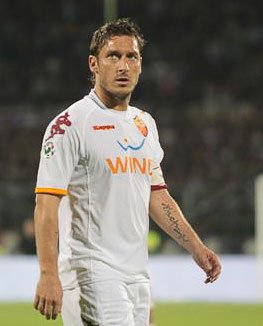
- Trastevere Calcio 1985-1986
- A.S. Roma 1993-2017 · 250 goals
One badge
He made his Roma debut in March 1993, aged sixteen. He retired in May 2017, aged forty. In between he played for no other club: twenty-five seasons, more than seven hundred and eighty official games, captain from 1998.
And not for lack of offers. Real Madrid wanted him in the middle of the Galáctico project and Milan actually had a deal agreed with Roma. He said no both times. He was from Porta Metronia, had grown up ten minutes from the Olimpico and decided he was already where he wanted to be.
In a twenty-five-year career he won a single league title, the 2001 scudetto, only the third in the club's history. That is exactly the price he paid, and he paid it knowing what it cost.
The cucchiaio
He had a trick he turned into a trademark: the cucchiaio, the spoon, the penalty chipped over the goalkeeper. He made it famous in the Euro 2000 semi-final against the Netherlands, in the shoot-out, in Amsterdam and against the hosts. Before taking it he told his team-mates what he was going to do. Italy went through to the final.
Four years later, at Euro 2004, he spat at an opponent in front of the cameras and got a three-match ban. Italy went out in the first round. Both things are him.
2006: from a broken ankle to world champion
In February 2006 he broke his fibula and damaged the ligaments in his left ankle. The World Cup started in June. He only just made it, with a titanium plate in his leg and hardly any match fitness.
He provided four assists, more than anyone at the tournament. And in the last sixteen against Australia, in the 95th minute, at 0-0 and with Italy down to ten men, it fell to him to take the penalty that put Italy into the quarter-finals. He scored it high, no chip.
Italy won that World Cup. Totti retired from international football soon afterwards, with fifty-eight caps.
A Golden Shoe at thirty
In the 2006-07 season, past thirty and after breaking his ankle, he scored twenty-six goals in Serie A: top scorer in Italy and European Golden Shoe, the award for the continent's top scorer.
It was the best scoring season of his life, and it came when everyone assumed he was past it.
The farewell
His last game was on 28 May 2017, against Genoa. He went round the Olimpico reading a letter with the whole stadium in tears.
He left Serie A as the second highest scorer in the competition's history, behind only Silvio Piola. Another coincidence this month: Piola was born on 29 September.
Also born on 27 September
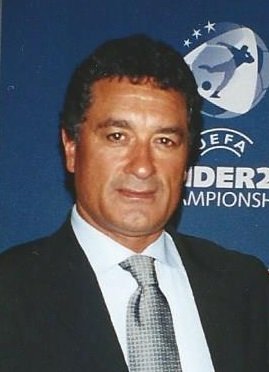
Claudio Gentile, the man who erased Maradona
Centre-back for Juventus and for the Italy side that won the 1982 World Cup, the same as Paolo Rossi, Marco Tardelli and Enzo Bearzot: all four were born in September, between the 23rd and the 27th.
At that World Cup he was given two impossible jobs and did both. In the second round he marked Maradona, then twenty-one, and fouled him out of the game: the statistics from that day count more than twenty challenges on him. Four days later it was Zico's turn, in the 3-2 against Brazil, and he tore his shirt from holding on to it so much.
His line, when criticised for his methods, is one that defines an era: «football is not for ballerinas». Years later, as a coach, he became a European under-21 champion with Italy.
- Arona Calcio 1971-1972 · 4 goals
- Associazione Sportiva Varese 1910 1972-1973 · 1 goals
- Juventus 1973-1984 · 9 goals
- ACF Fiorentina 1984-1987
- Piacenza Calcio 1987-1988
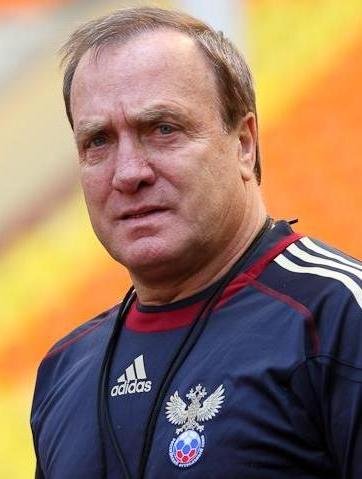
Dick Advocaat, the manager with a thousand lives
Dutch, assistant to Rinus Michels in the Netherlands side that won Euro 1988 and later manager of his country in two separate spells.
He has managed a number of clubs and national teams that is hard to match: the Netherlands, Rangers, South Korea, Zenit, Belgium, Serbia, Sunderland, Iraq, Curaçao. With Zenit Saint Petersburg he won the 2008 UEFA Cup and then the UEFA Super Cup against Manchester United. He has kept signing contracts past the age of seventy-five.
- ADO Den Haag 1966-1973 · 7 goals
- San Francisco Golden Gate Gales 1967 · 1 goals
- Roda JC 1973-1977 · 2 goals
- VVV-Venlo 1977-1979 · 6 goals
- Chicago Sting 1979 · 3 goals
- ADO Den Haag 1979-1980 · 1 goals
🔴⚪ Sporting Gijón players born this day
They played for Sporting Gijón and were born on this same day. There is only their data here: we would rather name them than leave them out, and rather give the bare facts than invent a story.
José Enrique Iglesias Solís 🔴⚪
- Real Sporting de Gijón 1967-1968 · 1 goals
- Real Oviedo 1969-1970
- Caudal Deportivo 1972-1974
A new one goes live every day at midnight (Spain time). We will let you know in your browser, and also when there is a new article. Turn it off whenever you like.
Dates, clubs, individual awards and photos come from Wikidata and Wikimedia Commons, under free licences, and update themselves. Ages are not written anywhere: they are calculated the moment you open the page, so this page always shows the right age, this year and twenty years from now. If any of these players signs for another club or wins an award, their profile picks it up on its own. What is written by hand is the story and the judgement: who the day belongs to, and why.